Dr. Sri Krishnan reflects on his top four proudest achievements as associate dean of research
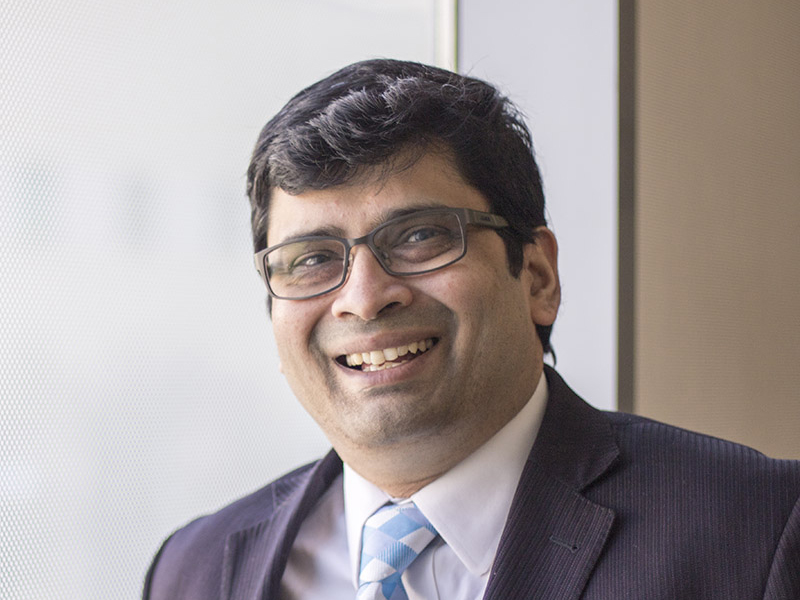
As a leading member at the Faculty of Engineering and Architectural Science (FEAS) since 1999, Dr. Sri Krishnan has worn various hats within the academic community. From his position as a professor, to the department chair, to associate dean, to interim dean this gave Dr. Krishnan an optimal understanding of what can be done to further evolve FEAS into a comprehensive research and innovation unit.
“Building a culture of fundamental research is more curiosity-driven, and in an academic context, we want our faculty to enjoy that process,” said Dr. Krishnan. “My job as an associate dean is to facilitate that.”
After over 20 years of frontline academic administration, Dr. Krishnan is preparing to take a break from his leading role at FEAS and focus on educating and fulfilling his book writing obligations. Looking into his 10-year role as associate dean of research, we spoke to Dr. Krishnan about his four proudest achievements during his time at FEAS.
1. Establishing RIO
As associate dean, Dr. Krishnan says he wanted to act as a catalyst to drive curiosity at FEAS. Through the creation of the Research and Innovation Office (RIO), the unit offers support to faculty members to help facilitate the initial spark of their knowledge and creation process. With five staff members assisting the 170 faculty researchers at FEAS, Dr. Krishnan says it was important for him to establish an all-encompassing unit that meets the needs of exploration, and functions to translate their knowledge into something tangible and concrete.
“The creation of RIO helped the faculty to cover the whole spectrum of fundamental research all the way up to turning that knowledge into something that has a meaningful impact on society,” said Dr. Krishnan.
2. Building FEAS’ research reputation
Throughout Dr. Krishnan’s 10 years as associate dean of research, the faculty has distinguished itself in knowledge dissemination and research outcome assessments. In 2018, TMU was ranked 5th in Canada for ‘Engineering Research Citation Impact’ by the U.S. News and World Report. Through the peer-reviewed publications that contribute to the University's bibliometrics, FEAS has had the opportunity to attract a global audience and emerge as a growing research community.
“The citation of research work is important because somebody else then gets to follow and build upon that work,” said Krishnan. “Being named top five in citations while building a comprehensive research and innovation university is a significant achievement.”
3. Hosting ‘Connector Events’
At its core, FEAS members are inherently problem solvers. Therefore, to meet the pressing needs of society today, Dr. Krishnan wanted the faculty to hear the issues faced by industry experts. Through the RIO office, Dr. Krishnan facilitated a series of events to connect researchers with industry leaders, non-profit organizations, and hospitals. By covering a wide range of topics at these connector events, from aerospace systems to microtechnologies, this grew engagement across the entire faculty and community.
With about 50 connector events held since its inception, faculty members had the opportunity to participate in industry collaboration and help create solutions through provincial, federal, and industry funding.
“These events created an experiential learning opportunity for the faculty and more importantly, created the human capital that we need in a country like Canada,” said Dr. Krishnan. “There is nothing more important than creating the next generation of scientists, innovators, and engineers.”
4. Creating the ‘Strive for Research Excellence’ strategic planning process
To hone in on the faculty’s strengths, the strategic planning process, Striving for Research Excellence, was created to help determine FEAS’ goals and how the faculty plans to evolve. The strategic plan aims to grow FEAS’ research reputation on an international scale, while additionally preparing students for their industries that are in line with the demands of our world today.
The goals of Striving for Research Excellence include:
- Creating a culture of Fundamental Research
- Covering the Spectrum of Discovery to Innovation
- Building Strategic Partnerships
- Fostering Interdisciplinary SRC Clusters
- Striving for Operational Excellence
- Enhancing Reputation, Intensity, Passion
“That's another moment of pride, not only for me, but for the entire faculty, because it allows us to demonstrate that we can compete for larger grants, and we can be part of this international research excellence,” said Dr. Krishnan.
“It creates a very strong momentum, which could be really built upon and assessed further to make our university the destination of choice for future researchers and students to perform high-quality work in a location like the City of Toronto,” he said. “This allows us to engage with the public around us, build other technologies and systems, and have an overall impact on the city and the country as a whole.”