About Us
- Build academic, public and private sector partnerships
- Conduct research, development and demonstration, leading to commercialization
- Create the next generation of energy entrepreneurs
- Encourage multidisciplinary and collaborative approaches
- Provide scholarship and learning opportunities
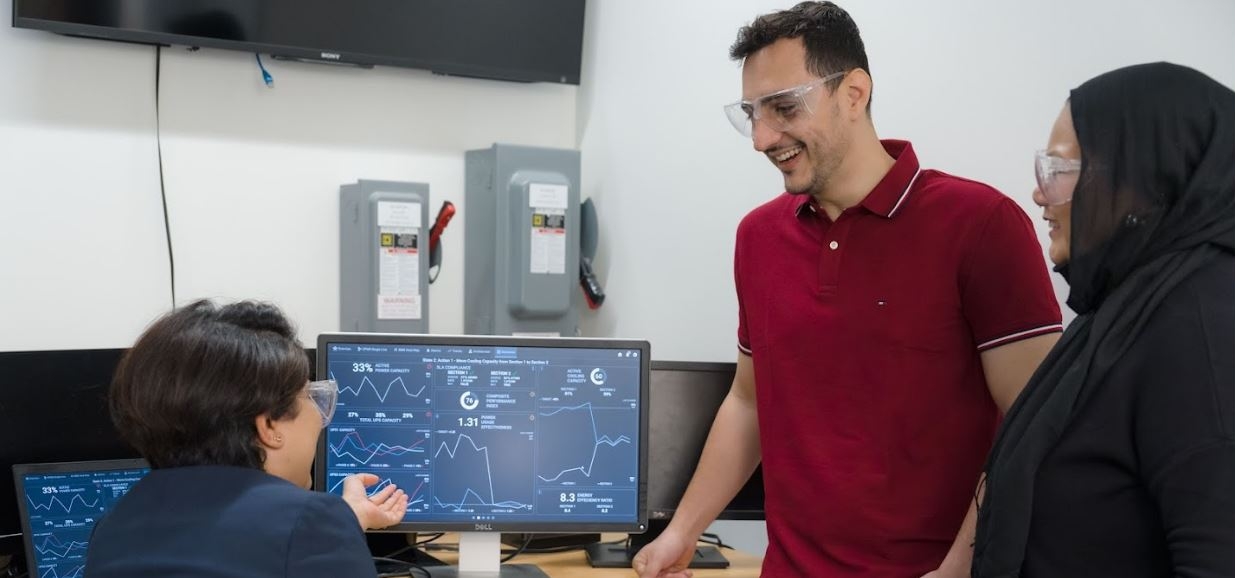
CUE aspires to be a world-class research and innovation centre dedicated to solving our most pressing urban energy challenges.
Focus areas
CUE’s focus areas are energy generation, transmission, distribution and use, with emphasis on:
- energy transition, deep electrification and transactive energy
- energy planning, policy and regulation
- demand management, efficiency and conservation
- renewables, smart grids, microgrids, storage hydrogen, electric vehicles and net-zero buildings
Activities
Research, testing and consulting
- Sponsored projects and reports are executed in collaboration with government, industry and academic partners
- Testing of products and prototypes is completed at world-class, state-of-the-art laboratories.
- Consulting projects draw on our capacity for multidisciplinary collaborations between industry professionals and academic researchers, as well as access to our unique laboratories.
Education
Professional development is offered through a formalized curriculum.
Innovation
As part of TMU’s Zone Learning ecosystem and housed in CUE, Clean Energy Zone (CEZ) is a startup incubator focused on fostering innovative ideas and businesses in the clean and sustainable energy sector.
During my time at CUE, I was fortunate to work in a dynamic and forward-thinking environment focused on addressing some of the most pressing energy challenges of our time. The collaborative culture at CUE fostered innovation and encouraged interdisciplinary approaches, allowing me to contribute meaningfully to impactful projects. I am deeply grateful for my time at the CUE and highly recommend it to anyone passionate about advancing the future of urban energy systems.
Expertise
CUE combines the perspectives of engineering, science, environmental studies, business, social sciences, public policy, law and infrastructure management.