SDG 17: Partnerships for the Goals
2025 SDG report

SDG 17: Partnerships for the Goals
Sustainable development requires collaboration. At TMU, we are committed to working closely with our partners to advance progress on the Sustainable Development Goals (SDGs). From government to industry and NGOs to other institutions like ours, we are collaborating with a range of partners by building relationships, collecting and sharing data and best practices, and being responsible corporate citizens together.
Top 200 in the world among universities for contributions towards SDG 17 (2025 Times Higher Education Impact Rankings)
Over 300 attendees from academia, industry and beyond participated in the Global AI Summit hosted by TMU and Times Higher Education in October 2025
Our goals in action
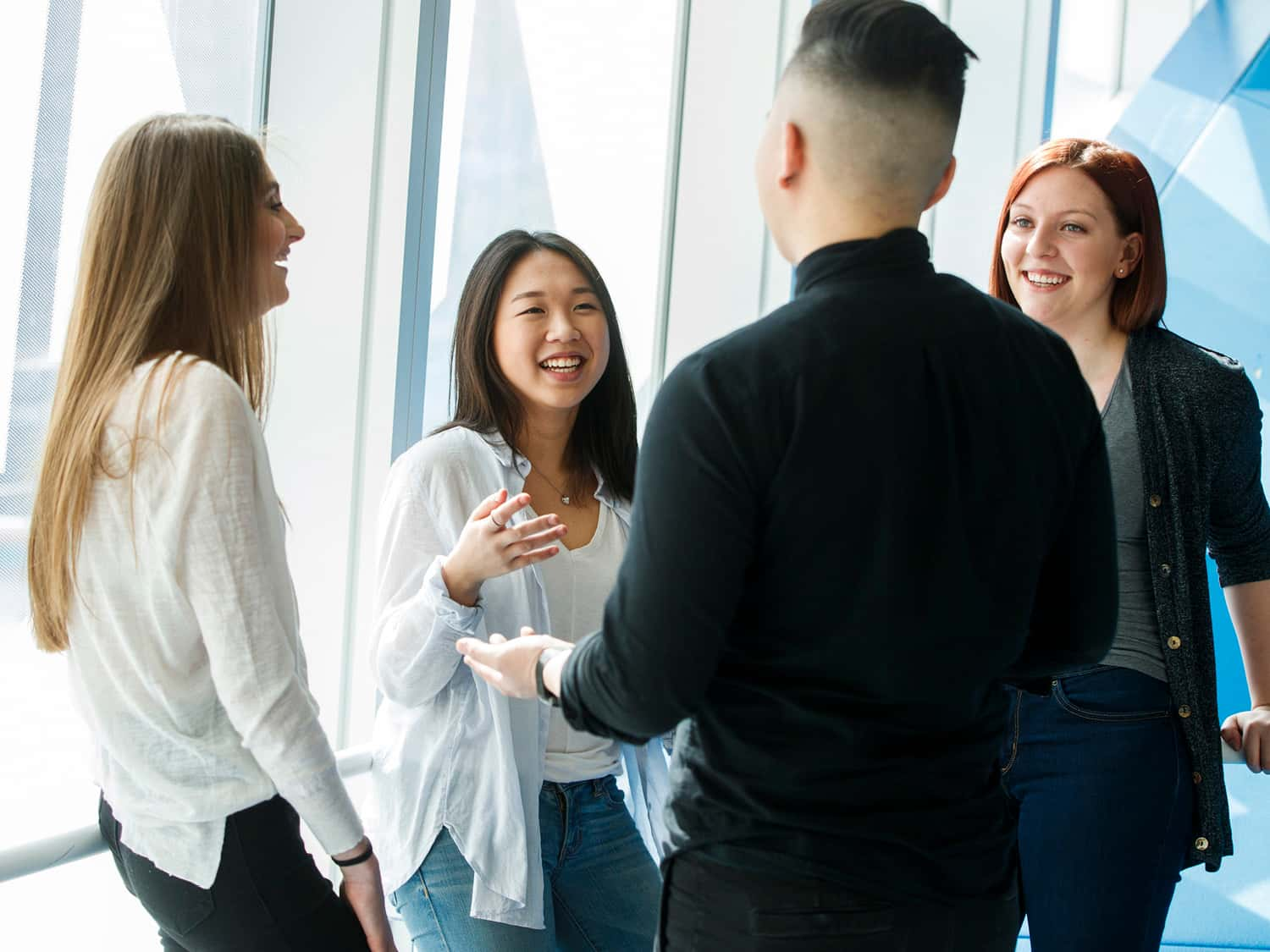
TMU is committed to making meaningful education on the SDGs available to all students to prepare them to take action on challenges facing our world today. Our faculty members and researchers are teaching and studying sustainability through hundreds of courses, programs and research initiatives, empowering students of any academic background to advance their sustainability knowledge and skills during their time at the university.
- TMU offers a range of academic options with a sustainability focus, including individual courses and degrees at both the undergraduate and graduate levels as well as certificate programs.
- Additional initiatives on campus to provide education about the SDGs include the Hack the World event at the Innovation Boost Zone and the English Language Institute’s annual SDG Solutions Day in which students work in teams to develop ideas to tackle the SDGs.
- The Ted Rogers School of Management’s MBA program has been named a Tier 1 Green MBA by the editors of CEO Magazine. It was one of only four Canadian MBA programs included in the international list’s top tier of more than 30 programs. Programs were assessed based on the percentage of core courses focused on ethical, social and environmental impact, as well as experiential learning opportunities, university-wide sustainability initiatives, faculty research, delivery methods and accreditation.
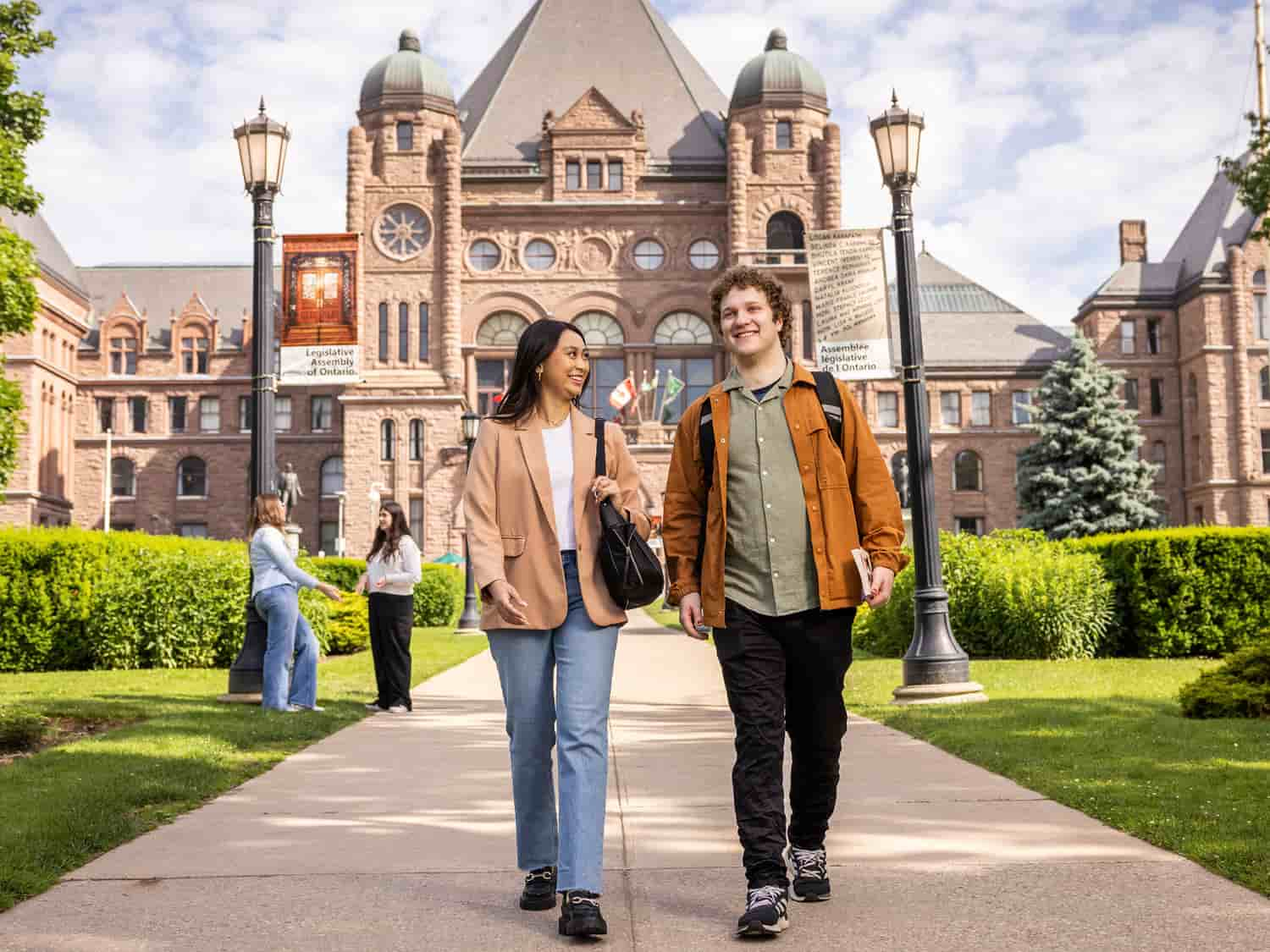
TMU actively contributes to developing policies to tackle the SDGs, working with governments, NGOs and other partners to identify challenges and develop strategies and solutions to address sustainability challenges.
- The Diversity Institute at the Ted Rogers School of Management (TRSM) worked with partners to provide tools to support organizations implementing the Government of Canada’s 50-30 Challenge (external link) to help advance gender parity and increase diversity in leadership.
- TMU Faculty of Science researchers are working with Colombian communities, policymakers and students to bring water security to rural communities in Colombia.
- The Geoffrey F. Bruce Graduate and Postdoctoral Fellowships support the next generation of freshwater leaders, policy researchers and practitioners and increase excellence in public policy to ensure the sustainability of Canada’s freshwater resources. Bruce Fellows generate critical recommendations that contribute to Canadian freshwater resources policy.
- TMU Geography and Environmental Studies professor Dave Atkinson and his team have been working with Inuit communities in Nunavut to gather data and build local environmental monitoring capacity to manage and protect their environments. The research team has used data showing altered permafrost conditions, carbon balance changes and greening of the Arctic vegetation to create process models that can inform policymakers on changes to Arctic ecosystems and can also help forecast potential future impacts.
- In October 2025, the National Institute on Ageing partnered with the C.D. Howe Institute to (PDF file) host the annual Health Partnership Summit (external link) in Niagara-on-the-Lake, bringing together 65 senior health care leaders, policymakers, clinicians, researchers and innovators from across Canada and abroad. Centred on the theme Solving Canada's Longstanding Primary Care Challenges Together, the Summit created a unique forum for candid dialogue, cross-sector collaboration and solution-focused discussions on one of the country's most pressing health care issues.
- Canada’s Department of Finance sought expertise on artificial intelligence (AI) in the financial sector from TMU math professor Alexey Rubtsov. He contributes to the development of AI-related policies that affect Canada’s financial institutions, including banks and insurance companies. He engages with banks and insurance companies to understand how they’re using AI and what challenges they face. He also helps the Department of Finance assess how existing rules, policies, and guidelines can influence adoption and address AI-related risks.
- In June 2025, the Faculty of Community Services brought together leaders in social work, child protection, children’s mental health, education and more to build organizational capacity to identify, effectively respond to, and prevent child sex trafficking and online child sexual exploitation. The leaders are the key decision-makers for how policy and practice unfolds in their organizations. Through the Executive Program in Combating Child Sex Trafficking & Online Child Sexual Exploitation, participants learned how their organizations can better respond to risks, harms and complex needs of victims and survivors.

TMU researchers are engaged in collaborations with international partners in academia and beyond to gather, measure and analyze data related to the SDGs. This work cuts across disciplines and faculties.
- TMU is a hub of research, knowledge-sharing and education related to migration. Complex Migration Flows and Multiple Drivers in Comparative Perspective (MEMO) is a multidisciplinary research partnership between 19 research organizations and community partners, service providers, NGOs and other organizations from around the world that aims to uncover new knowledge and develop a framework for better understanding migration. Anna Triandafyllidou, the Canada Excellence Research Chair in Migration and Integration at TMU, serves as co-chair of Metropolis International, one of the world’s largest networks focused on matters relating to migration, settlement and diversity.
- The Urban Sanctuary, Migrant Solidarity, and Hospitality in Global Perspective partnership brings together academics and partners in government and NGOs to co-develop and collect, measure and share evidence-based knowledge and data related to the policies and practices of accommodating vulnerable and precarious migrants and refugees in major urban centres in Africa, Europe, North America and Latin America.
- TMU Politics and Public Administration professor Chris Gore is part of a global collaboration to gather data and evaluate strategies to make cities safer, more inclusive and more resilient in the face of climate change. Research focuses on 20 cities from Europe, North America, Asia, Africa and Latin America. A preliminary finding was that cities with a historically strong climate action backdrop shifted focus to improving social equity and reducing vulnerabilities. In Toronto, the team’s research found that the notion of resilience resonated widely with political leaders and community members.
- The International and Canadian Child Rights Partnership seeks to explore and better understand the connection between children’s rights to participation and protection. The partnership includes young people with lived experience, 40 researchers and 30 partner organizations from universities, NGOs, major human rights institutions, and governments from Canada and across the Americas, Africa, Europe, Asia and Oceania.
- TMU’s School of Public Policy and Democratic Innovation is an active contributor to the Global Center for Climate Change and Transboundary Waters (external link) , which leads innovative research to understand and generate resilience to water crises in transboundary regions. Leveraging international expertise, it studies water resources spanning the North American geopolitical boundaries and aims to engage vulnerable communities around the world.
- Through her Sustainable Water-Energy Nexus (WEN) for a Circular Economy project, Chemical Engineering professor Hadis Zarrin is working alongside faculty from the State University of São Paulo to develop more sustainable, cost-effective systems to produce green hydrogen. The project will also explore renewable energy sources like solar and wind to power water electrolysis and treated wastewater as a hydrogen production source. Ultimately, Zarrin aims to make these technologies accessible and beneficial to diverse users, including those from socio-economically marginalized communities.
- TMU has been accepted as a new member of the World Health Organization’s (WHO) Disability Health Equity Network. Launched in June 2025, the WHO Disability Health Equity Network is a global effort to close avoidable health gaps between people with disabilities and the general population. It focuses on leadership by persons with disabilities, political prioritization, inclusive health systems and strengthening data. Led by Karen Soldatic, the Canada Excellence Research Chair (CERC) in Health Equity and Community Wellbeing and professor in the School of Disability Studies at TMU, the membership makes TMU one of only three Canadian research organizations in the network.
- Karen Soldatic and the CERC in Health Equity and Community Wellbeing also co-lead a research project on technology-facilitated violence and abuse against women with disabilities in South Africa, in collaboration with South African researchers and organizations.
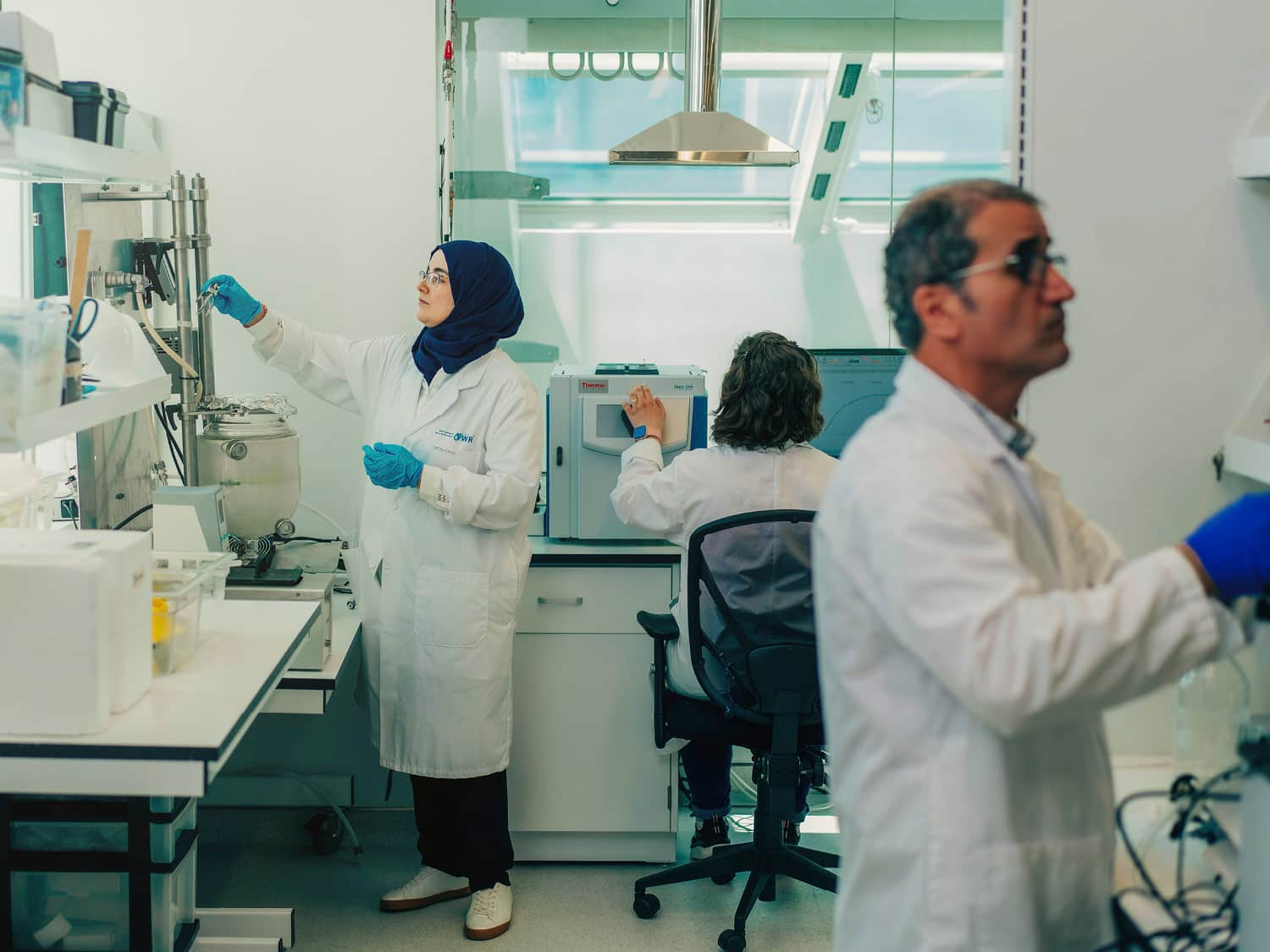
TMU faculty members, research institutes and students collaborate with partners in Canada and abroad to disseminate knowledge, exchange ideas and develop best practices to support progress on tackling the SDGs. These partnerships include research initiatives with industry, collaborations with academic institutions and grants for pilot projects to test solutions to sustainability challenges.
- The annual Clean Energy Expo hosted by the Centre for Urban Energy brings together people from industry, public utilities, academia and clean-energy startups to develop best practices. The 2025 event focused on building a smarter, more resilient energy future through cooperation, innovation, and practical solutions.
- The Global Migration Institute and Bridging Divides Journalism Fellowship hosts experienced journalists for a prestigious one-month residency at TMU, a unique opportunity to engage with cutting-edge research on migration and integration and build relationships with leading scholars and policy thinkers in Canada and beyond.
- The Diversity Institute, in partnership with the Ontario Chamber of Commerce, developed the pilot Accessibility Diversity Assessment Tool Add-on. This tool is designed for small and medium-sized enterprises (SMEs) to evaluate their accessibility policies and practices, identify successes and areas for improvement, and receive customized recommendations and best practices. An accompanying report provides tips on industry best practices as a solution to help SMEs understand their current EDI, accessibility, and disability inclusion.
- With the support of funding from the federal government, the DMZ established the Centre for Housing Innovation (CHI), a pioneering hub aimed at transforming Canada’s housing sector. In partnership with GroundBreak Ventures, CivicAction and NGen, CHI will serve as a central hub uniting innovators, developers, contractors and municipalities to drive the development and commercialization of housing technology. The centre aims to scale sustainable, affordable and high-quality housing solutions and upskill industry professionals, including contractors, manufacturers and developers, with training in key manufacturing areas.
- The BMO Newcomer Workforce Integration Lab (BMO Lab) is a specialized research lab through which the Global Migration Institute conducts the majority of its research on labour migration. The Lab is dedicated to advancing research on labour migration and creating practical, evidence-based tools that businesses can use to strengthen their recruitment, hiring, and onboarding practices. By equipping employers with strategies to better leverage the skills and talents of newcomers to Canada, the BMO Lab contributes directly to building a stronger, more inclusive workforce.
- TMU is a member of the Sustainable Development Solutions Network (external link) , which mobilizes the world’s leading academic and research institutes and leverages their strengths to help promote practical solutions to sustainable development challenges.
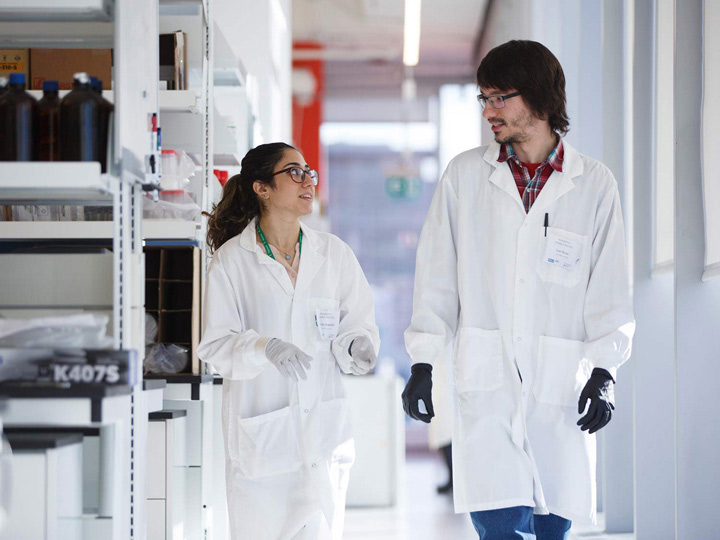
Progress on the SDGs depends on partnerships not only among researchers and institutions, but also beyond academia. At TMU, we are proud to engage in cross-sectoral dialogue with governments, industry and nonprofits to exchange ideas and leverage the roles of various organizations in advancing progress.
- Over 300 attendees from academia, industry and beyond participated in the Global AI Summit hosted by TMU and Times Higher Education in October 2025. The event brought together leading researchers, policymakers and industry experts to explore how AI can be developed and deployed ethically and equitably in post-secondary education and in the world.
- In May 2025, TMU hosted the International Migration: From Root Causes to Drivers conference. The event brought together a diverse group of stakeholders in the field of migration, including leading researchers, academics, policy-makers, students, and people from civil society organizations. The conference delved into the multiple drivers of migration including social, economic, political, and environmental, as well as the ways in which they shape decision-making.
- The Health & Technology Symposium, held November 28, 2025, at the Ted Rogers School of Management (TRSM), critically examined how technology, including artificial intelligence, digital diagnostics, predictive mapping, wearable sensors, robotics and virtual care, is reshaping the ways people experience care and how health systems operate.
- In 2025, TRSM launched the Sustainability Leadership Network, which was designed to bring together a diverse ecosystem of leaders in industry who have demonstrated sustainable practices. Schneider Electric joins the network as a founding member, lending its global expertise in energy management and automation to help shape the Network’s strategic direction and impact.

TMU is proud to conduct educational outreach beyond campus to share knowledge and create learning opportunities about the SDGs in the local community.
- Educational outreach events for young people in our local community have included the SciXchange program for Indigenous communities; Badge Day, where FEAS welcomed over 60 Girl Guides to campus for a day of creativity, curiosity, and flashlight building; and FuturENG, which welcomes highly motivated and talented female students in Grades 9 and 12 to discover engineering at the university level. This event combines theory with practical experience in cutting-edge technologies.
- The Newcomer Entrepreneur Hub at the Diversity Institute provides mentorship and training on topics such as finance, procurement and social media to help immigrants and refugees looking to start their own businesses.
- DMZ Innisfil (external link) is a community-driven business accelerator and incubator dedicated to supporting entrepreneurs and business owners in the town of Innisfil.
- The WUSC Toronto Metropolitan University Local Committee is a group of students that raises awareness about international development issues. The committee also facilitates the Student Refugee Program, which sponsors and supports students with refugee backgrounds to come to Canada to study and become permanent residents.
- The Sanctuary Scholars program offered via TMU’s Office of Social Innovation provides an access pathway for students who hold precarious immigration status. The program allows eligible students to access any TMU undergraduate degree or program at domestic tuition fee rates, and supports them in navigating the university and addressing any status-related barriers or obstacles.
- The Diversity Institute delivers training programs designed to strengthen Canada’s talent pipeline in a rapidly changing economy; From tutoring programs that support school-aged children in gaining foundational skills, to training programs that support post-secondary graduates or mid-level career professionals upskill, and accessible online training specific to small and medium-sized enterprises.
- The Peel District School Board and TMU’s School of Medicine, Faculty of Community Services and Student Affairs office are collaborating on the Future of Healthcare Initiative. The project allows students to explore, engage and experience the field of healthcare through mentorship and coaching, a speaker series, a university course offering, and experiential learning opportunities. The aim is to encourage students to consider post-secondary education and careers in healthcare and related fields.
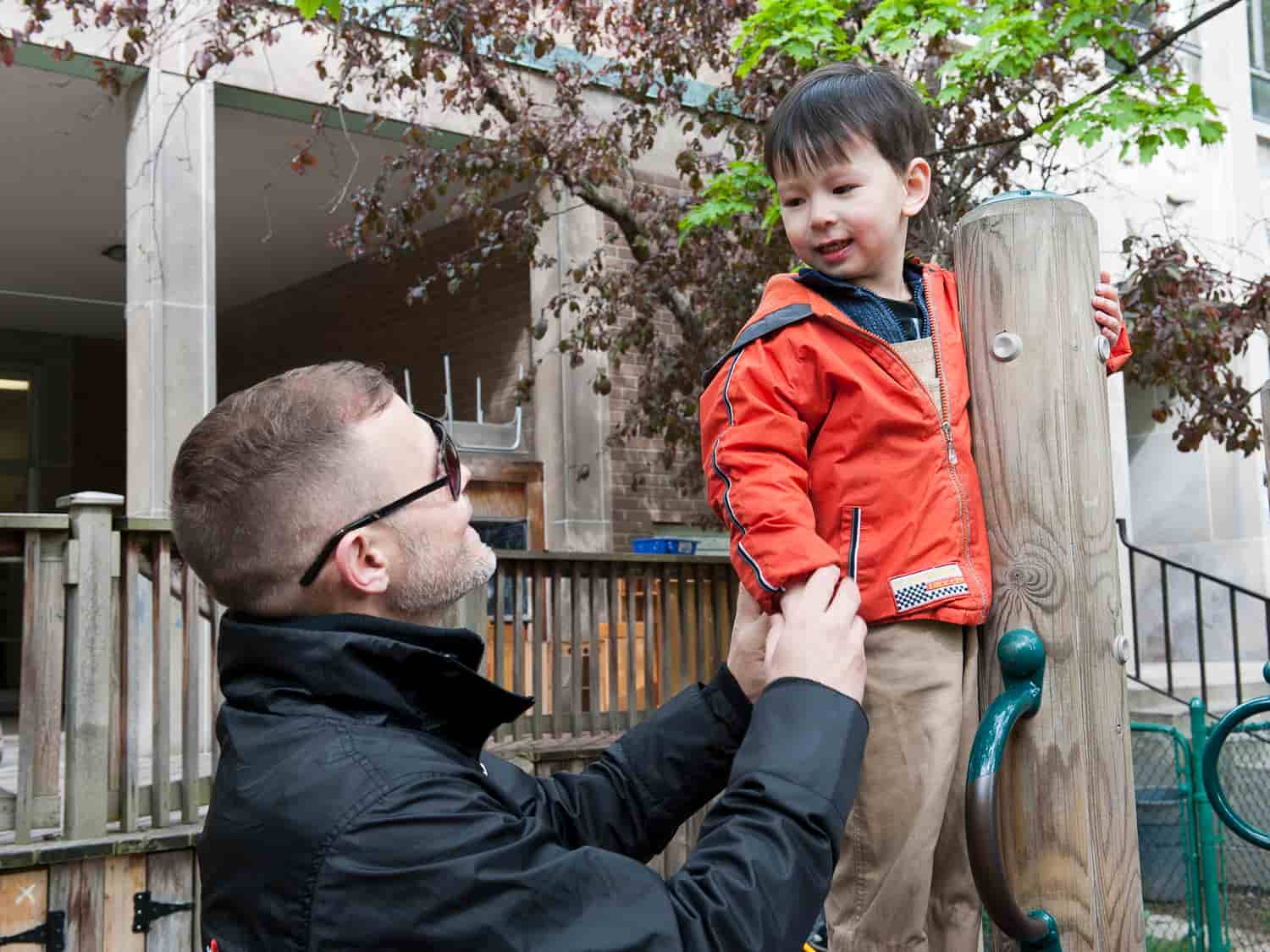
TMU works with NGOs to tackle the SDGs through a variety of initiatives. These include opportunities for students to volunteer in support of sustainable development efforts, partnerships with nonprofits on shared research projects, and the development and dissemination of educational resources to help community members in their efforts to achieve progress towards the goals.
- Sustainability-focused student volunteering programs with NGOs include the Living Planet @ Campus program with WWF Canada, which offers students opportunities to build their resumé and contribute to positive change, such as community clean-ups and hackathon competitions. Through the Volunteer Link tool, TMU students are connected to volunteer opportunities at TMU and in the community. It’s a great chance to see what TMU offers, enhance leadership skills, and build valuable work experience.
- The 2024–2025 Urban Water Student Leadership Committee made a strong impact through environmental action and student engagement. They partnered with the Toronto Region Conservation Authority to plant over 100 trees and shrubs on TMU’s downtown campus and led a successful Yellow Creek cleanup.
- Educational resources related to sustainable development developed and shared through collaborations with NGOs include: TMU’s School of Child and Youth Care and the Chang School of Continuing Education working with Right To Play to upskill and certify Indigenous child and youth practitioners (external link) ; and TMU partnering with the Indigenous Primary Health Care Council to eliminate inequities and disparities that negatively impact Indigenous people within the medical system.
- The Catalyst Cyber Clinic (external link) provides free cybersecurity support for Canadian non-profits and community organizations that may lack access to dedicated security resources. The initiative helps to expand access to non-profit cybersecurity support in Canada. Non-profits get actionable support to improve their security, including a documented Cybersecurity Action Plan outlining recommended security improvements and next steps.
- The CERC in Health Equity works with Casey House non-profit and research partners on a project to examine the factors contributing to early disengagement from HIV care and develop tailored, community-driven interventions to improve retention among people seeking care and treatment for HIV.
- Researchers at TMU’s Centre for Studies in Food Security worked with the Rexdale Community Hub and the United Way on a project to develop a community grocery store model to support food security in the Rexdale community.
- In January 2025, the Chang School of Continuing Education hosted people looking to grow their professional network, exchange industry insights, and explore new opportunities in the charitable and nonprofit field. The event also highlighted our programs designed to build essential skills in community engagement, fundraising, and nonprofit management that can move careers forward.