SDG 9: Industry, Innovation and Infrastructure
2025 SDG report

SDG 9: Industry, Innovation and Infrastructure
A strong economy, resilient communities and a sustainable future all rely on innovation. As the world faces rapid change, advancing new ideas, technologies and infrastructure is more important than ever. At TMU, innovation is a defining strength – embedded in our research, academic programs and industry collaborations. This focus not only drives progress but also ensures our graduates are prepared to lead in an evolving workforce.
Top 10 among Canadian universities for graduate employability (Times Higher Education Global Employability University Ranking 2025).
The DMZ at TMU is ranked the #1 university-based tech incubator in the world by UBI Global.
Our Toronto campus features 340,000 square feet of teaching lab space and 230,000 square feet of research space
Our goals in action

At TMU, we prioritize innovation in our curriculum, integrating it into every aspect of the academic experience. This commitment is rooted in our Academic Plan, with priorities focusing on making impact through scholarship, research and creative activity (SRC) and innovation, and preparing students for evolving careers. We emphasize real-world experiences and interdisciplinary collaboration to equip students with the skills needed to tackle global challenges and thrive in dynamic professional environments.
- Zone Learning is TMU’s network for innovation and entrepreneurial experiences, offering hands-on programs that bridge the gap between education and real-world problems.
- TMU is home to 10 zones on our downtown campus, as well as several off-campus zones, each with a distinct industry focus. Designed for brainstorming, igniting projects and nurturing startups from the ground up, students can expand their networks, gain experience, bolster their resumes and tap into funding opportunities that can turn dreams into reality.
- The ZON 100 open elective course from Zone Learning allows undergraduate students to develop projects with instructor guidance, combining group sessions and one-on-one mentorship for hands-on learning.
- Startup School provides fundamental entrepreneurial education to aspiring and emerging entrepreneurs alike. Students and founders can take advantage of practical education on topics curated to accelerate a startup’s growth. Industry experts, academic thought leaders and seasoned entrepreneurs lead sessions on the topics crucial to entrepreneurial success.
- The Master of Engineering Innovation and Entrepreneurship (MEIE) program is designed for engineering students, science students and industry professionals interested in advancing their own technology-based startups or leading innovation within an existing organization. Following the lean-startup development process, students refine their concepts through customer discovery, customer validation and customer acquisition phases into viable businesses. Students gain the knowledge, skills and hands-on experience necessary to drive and manage innovation in existing companies or their own ventures.
- All academic programs at TMU are required to have a Program Advisory Council (PAC). A PAC is a group of volunteers comprising industry and community representatives that provides expert guidance on curriculum, program review, technology and trends in the industry, discipline or profession. PACs ensure TMU programs remain current and aligned with industry and labour market trends.
- The Rogers Cybersecure Catalyst at TMU offers CyberStart Canada (external link) , a free, immersive, gamified learning experience that helps students develop cybersecurity skills while having fun. The program allows young Canadians to dive into the world of cybersecurity through hands-on labs, challenges, and puzzles.
Driven by a passion for progress, TMU researchers are advancing innovative solutions across industries. Our unique Zone Learning concept leverages campus research, expertise and industry connections to incubate startups and support new ventures. By fostering collaboration across disciplines, Zone Learning drives economic growth, creates high quality jobs and fuels innovation.
- The Biomedical Zone at TMU helps early-stage health technology companies to validate their need-based solutions directly in the hospital setting with clinicians, business experts, and innovative thinkers. Through the Biomedical Zone, startups are able to rapidly iterate their technology, refine their business model, and demonstrate clinical value. First-in-class programs offer startups unprecedented access to the clinical environment, while facilitating unique experiential learning opportunities for students.
- The Science Discovery Zone (SDZ) serves as a hub for science entrepreneurship, connecting TMU and the wider community to promote evidence-based innovation through hands-on learning experiences. Additionally, it offers assistance to aspiring innovators and fledgling startups as they embark on their initial stages of development and validation.
- Enterprise Bridge Toronto focuses on the economic integration of immigrants in the city of Toronto, with the goal to empower economically disadvantaged immigrants by supporting them with the tools and knowledge to start and grow sustainable businesses through a set of six key components: training, mentoring, consulting, networking, microcredit, and research and tracking. The project will actively engage with entrepreneurs for over a 11-month period to implement above mentioned activities and track their progress for three years.
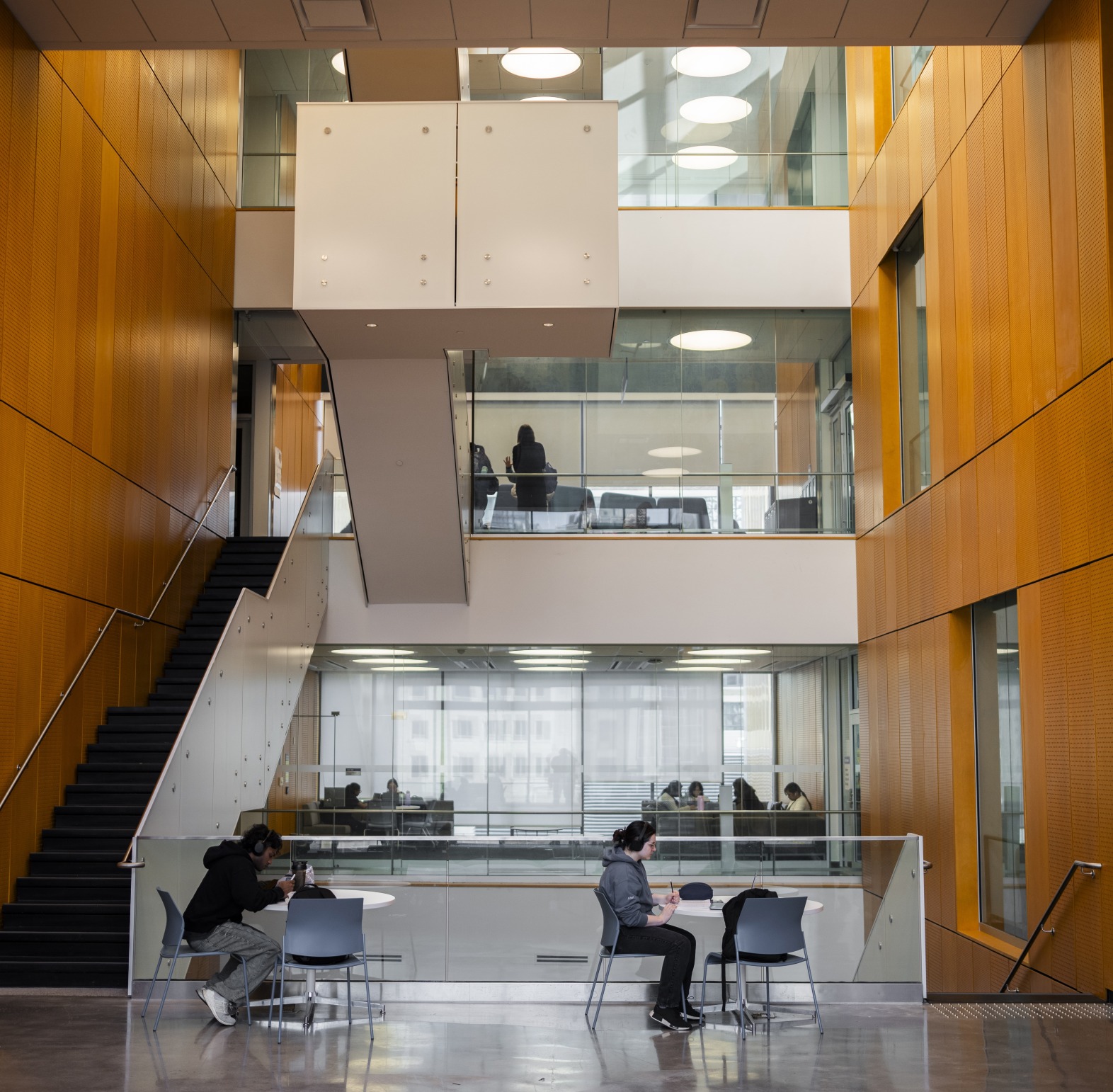
A dynamic campus environment enhances student learning, growth, and connection. TMU provides innovative opportunities – from co-op programs to social impact initiatives – that bridge education with real-world experience. State-of-the-art spaces and community partnerships further support collaboration, creativity and hands-on learning while upholding high standards for sustainable infrastructure.
- TMU’s innovative co-op programs offer students relevant work experience and the opportunity to expand their professional networks. Options are available across five faculties.
- The Office of Social Innovation (OSI) undertakes a range of initiatives to develop transformative approaches to societal well-being within the university community and its surrounding neighbourhoods. Explore OSI’s current programs and projects to learn more about the office’s work.
- VentureMatch connects students with innovative Zone Learning startups through flexible, part-time, skill-based project placements. It provides an opportunity to gain hands-on experience while working directly with startup teams and industry professionals.
- Students gain hands-on experience working on real startup projects, allowing them to develop practical skills, build professional confidence, and strengthen their resumes before entering the workforce. Startups gain access to motivated student talent who can contribute fresh perspectives and support key projects, helping teams move forward on important business priorities.
Innovation drives progress, and TMU is committed to using its strengths to create lasting impact in our communities. Through industry partnerships, incubators and social ventures, we support economic growth and capacity building while addressing local and global challenges.
- A joint partnership between the City of Brampton and TMU, Brampton Venture Zone (BVZ) is a non-equity incubator that is dedicated to building and growing early stage technology startups in Brampton. BVZ connects aspiring entrepreneurs, current founders, industry experts, funders and customers to build solutions for local challenges. Virtual programming helps first-time founders navigate market development, build industry collaborations and helps technology startups develop a playbook for market launch and growth.
- The Future of Sport Lab (FSL) (external link) is a collaborative lab and incubator for sport innovation and research, created by TMU in partnership with Maple Leaf Sports and Entertainment (MLSE). It was the first industry-facing sport technology incubator in North America and is now widely recognized as Canada’s global leader in sport innovation, supporting a vibrant ecosystem that connects sport properties, industry partners, entrepreneurs, investors, thought leaders and academic scholars.
- The Lincoln Alexander School of Law has received funding from Innovation, Science and Economic Development Canada (ISED) to expand its collaborative work with DMZ’s Intellectual Property (IP) Clinic. With this new support, the law school will scale DMZ’s IP offerings through its IP Clinic, making free and low-cost IP support more accessible to startups incubated at DMZ and across TMU’s Zone Learning network.
- DMZ’s startup legal service, backed by in-house experts, experienced lawyers and dedicated students from the Lincoln Alexander School of Law, provides free and low-cost general counsel to entrepreneurs building new ventures.
- In 2025 DMZ Japan was launched to strengthen Japan’s entrepreneurial ecosystem. The hub will drive cross-border collaboration between Canada and Japan, equipping Japanese startups with the skills needed to scale globally while increasing opportunities for women entrepreneurs through targeted programming and mentorship.
- In January 2025, the Federal Economic Development Agency for Southern Ontario announced a $3.5 million investment at DMZ to establish the Centre for Housing Innovation (CHI), a pioneering hub aimed at transforming Canada’s housing sector. In partnership with GroundBreak Ventures, CivicAction and NGen, CHI will serve as a central hub uniting innovators, developers, contractors and municipalities to drive the development and commercialization of housing technology. The centre aims to scale sustainable, affordable and high-quality housing solutions and upskill industry professionals, including contractors, manufacturers and developers, with training in key manufacturing areas.