Expanding Scholarly, Research + Creative (SRC) Activity
In the 2024–25 period, TMU’s overall research funding reached $131.4 million, the highest in the university’s history. We achieved this number through scholarly, research and creative (SRC) excellence that aims to bridge academic inquiry to real-world needs in targeted strategic areas.
We have continued to deepen our support through established government funding streams while expanding local, national and international partnerships and collaborations across disciplinary boundaries.


$131.4M
Total research funding

200+
Funding partners
This year saw the launch of our Strategic Research Plan 2025–2030, where we laid out the roadmap for our future achievement across our newly defined strategic research themes:
- Health and Wellbeing
- Transformative Technology
- Resilient, Inclusive Communities
- Climate, Environment and Sustainability
- Future of Work
- Democracy, Justice and Governance
- Arts, Culture and Creativity
These themes highlight where TMU will be driving SRC intensity, impact and excellence through institutional investment. This plan outlines both our community-engaged and international focuses as well as the implementation strategies and infrastructure we will develop moving forward. This bold new plan positions us to continue the trajectory of growth highlighted in this annual report.
Canada Research Chairs Program
Administered by the Tri-Agencies, the Canada Research Chairs (CRC) Program attracts and retains world-class researchers in the humanities, engineering, and the natural, health and social sciences. In this fiscal year, TMU saw four CRCs awarded — two new and two renewals.
Miranda Kirby (Physics) is the Tier 2 CRC in Quantitative Imaging, which has been renewed for five years. Her central research goal is to create innovative imaging solutions for earlier diagnosis, improved classification and more effective management of lung diseases for Canadians and individuals worldwide.
Sharareh Taghipour (Mechanical, Industrial, and Mechatronics Engineering) is the Tier 2 CRC in Physical Asset Management, which has been renewed for five years. She is working to optimize physical assets such as turbines, transformers and dams to establish sustainable operations in carbon-intensive industries such as mining, iron and steel.
Cheryl Thompson (Performance), the Tier 2 CRC in Black Expressive Culture and Creativity, is exploring, mapping and sharing how Black Canadians’ lives have shaped Canada’s creative landscape. She collaborates with Black scholars, cultural producers and industry stakeholders to deepen our understanding of how Black creative histories are represented in Canadian archival collections, making those histories more accessible and searchable.
Morteza Zihayat (Information Technology Management) is the Tier 2 CRC in Human-Centered Artificial Intelligence, whose primary goal is to explore what it means for AI to be truly human-centred, especially in search applications. His research seeks to ensure fair and equitable access to information to empower AI-assisted decision-making for individuals and communities.
Canadian Institutes of Health Research (CIHR)
Jasmin Bhawra (Occupational and Public Health) was awarded a Catalyst grant to build a digital citizen scientist initiative focused on climate change impacts on community health in Toronto. Under a community-based participatory research model, this project aims to help marginalized communities with rapid response and real-time data collection.
Roberto Botelho (Chemistry and Biology) received a Project grant to study how lysosomes, which help break down microbes that infect cells, change in response to infections, and the antigens that provide immune system responses. This research seeks to fill knowledge gaps around vaccine response processes and potentially produce more effective, safer vaccines.
Camille Clarke (School of Medicine) received a Planning and Dissemination grant to study health inequities in racialized communities in Canada, employing cross-sectoral community consultation to identify gaps in developing a patient-oriented research plan.
Ali Tavallaei (Electrical, Computer, and Biomedical Engineering), CRC in Systems and Devices for Cardiovascular Interventions, received a Project grant to support the CathPilot catheter, refining the design of an innovative biomedical tool that could significantly improve the treatment of cardiovascular diseases.

Natural Sciences and Engineering Research Council of Canada (NSERC)
Raffi Karshafian (Physics) received an Alliance Advantage grant to develop an AI-enabled ultrasound microbubble therapy system for cancer treatment. In partnership with Sonele, Inc., this device will enhance cancer treatment by targeting tumour tissue while aiding the delivery of chemotherapy and radiation therapy, sparing surrounding tissues.
Elsayed Elbeshbishy (Civil Engineering) received an Alliance Advantage grant to study the effects of pretreating wastewater sludge with ozone and hydrogen peroxide, which could lead to better pretreatment options for more kinds of waste.
Seth Dworkin (Mechanical, Industrial, and Mechatronics Engineering), CRC in Sustainable Energy Modelling and Simulation, received an Alliance Advantage grant, in partnership with Innovia GEO Corp., to study innovative heat exchangers with the potential to help heat buildings in Canada’s North while reducing the thawing of permafrost, which would enhance structural stability.
Bo Tan (Aerospace Engineering) received an Alliance International Catalyst grant to study drug-free cancer therapy using injectable nanoparticles called quantum dots. The research focuses on the cells for triple negative breast cancer, which has a survival rate under 65 per cent.
Social Sciences and Humanities Research Council (SSHRC)
Natalie Alvarez (Performance), with principal national partner organization Mass Culture, received a Partnership grant to establish a research cluster of 72 researchers, 18 Canadian partner organizations, two consortia of over 1000 arts entities and three international satellite partners to measure and communicate the civic impact of the arts and artistic research.
Vincent Hui (Architectural Science) received an Exploration grant to develop groundbreaking 3D-printing technologies that will allow us to use biomaterials in building construction with the potential to hold carbon from the atmosphere while also repairing themselves.
Atefeh (Atty) Mashatan (Information Technology Management), CRC in Quality of Security Framework for Internet-of-Things, received an Insight grant to develop a framework to evaluate cryptographic agility: the ability of cybersecurity infrastructure to adapt different schemes in the face of the threats posed by quantum computing.
Jessica Mudry (Professional Communication) received an Exploration grant to reimagine overcrowded hospital space, treating hallways as clinical areas with modular emergency seating that includes features such as customizable ergonomic features and diagnostic “plug-ins”.
New Frontiers in Research Fund (NFRF)
Sari Graben (Law) received funding through the New Frontiers in Research Fund in collaboration with York University to research climate change adaptation measures for Arctic Indigenous communities, aiming to to decrease drownings and accidents, promote enhanced mobility and food security, and strengthen physical and mental health.

Canada First Research Excellence Fund: Bridging Divides
Bridging Divides, funded by the Canada First Research Excellence Fund (CFREF), brings together researchers from across disciplines at TMU, the University of British Columbia, the University of Alberta and Concordia University to explore the challenges and opportunities of migrant integration in Canada.
Bilal Farooq (Civil Engineering), CRC in Disruptive Transportation Technologies and Services, received a Bridging Divides Emerging Research grant to study newcomers’ driving behaviours and how they adapt to Canadian road conditions. This work uses extended reality (XR) and digital twin technologies to simulate and analyze real-world driving scenarios to help migrants integrate into the Canadian system.
Reza Samavi (Electrical, Computer, and Biomedical Engineering) received a Bridging Divides Emerging Research grant to study the use of large language model conversation agents to aid the mental health of young migrants experiencing symptoms of depression and anxiety. The research will explore challenges such as language and cultural barriers as well as ethical considerations.
Julia Spaniol (Psychology) received a Bridging Divides Emerging Research grant to study the experiences of newcomers with generative artificial intelligence (GenAI) in employment programs, focusing on whether training in metacognitive skills can improve newcomers’ ability to effectively use GenAI to improve their employment outcomes.
Vess Stamenova (Information Technology) received Bridging Divides Emerging Research funding to examine newcomers’ access to telehealth in Ontario. The research will seek a comprehensive review of telehealth access for immigrants, examining barriers, experiences and preferences.
Non-Tri-Agency Federal Funding
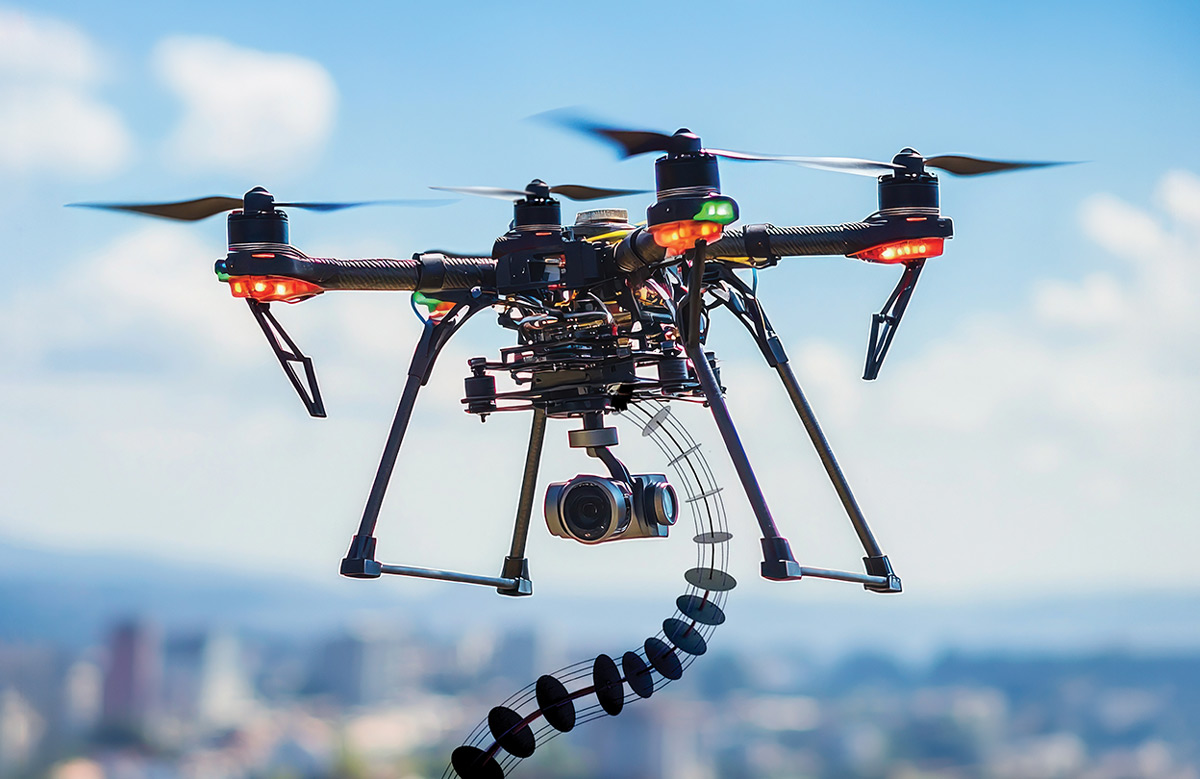
Farrokh Janabi-Sharifi (Mechanical, Industrial, and Mechatronics Engineering) received funding from the Canada Foundation for Innovation to establish a multi-institutional research hub and two satellite sites for the development of unmanned aerial vehicles with dextrous robotic arms.
Owais Khan (Electrical, Computer, and Biomedical Engineering) received funding from the Canada Foundation for Innovation to develop computational technologies that will lead to new, non-invasive and personalized cardiovascular treatments.
Alexandra Mazalek (Media), CRC in Digital Media and Innovation, and Richard Lachman (Media) received a grant from the Canada Foundation for Innovation to establish a network of flexible collaboration spaces for research into embodied extended-reality technologies and their social impacts.
Jessica Penney (Sociology) received funding from the Networks of Centres of Excellence of Canada via ArcticNet to evaluate the effectiveness of participant photography as a research method among Inuit communities by documenting local perspectives about the Muskrat Falls hydroelectric project.
$62.5M
Total municipal, provincial and non-Tri-Agency federal funding
$55.1M
Total non-Tri-Agency federal funding
Provincial Funding
Yeganeh Bahoo (Computer Science) received funding from the Ontario Ministry of Colleges and Universities to support the development of improved computer-aided design (CAD) approaches for 3D-printing, which will benefit applications from automotive to aerospace.
Anton de Ruiter (Aerospace Engineering), received funding from the Ontario Centre of Innovation to develop intelligent multi-rover robotic systems for space exploration, with a focus on developing autonomous robots to explore the Moon and Mars.
Sarah Sabatinos (Chemistry and Biology) received funding through the PSE Pilot Program to support her research into boron-based pharmaceutical compounds. These little-studied compounds have the potential to expand treatment opportunities for conditions such as pancreatic cancer, as well as inhibiting growth of viral, bacterial and fungal cells.
Municipal Funding
Raktim Mitra (Urban and Regional Planning) received funding from the City of Mississauga to investigate the short-term effects of the city’s shared e-bike and e-scooter micromobility pilot program.
Roxana Suehring (Chemistry and Biology) received funding from Nipissing First Nation to study PFAS and persistent, mobile and toxic (PMT) plastic contaminants within Nipissing First Nation traditional territory waters, fish and animal life to better protect these vital resources.
$6.9M
Total provincial funding
$0.5M
Total municipal funding

TMU’s research collaborations with industry, not-for-profit and community partners facilitate innovative solutions to real-world problems, benefitting Canadians through improved health care, social equity, culture, science, technology and economics.
Alexandre Douplik (Physics) received funding from Verity Pharmaceuticals to advance the development of a fine needle for injections with hopes of reducing pain and bleeding, and avoiding damage to nerves and tissues, when administering medications.
Kathleen Hammond (Law), received funding from the Canadian Foundation for Legal Research to examine the use of Section 10 of An Act respecting First Nations, Inuit, and Métis Children in recent case law. Section 10 defines and establishes the best interests of the Indigenous child regarding decision-making for child and family services.
Nina-Marie Lister (Urban and Regional Planning) received funding from ARC Solutions in support of her research into landscape and habitat connectivity, exploring opportunities to recover and protect biodiversity across Canada’s southern urban territory.
Hadis Zarrin (Chemical Engineering), earned funding from the Rideau Hall Foundation via the 2025 Canadian Queen Elizabeth II Diamond Jubilee Scholarship, supporting her research into sustainable water-energy nexus technology.
$22.9M
Total industry and non-government funding
$10.4M
Industry funding
$12.4M
Foundation and non-profit funding
Centres and Institutes
The Creative School launched Chrysalis, an innovation hub and performance space fostering multidisciplinary collaborative research, integrating talent and technology for creative productions and immersing students in real-world learning opportunities.
TMU’s Lab2Market network received a $4.25 million funding commitment from the Government of Canada to expand innovation hubs and enhance programming over the next five years. Lab2Market works to turn research innovations into impactful commercial ventures.
TMU broke ground on the Smart Campus Integrated Testing Hub (SCITHub), the world’s first 100 per cent digitally enabled building, with Jenn McArthur (Architectural Science) as principal investigator. Research will explore optimizing building performance with smart city technologies, including AI and digital twin integration and comprehensive decarbonization solutions, to develop the offices and homes of the future.

Photo: Jeremy Mimnagh, “RISE: Fall Dances 2022” by School of Performance