How TMU and Penn State are teaching students to understand each other
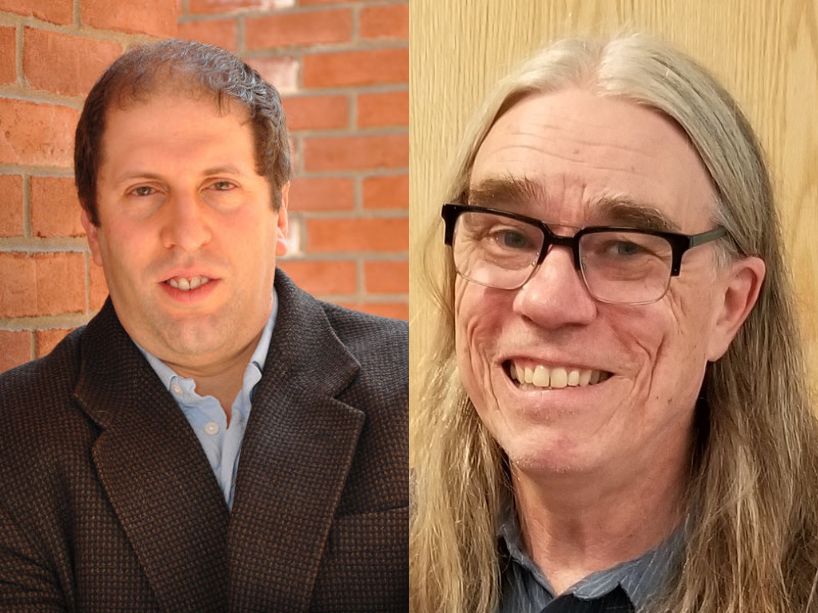
When Penn State University professor Robert Speel reached out to TMU’s Department of Politics and Public Administration with an idea for a cross-border course, he never imagined it would grow into a 20-year partnership.
Since 2006, students from TMU and Penn State have studied Canadian and U.S. politics together in the same classroom. They compare elections, public policy and the ever-changing relationship between the two countries.
“I had been looking to partner with a Canadian institution to teach Canadian politics to U.S. students in Canada due to my own research and teaching interests. I researched Canadian universities in southern Ontario and thought that TMU was a good fit for Penn State due to its location in downtown Toronto,” says Speel.
The course, called North American Politics, (external link) is co-taught by Speel and TMU professor Greg Inwood. While in Toronto, Penn State students live at TMU’s International Living Learning Centre. They get a full dose of Canadian culture through field trips to Queen's Park, Mackenzie House, the Royal Ontario Museum and the CN Tower.
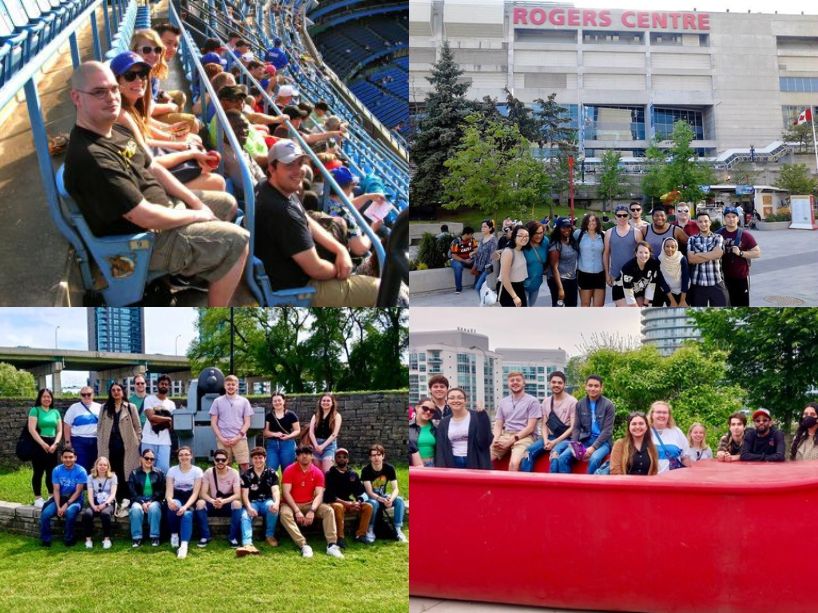
Students on field trips experiencing Canadian culture.
“I can't believe it's been 20 years,” says Inwood. “Each year that we teach, we are renewed with enthusiasm about how much interest there is among students to pursue the study of Canadian-American relations.”
“Both Penn State and TMU agreed that it would be a useful, interesting and unique experience for students to sit together in the classroom in this way and explore the wide range of issues that exist between Canada and the United States,” says Inwood.
A course that changes with the times
The course's goal hasn’t changed, but the conversations in the classroom have. They shift along with the real-world relationship between Canada and the U.S.
One constant theme is how prime ministers and presidents get along.
"We've gone through several prime ministers and presidents in these 20 years, and it's always been interesting to watch how things unfold. There's been consistency across tensions in the relationship, but mostly partnership, cooperation, collaboration — until the most recent president came along,” says Inwood.
For Speel, the course has evolved full circle with the Canada-U.S. relationship.
"When we first started teaching the course, the United States was bogged down in the Iraq War… This year when we taught the class, the United States had become bogged down with the Iran war.”
Recent classes have dug into trade tensions, political leadership and the challenges facing the Canada-U.S. relationship today.
Learning from each other, not just about each other
Both professors say the real value of the course comes from students learning directly from one another, not just from lectures.
“It opens their minds, exposes them to perspectives, ideas and ways of doing things that might be different than what they’re used to,” says Inwood.
Classroom debates have also helped students drop stereotypes about the other country, and many keep in touch after the course ends.
“I think our course provides a unique experience to allow Canadian and U.S. students to exchange political ideas together in a classroom,” says Speel. “It’s also rewarding to see students form friendships outside of class to visit sites and restaurants in Toronto and to socialize in the TMU campus area. Thanks to social media and texting, some of those friendships have become permanent.”
Seeing both sides of the border
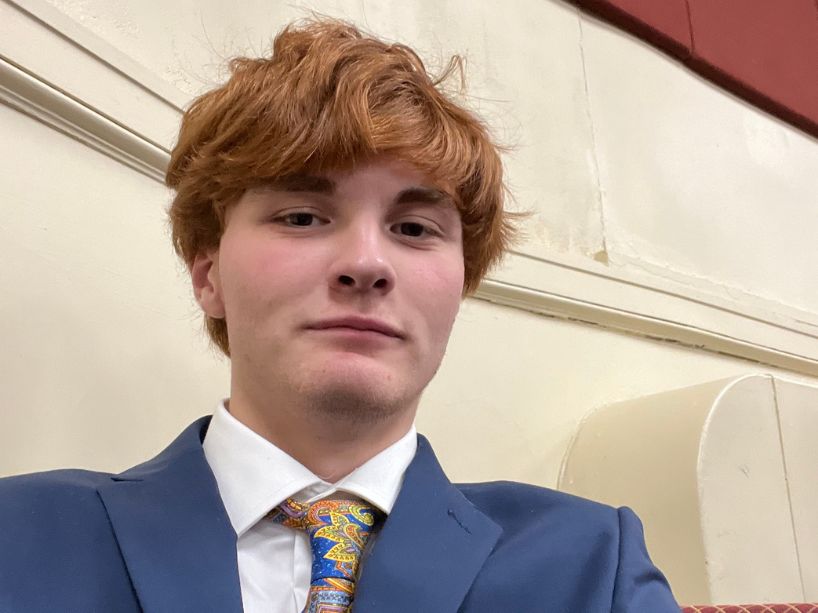
Max Rossman is a fourth-year student at Penn State University and took the North American Politics course this summer.
For Max Rossman, a fourth-year Penn State student who took the course this summer, hearing Canadian classmates’ views was the highlight.
“It was interesting to hear how Canadian students viewed issues that I had only considered from an American perspective. Their experiences and opinions helped me understand that people can interpret the same events differently depending on their country's history and political system,” says Rossman.
He says following current events in real time made the discussions hit harder. “The course gave me a greater appreciation for the importance of cooperation and communication between Canada and the United States,” says Rossman.
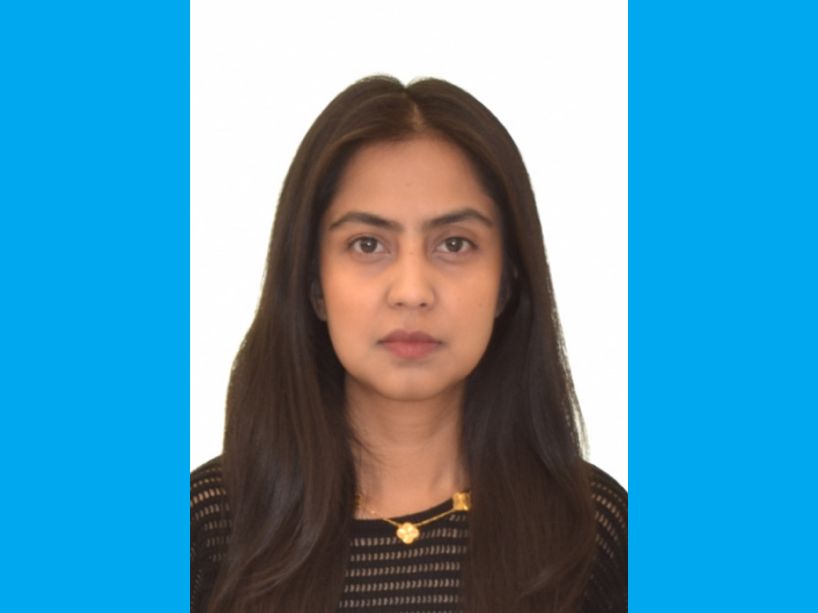
Geti Hakimi is a third-year student at TMU and took the North American Politics course this summer.
Geti Hakimi, a third-year TMU politics and governance student, signed up to better understand how the Canada-U.S. relationship got where it is today.
“I appreciated that students from both Canada and the United States shared their perspectives respectfully and objectively, and that everyone expressed a desire for a more positive and peaceful relationship between the two countries,” says Hakimi.
She also liked watching the two professors from different universities tackle the same subjects.
“It was interesting to see how they sometimes analyzed the same issue differently while complementing each other’s ideas rather than contradicting one another,” she says. “The classroom environment was very friendly and welcoming.”
A partnership built for uncertain times
As Canada and the U.S. work through a tense stretch, Inwood says conversations like these matter more than ever.
“Our hope is that fundamentally our Canadian students will understand the United States better, the Americans will understand Canada better, and that will lead to an ongoing, stable, secure, positive relationship between the two countries,” says Inwood. “Every little bit adds up and counts, and maybe our partnership contributes to that.”