This TMU PhD student is teaching robots to help humans feel less alone
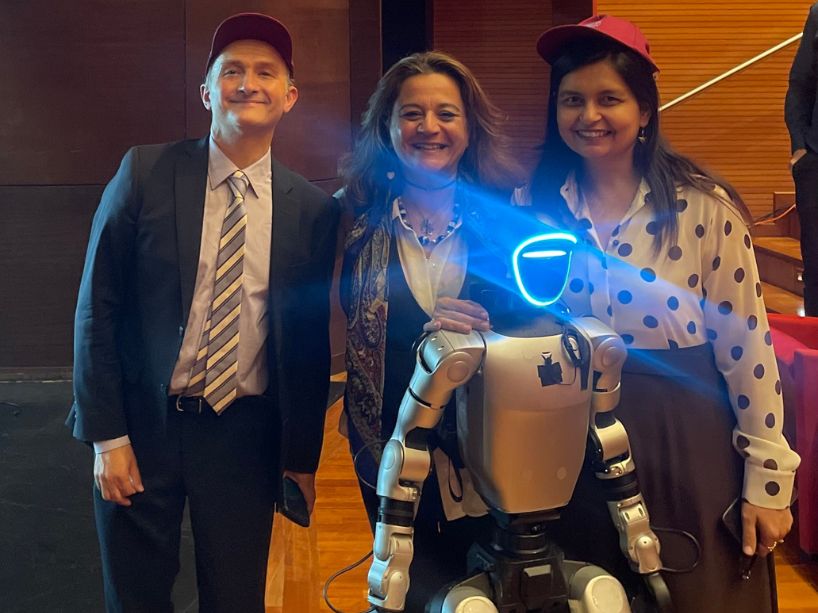
After moving from Istanbul to Toronto, TMU PhD candidate Mehnaz Aydemir struggled to find a sense of belonging through her immigrant experience.
“As an industrial designer, I was inspired to look into inclusive design and started questioning industrial design principles after noticing a lack of cultural connection in digital technologies for diverse communities,” says Aydemir.
That experience sparked a research question throughout her Canadian education: can human-robot art collaboration (HRAC) help people feel more connected?
Now in her fourth year of TMU's Media and Design Innovation (MDI) program, Aydemir studies how multisensory experiences with digital technology can create a sense of belonging and presence for abled and disabled bodies.
She is supervised by Richard Lachman, professor at the RTA School of Media.
“Feeling alienated is part of digital technology, and it's growing,” says Aydemir. “As one part of my research, I started looking from the human-machine connection’s point of view to help understand this collaboration between robots and humans.”
Building a prototype
Aydemir’s first thesis prototype, Giselle, was a mannequin incorporating abstract artwork and designed to engage all five senses.
Its chest pulses with red light to simulate a heartbeat through eye connection. When someone hugs or touches its cheek, hand, shoulder, arm or ribs, a video plays on a nearby wall showing an emotional reaction — making every interaction feel personal.
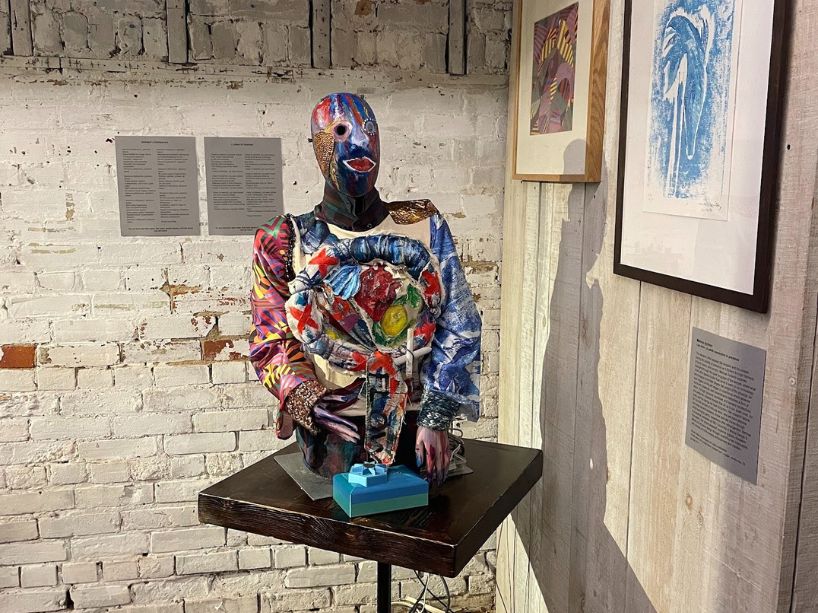
Aydemir’s prototype Giselle on display at Design TO.
The prototype was featured in the Design TO exhibit and at the RE:SciComm Conference 2026, (external link) exploring how interactive art can foster a sense of belonging.
Aydemir used TMU’s Design Technology Lab to UV print sleeves for the mannequin and the Library Collaboratory Lab to 3D print a diffuser box that releases scent for a sensory experience.
The prototype was featured in the Design TO exhibit and at the RE:SciComm Conference 2026, (external link) exploring how interactive art can foster a sense of belonging.
Aydemir used TMU’s Design Technology Lab to UV print sleeves for the mannequin and the Library Collaboratory Lab to 3D print a diffuser box that releases scent for a sensory experience.
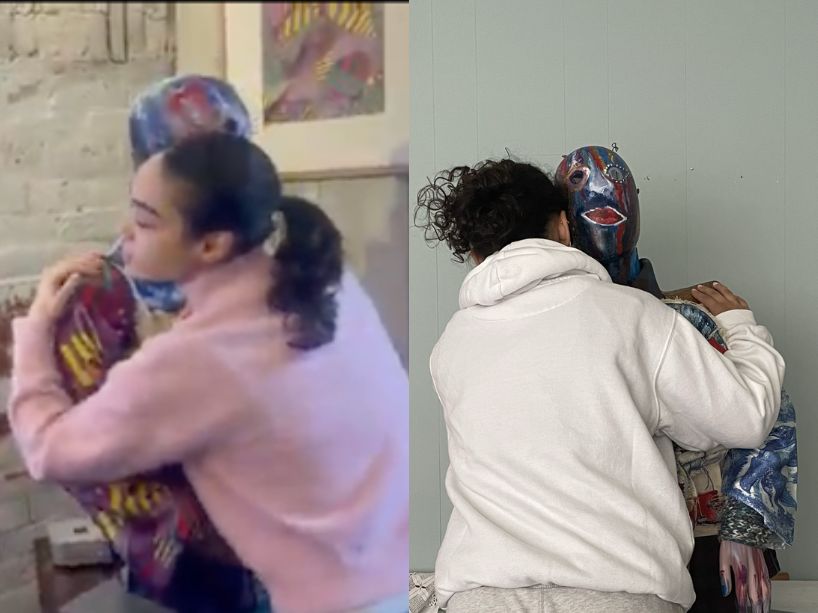
People interacting with the Giselle mannequin.
“It was great to engage with different people and observe their reactions,” says Aydemir. “Some people were scared, but there were some who were fascinated and hugged Giselle.”
Aydemir is now developing additional prototypes that expand on this work as part of her doctoral thesis.
Taking the research to Italy
Aydemir’s work caught international attention. She’s now part of a research collaboration between TMU and the University of Calabria in Italy, partnering with Giancarlo Fortino, one of Europe's leading researchers in artificial intelligence and human-robot interaction.
“I had a meeting with him, and he was very interested in creating with a designer’s point of view in the context of human-robot artistic collaboration,” says Aydemir.
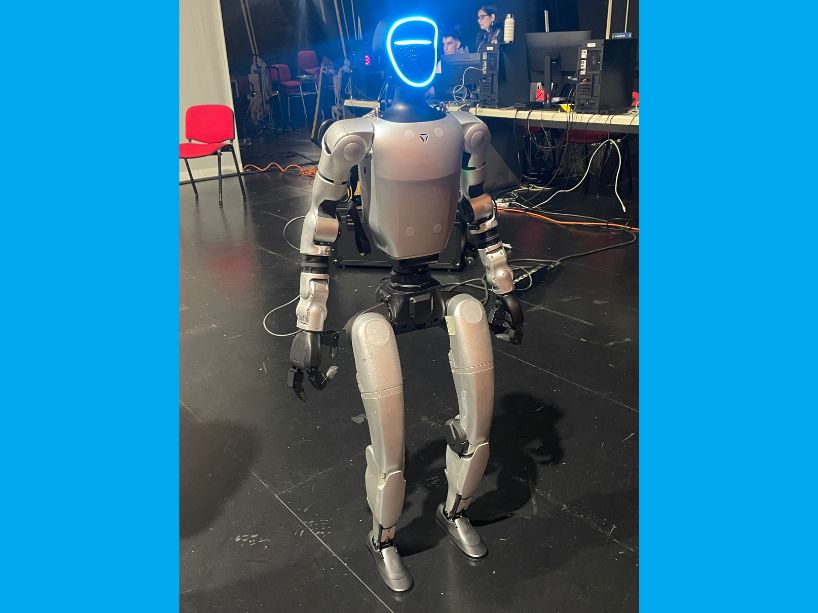
Robot from the Music4D project at the University of Calabria research conference.
Aydemir published her first paper co-authored with Fortino and Rashmi Chawla at the University of Calabria for the IEEE Smart World Congress 2026, an international conference on smart technologies taking place in September in Rende, Italy.
Through the collaboration, Aydemir is part of the next phase of the RoboCon project, which focuses on human-robot art collaboration. The research directly relates to her MDI thesis.
Why it matters
Aydemir's goal isn't to replace human connection with technology — it's to use technology as a tool to deepen it. She's also focused on making sure these systems work for people of different backgrounds and abilities.
“My third prototype seeks to address this gap by examining how collaborative artistic experiences with robots may contribute to a sense of presence, belonging and meaningful engagement,” she says.