TRC review: 10-years of reconciliation work at TMU – and what comes next
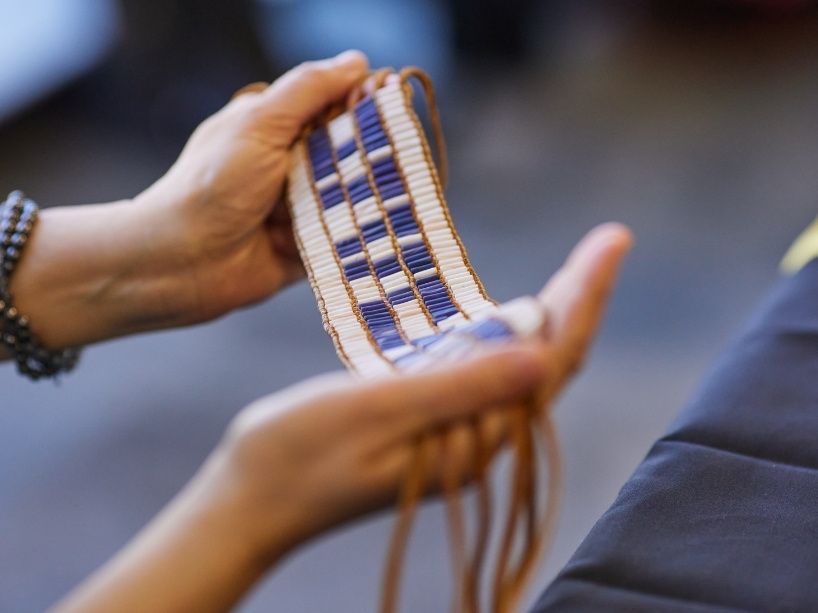
Ten years have passed since Canada’s Truth and Reconciliation Commission (external link) (TRC) released its (PDF file) 94 Calls to Action (external link) . For TMU, that milestone is both a moment to reflect and a prompt to keep moving.
To mark the anniversary, the Orange Shirt Day/National Indigenous Peoples Day planning circle launched the First 10/Next 10 Poster Series. The project looks back at a decade of institutional change guided by the TRC's calls and TMU's own 2018 TRC Community Consultation Summary Report – and commits to the next ten years of work.
The poster series was launched under the leadership of Crystal Osawamick, Indigenous events and special projects manager; Sally Goldberg Powell, Centre for Excellence in Learning and Teaching (CELT) and School of Journalism; Rachel Barreca, Student Affairs; Sierra Lefave, Student Association for Indigenous Growth in Economics (SAIGE) and Kathleen Peets, School of Early Childhood Studies.
How the TRC Strategic Working Group supports action
Shortly after the 2018 report was published, TMU formed the Truth and Reconciliation Strategic Working Group. The group guides reconciliation efforts across campus including responding to the community’s evolving needs, commitments and parallel initiatives and implementing the (PDF file) Standing Strong (Mash Koh Wee Kah Pooh Win) Task Force (SSTF) recommendations.
Together, these structures continue to guide how reconciliation efforts are embedded into curriculum, student supports, campus spaces and institutional practices.
Enhancing Indigenous education and honouring Indigenous histories: 2025 progress
Over the past year, the working group has provided guidance and feedback on several initiatives, including the following:
In partnership with the Centre for Excellence in Learning and Teaching (CELT), faculty and contract lecturers have access to a series of supports to deepen Indigenous pedagogical practice and strengthen Indigenous knowledge, relationships and teaching excellence across TMU.
- Initiatives include one-on-one consultations, department-specific sessions and Indigenous pedagogy workshops; the Indigenous Pedagogies and Curriculum webpage that will continue to grow with resources for faculty and curriculum committees; and Curriculum Design Support Circles for recipients of the Indigenous Education Council (IEC) Curriculum Development Fund, financially supported by the Office of the Provost and Vice-President, Academic.
In partnership with the G. Raymond Chang School of Continuing Education and in consultation with Indigenous faculty, advisors, Elders and academic leaders, a comprehensive review of all online courses delivered by The Chang School is underway to map changes to curriculum content deemed to be harmful to Indigenous Peoples and learners. These actions are strengthening curriculum quality and improving student experience.
Course content identified as requiring urgent attention has already been revised and students were provided updated resources. The audit findings are now helping to shape a sustainable, school-wide plan to ensure Indigenous content is accurate, culturally grounded and responsibly integrated.
In 2025, TMU opened its doors to the inaugural class at the School of Medicine. Through the leadership of TMU School of Medicine’s Indigenous health lead Dr. Jamaica Cass (now moved on to Queen’s University), Indigenous perspectives have been integrated into medical training from the outset. A holistic admissions approach ensures that academic strength is assessed alongside skills and lived experiences, creating clear pathways for Indigenous applicants and under-represented groups.
Advancing Indigenous student support and experiences
Across TMU, student-facing teams, including Gdoo-maawnjidimi Mompii Indigenous Student Services and Indigenous Initiatives, both in the Office of the Vice-President, Equity and Community Inclusion (OVPECI) and the Office of the Vice-Provost, Students, have collaborated to provide culturally responsive and holistic support to Indigenous students.
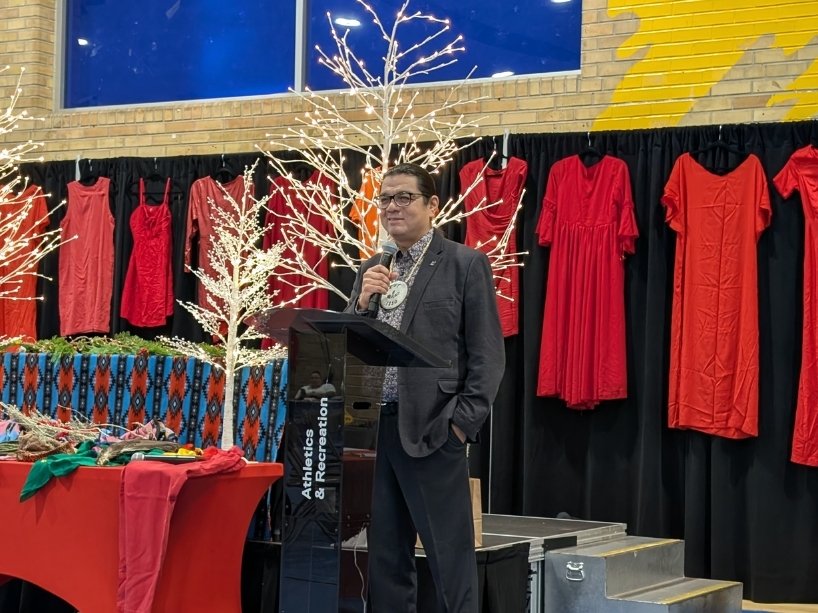
Hosted by the Indigenous Education Council and the Ceremonials team, TMU welcomed Duke Peltier, former Ogimaa (Chief) of Wiikwemkoong Unceded Territory for the first time. He discussed the Robinson Huron Treaty Settlement Process, Indigenous governance, treaty obligations and the road to self-determination.
TMU hosted Peltier as part of Indigenous Education and Treaties Recognition Week, which invites the community to deepen understanding of Indigenous experiences, treaty relationships and our shared responsibility for reconciliation through panels, workshops and events.
This year, Gdoo-maawnjidimi Mompii Indigenous Student Services (GMISS) welcomed two high school class visits from Mushkegowuk/James Bay and the Wandering Spirits School (Toronto) (Kapapamahchakwew) to TMU, building pathways for education and representation. GMISS also hosted TMU’s first Cedar and Smoke Winter craft market, welcoming 25 vendors and over 150 patrons to the TMU campus.
In collaboration with TMU’s Urban Farm, GMISS’s “Tea n Talk Summer Series” offered a welcoming space for First Nations, Métis, Inuit and other Indigenous students. This year, Indigenous students gathered on the rooftop of TMU’s Urban Farm for a summer community-building series. Together, they participated in activities such as wood-burning to create new garden signage, while learning about the medicines grown in the Indigenous Foodways Medicine Garden to build knowledge and strengthen relationships in a supportive environment.
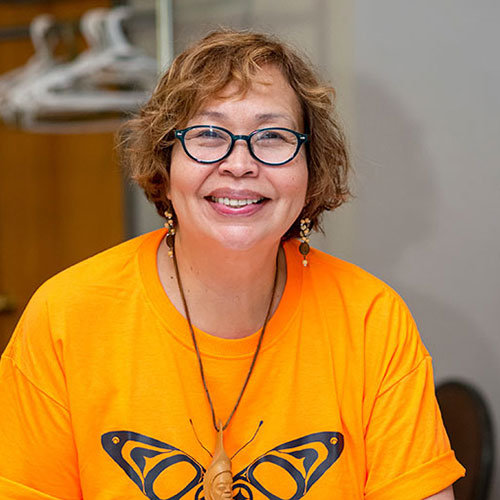
This year, Monica Mckay, director Indigenous Initiatives, was awarded the President’s Blue and Gold Award in recognition of more than three decades dedicated to Indigenous student success, community building and institutional change.
Embedding Indigenous culture and visibility into community spaces
Extending outward from TMU’s efforts to create an inclusive environment through knowledge, resource and service spaces, Indigenous Placemaking at TMU continues to shape TMU’s campus environment, bringing Indigenous representation into the physical community space.
The reimagined School of Medicine and surrounding public environment were shaped through deep collaboration with Indigenous partners and guided by the Indigenous firm Two Row Architect and TMU’s Indigenous Space Sub-Working Group.
These new additions embed Indigenous knowledge and cultural presence directly into campus space through features such as seasonal gathering spaces, pollinator gardens with culturally significant plantings and a newly designed healing garden that reflects Indigenous relationships to land, medicines and community well-being.
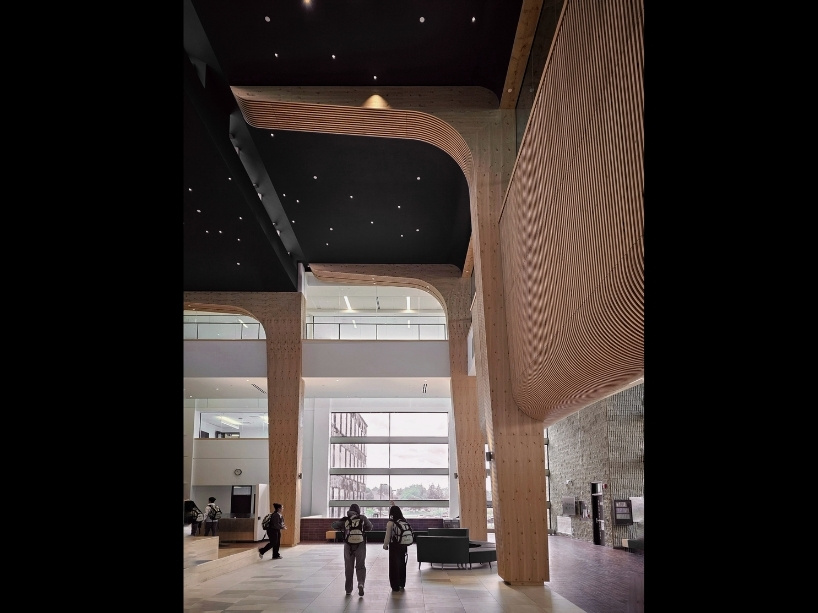
Inside the TMU School of Medicine is a replica of the Ojibwe star map spanning the atrium ceiling. Designers isolated and layered individual stars to create a continuous night sky, with the starry-night lighting symbolizing the celestial guides that have long supported learning, care and community among Indigenous peoples. Photo by Haley Zhou, Diamond Schmitt.
Going forward
The Truth and Reconciliation Strategic Working Group, comprised of Provost and Vice-President, Academic, Roberta Iannacito-Provenzano; Vice-President, Equity and Community Inclusion, Tanya (Toni) De Mello; and Elder (Ke Shay Hayo) and Senior Advisor, Indigenous Relations and Reconciliation, Joanne Okimawininew Dallaire, will focus on three interconnected priorities to deepen TMU’s commitments:
1. Expand the integration of Indigenous ways of knowing, being and doing across curriculum policies and university practices: This includes supporting faculty-led Indigenization efforts, fostering Indigenous-focused field placements and embedding Indigenous practices into campus life.
2. Strengthen recruitment, retention and success of Indigenous students, faculty and staff: By delivering enhanced supports, targeted hiring strategies and cross-faculty implementation support.
3. Training and professional development initiatives for TMU employees: Expand and coordinate meaningful training and professional development for TMU employees.
Through focused meetings with Indigenous community members and allies, campus updates and regular progress tracking, this next phase keeps reconciliation work at TMU moving forward.
Have an initiative to share?
As we continue this shared journey toward truth and reconciliation, we celebrate the remarkable work happening across our university. Every initiative, project and resource contributes to our commitment to supporting Indigenous students, faculty, staff and the broader community. If you are involved in the recruitment, retention and success of Indigenous students, faculty and staff, in curriculum development, training programs, or other initiatives, we warmly encourage you to share your work with us.
To share your initiative or engage with the TRC Strategic Working Group, contact Rose Sandino at rose.sandino@torontomu.ca.
Together, we can strengthen our path toward a more inclusive and equitable future.