Summer 2027 Applications due November 9, 2026 - please submit to your local ICE recruiter
Click the links below to see what kind of exciting research is going at the ICE2027 host destinations
Principle Investigator |
University, City |
Research Keywords |
UPEI, Charlottetown |
Green and sustainable chemistry, Catalyst designSmall-molecule activation | |
Western, London |
organometallics, main-group, energy and sustainability, carbon dioxide fixation, boron | |
|
||
USask, Saskatoon |
Supramolecular chemistry, macrocycles, molecular cages, intermetallic bonds, functional materials |
|
TrentU, Peterborough |
carbon materials, environmental remediation, surface functionalization, ATRP, click chemistry |
October 2026 - Submit your application to your faculty recruiter (below) by Nov 9th
Nov/Dec 2026 - Successful applicants will be matched with summer supervisor and informed
Dec/January 2027 - Work with faculty host to prepare and submit your NSERC USRA or equivalent summer grant
May 2027 - Travel (travel costs are covered) to your host institution and begin your research
August 2027 - Travel to Saskatchewan, SK (travel costs are covered) to present your summer research to the rest of the ICE participants
Below are just some of the reasons why you may want be a part of ICE this summer:

1. Expand your network and leave your comfrot zone by travelling and working at other Canadain Universities

2. It is an amazing experiential learning opportunity where you can be a part of cutting edge research in the areas of nanomaterials, solar energy, catalysis, and so much more!

3. You get the opportunity to apply what you are learning in the classroom and further develop your critical thinking and problem solving skills with the help of amazing mentors.
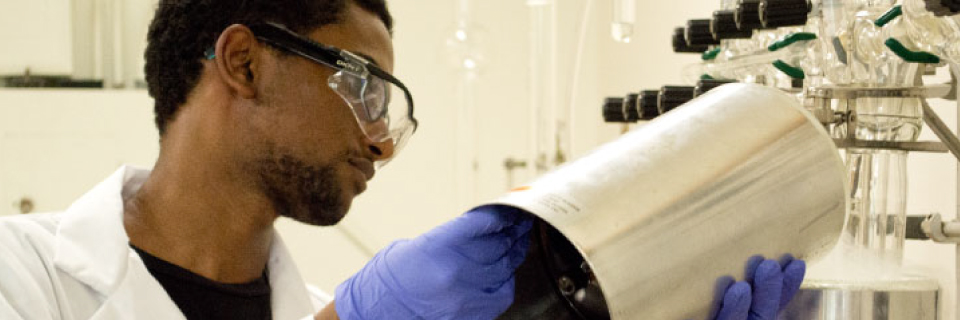
4. You get paid ($$$) and have the opportunity to go to conferences and the travel expenses are also covered as part of the program!
In conversation with Dr. Lisa Rosenberg, one of the co-founders of the ICE program
Q. Lisa, how did the ICE exchange get started in 2004?
A. Deryn Fogg and I had a series of discussions arounded the fact idea that across Canada, chemistry researchers were eager to recruit outstanding graduate students, and that we were all essentially training each others’ future coworkers. Recognizing the great success of the RISE programs aimed at helping undergraduate students to think maturely and broadly about their career options in mass spectrometry and photochemistry, we decided our field of inorganic chemistry needed the same type of program to increase its visibility among talented undergraduates. The goal was to identify and nurture the abilities of promising undergraduates, by giving them exciting, challenging, out-of-province summer research positions. We kept it simple the first year: Deryn sent a great student to spend the summer working in my lab in Victoria. Sébastien Monfette, who is now a research scientist at Pfizer, still speaks of how formative that experience was for him. Deryn had just become Chair of the Inorganic Division of the CSC. At the Division AGM that year (2004), she and I, articulated her vision for a larger-scale program, and it was unanimously approved. She commissioned me, as a Division Executive member at large, to set up the ICE program as we now know it.
Q. Lisa, reflecting on your original motivation for the program, what would you say are some of it greatest accomplishments over the last 10 years?
A. As we expected, the program has identified and supported many outstanding students over the years, many of whom have gone on to graduate school in Chemistry, and other professional careers. What we did not fully anticipated was the collegiality and community-building that would occur among the faculty as well. The recruitment portion of the program puts us in the unusual position of selling other peoples’ research to our brightest undergraduates, and at the end-of-summer conference we get to know our colleagues and about their research programs in an informal setting where the focus is not on us (!). The network building and exchange of ideas moves outwards from this program in great waves, for students and faculty alike.
Pictures and Alumni coming soon... but while you wait, you should consider becoming a future alumni yourself!
ICE Program Coordinator
Dr. Kate Marczenko (external link)
Carleton University
KatherineMarczenko@cunet.carleton.ca
ICE Recruitment Coordinator
Dr. Gab Ménard (external link)
University of Calgary
gabriel.menard@ucalgary.ca (opens in new window)
ICE Webmaster
Toronto Metropolitan University