COVID in Focus: What We Learned
Over the past two months, City Building Ryerson has explored the COVID-19 pandemic’s wide-ranging impact on cities through our COVID in Focus webinar series. This series presented new Ryerson research that delves into the effect of policy measures enacted during the pandemic, as well as newly apparent needs for pandemic preparedness and the protection of public health in an urban context.
To everyone who participated, thank you! To watch any session, find recordings of all four webinars on our Events page.

Apartments that promote health and wellbeing
Recent shelter-in-place guidelines have caused us to think about our homes in a new light. Our first webinar featured Dr. Terri Peters (Department of Architectural Science) in How Our Homes Impact Our Health. Interested in developing practical guidelines for architects in the future of apartment design, Dr. Peters led a literature review aimed at uncovering the essential elements of health-promoting architecture, and strategies for increasing the health resilience of multi-residential housing. Her presentation walks us through the notable ways restorative environmental design can be employed to support health and wellbeing of residents--during a pandemic and in general.
Getting around safely in the age of physical distancing
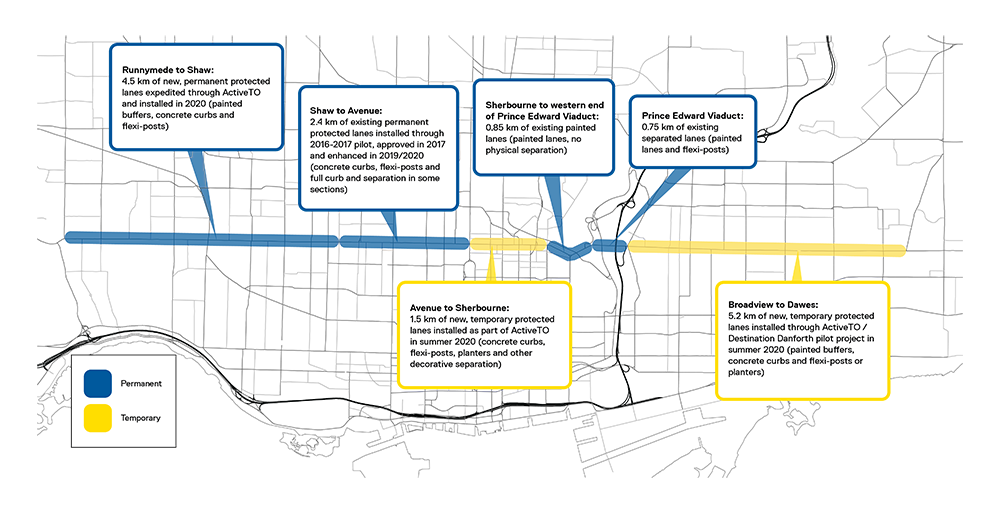
The pandemic has led to a boom in cycling in Toronto. Our second webinar featured Dr. Anne Harris (School of Occupational and Public Health) <link> discussing the background on her latest report released with City Building Ryerson, Lane Change: Safer Cycling Infrastructure in Toronto. This report, which quantifies the estimated injury impacts of different cycling facility designs along Bloor-Danforth, involved careful data analysis and a consideration of COVID-19 impacts. Learn what went into her team’s measurement of relative safety in the recording, then download the report. This contribution is of particular value to local policy makers and advocates as the City of Toronto continues to expand its cycling network.
Implementing policy wisely for road safety
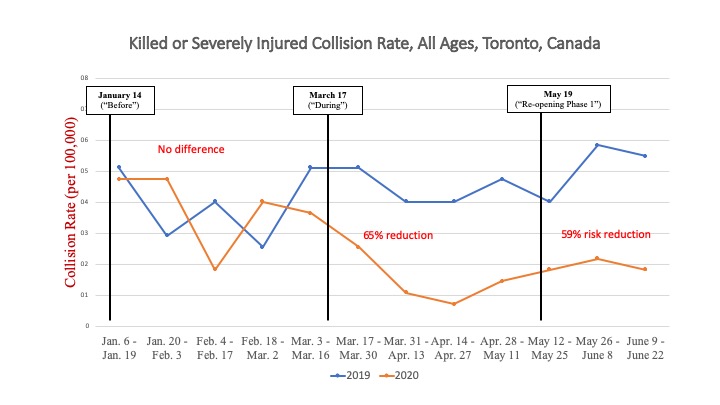
Stage 1 of the City of Toronto's COVID-19 emergency response coincided with a 65% reduction in collision rates on Toronto streets; when traffic levels dropped, , so did road injuries. “We temporarily solved one of the biggest injury threats,” said Dr. Linda Rothman (School of Occupational and Public Health) in our third webinar, Road Safety as a Public Health Issue. In this session, Dr. Rothman outlines why road safety is a matter of public health, and makes the case for creating evidence-based policy that extends the temporary positive outcome of fewer road injuries beyond the pandemic. Dr. Rothman's continuing research will assist in decision making by measuring the results of City of Toronto’s road interventions.
Designing neighbourhoods for health resiliency
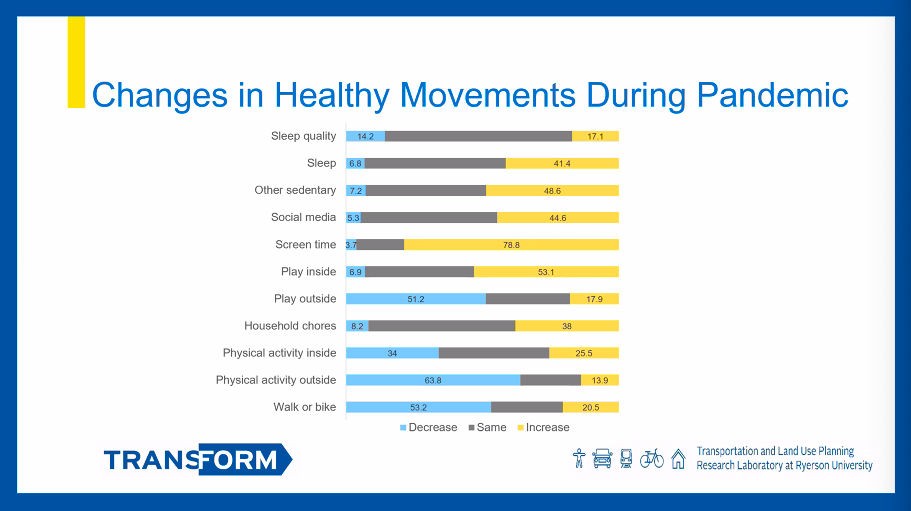
Our fourth webinar presented Dr. Raktim Mitra (School of Urban and Regional Planning), who explained his latest research that mapped data from a national survey of young people’s movement behaviour during Stage 1 of Canada's COVID-19 response to neighbourhoods in the GTA. His findings indicate that there are neighbourhood and built environment variables that help--and that hinder--healthy movement and outdoor activity among children and youth during a pandemic. Looking closely at these results can reveal essential elements of healthy neighbourhood design.