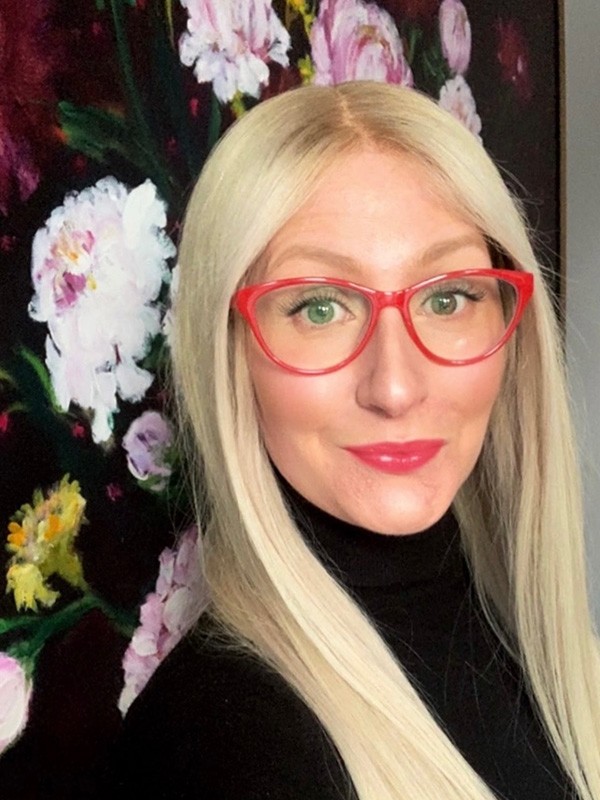
Dr. Faye M. Fraser
Dr. Faye M. Fraser brings over a decade of frontline experience working with sexually exploited and incarcerated Indigenous youth in prisons, courts, and rehabilitation centres through which she performed crisis intervention and advocacy related to Indigenous youth human rights. Her deep commitment to justice has fostered collaborative relationships with Indigenous political leaders and contributed to policy advocacy at both municipal and provincial levels, including at the Legislative Assembly of Ontario.
Faye is a scholar, writer, and activist whose interdisciplinary research bridges feminist international relations, critical legal studies, and decolonial methodologies. She holds a PhD from York University’s Department of Social and Political Thought, an MA in Law and Social Theory from York’s Department of Socio-Legal Studies, and an HBA in Political Science Pre-Law from Lakehead University. She has held academic appointments at Toronto Metropolitan University (School of Child and Youth Care) and Lakehead University (Department of Political Science). Her work critically interrogates the epistemological co-production of racist and anti-racist political thought, with a focus on how sex is entangled with law and state violence.
Faye’s research in the field of critical youth studies has also been published in different venues. For example, her publication titled On the Question of Soul Wounding: Secular Debility, Biopolitics and Canada’s Right to Maim [Disability Studies Quarterly. 2023. 43 (1), 1-24] explores Thunder Bay’s political economy of health and the production of debility within Nishnawbe Aski Nation (NAN) Treaty 9 and Treaty 5 communities. As well, her chapter titled ‘International Institutions, Global Governance, and Peacebuilding’ in Kim, Hallward, Mouly, Siedel, & Wai’s edited volume, Handbook of Peace & Conflict Studies (2024) examines human rights, international aid organizations, and political humanitarianism of “helping professions.” Her book chapter titled ‘Settler Violence, Indigenous Youth, and Anti-Black Methodologies in In/Security’ in Gendering Global Politics, Oxford University Press [forthcoming 2026], examines feminist decolonial methodologies as they pertain to Indigenous theories of trauma, how Indigenous communities resist the conditions of gender-based settler colonial domination, and its relationship to anti-Blackness. Finally, her article Queering Sexual Morality: Disenchantment and the Two-Spirit Other [under peer review, Journal of Theoretical and Philosophical Psychology] examines youth sexual health, technology, and digital violence.
Faye’s research projects theorize sexual empire; a framework that examines how global epistemic systems are embedded in legal and political institutions, sustaining material conditions of imperial violence and hierarchical dehumanization of sexual minorities and children. Her current manuscript, Epistemologies of Imperial Feminisms, offers a critical archaeology of feminist moral regulation theory and its relationship to sex work law and policy, analyzed through Indigenous and postcolonial feminist lenses. The project interrogates feminist legal proceduralism, epistemic violence, and the ethical contradictions of settler feminist complicity in sexual imperialism. Her current research is supported by the Social Sciences and Humanities Research Council of Canada (SSHRC) and includes a transnational project titled Building an International Partnership to Research and Address Reparative Justice in Post-Conflict Situations: Canada, Africa, and Europe. This initiative brings together scholars and grassroots partners from Indigenous nations across Turtle Island, as well as from Congo, Uganda, Sierra Leone, Liberia, Bosnia, and Europe. The project focuses on examining models of reparative justice, particularly in relation to resource extraction, militarization, and gender-based violence.