SDG 4: Quality Education
SDG 4: Quality Education
Toronto Metropolitan University is committed to advancing quality education at all stages of life: from early childhood through to postsecondary and beyond. Through our academic programs, research and community partnerships, we work to remove barriers and expand access to meaningful learning experiences.
TMU trains the next generation of educators, supports lifelong learning, and provides opportunities for personal and academic development for children and youth, from infancy to high school. Our faculty, students and staff also play a vital role in developing and delivering educational programming that uplifts underrepresented and underserved communities locally and globally.

12 students with refugee backgrounds have to come to Canada to study at TMU through the World University Services of Canada Scholars program
Our goals in action

As outlined in the university’s Academic Plan, TMU prioritizes a high-quality, accessible and inclusive education for all learners, whether undergraduate, graduate or continuing education. The university offers a wide range of programs designed to support diverse pathways to postsecondary education and lifelong learning. TMU is also home to innovative academic offerings in early childhood studies, education, and youth and child care, helping to equip students with the skills and knowledge to support learning and development from the earliest years of life.
- As outlined in both TMU’s Academic Plan and Strategic Vision, the university is committed to delivering an inclusive, accessible and high-quality learning experience for all students. This commitment guides the design of programs, supports for learners, and teaching practices across the institution.
- TMU offers more than 125 undergraduate and graduate programs, over 60 continuing education certificates, and a range of executive education and professional development programs through The G. Raymond Chang School of Continuing Education and other campus partners. Across all levels of study, TMU emphasizes experiential learning, academic excellence and real-world impact.
- TMU’s Faculty of Community Services offers Bachelor of Arts and Master of Arts programs in Early Childhood Studies. The School of Early Childhood Studies prepares students for a range of careers working with young children and their families, as well as in the areas of early childhood research and policy.
- The Faculty of Community Services also offers undergraduate and graduate programs in Child and Youth Care, which seek to prepare students to promote the rights of children and youth, enrich the everyday lived experience of young people facing adversity, and advocate on behalf of young people. TMU is the only university in Ontario that offers a BA in Child and Youth Care. TMU’s Chang School of Continuing Education also offers courses in child and youth care.
- The Indigenous Education Council (IEC) at TMU serves as an advisory group on Indigenous issues and education across the university. The IEC’s vision is to ensure that the next seven generations of Indigenous Peoples will have greater opportunities and success in education at TMU through initiatives that are driven by Indigenous knowledge and ways of being.
TMU’s scholarly, research and creative (SRC) activity contributes to more inclusive and enriching education for children. Our researchers lead projects that address systemic barriers and generate insights to inform inclusive teaching, curriculum design and student support services. This work includes a focus on enhancing learning opportunities for marginalized communities, such as individuals with disabilities and people from low-income backgrounds.
- The Inclusive Early Childhood Service System (IECSS) project is a longitudinal study interviewing families over a 14-year period starting prior to school entry up to grade 3. The study is informed by a social relational theory of disability that recognizes that disablement is the result of an interaction between individual characteristics, social experiences and access to community social capital.
- This project was developed through a partnership with community, academic and policy organizations and covers various areas of the country. These partners offer diverse cultural perspectives encompassing different approaches to supporting families in rural, remote and urban communities. In addition, our partners bring service experience from the childcare, early intervention, health, development and Indigenous service sectors.
- Faculty members at the School of Early Childhood Studies have published several books in recent years with a focus on making children’s first learning experiences intriguing, captivating and fun. Topics covered include sound and music, experiences of urban youth, and curriculum theory.
- The Siakam EdTech Engine is a 12-week virtual accelerator program designed to help early-stage education technology (EdTech) startups from across North America scale their impact. Co-founded by former Toronto Raptor and NBA champion Pascal Siakam’s PS43 Foundation and powered by the DMZ, the program offers mentorship, resources, real-world testing, and funding opportunities.
- TMU Faculty of Science professor Darius Rackus is leading the Biomanufacturing Hub Network (BioHubNet) program with colleagues from the University of Toronto. The program is funded by the Canada Biomedical Research Fund, which aims to increase Canada’s ability to produce life-saving vaccines and therapeutics. BioHubNet will provide cutting-edge, hands-on training to graduate students, postdoctoral fellows and others who are ready to transition to industry. Over four years, the program will produce close to 1,000 highly skilled workers through microcredential courses and experiential learning opportunities, including industry internships and academic lab exchange placements, through its 26 academic, industry, hospital and not-for-profit partnerships.
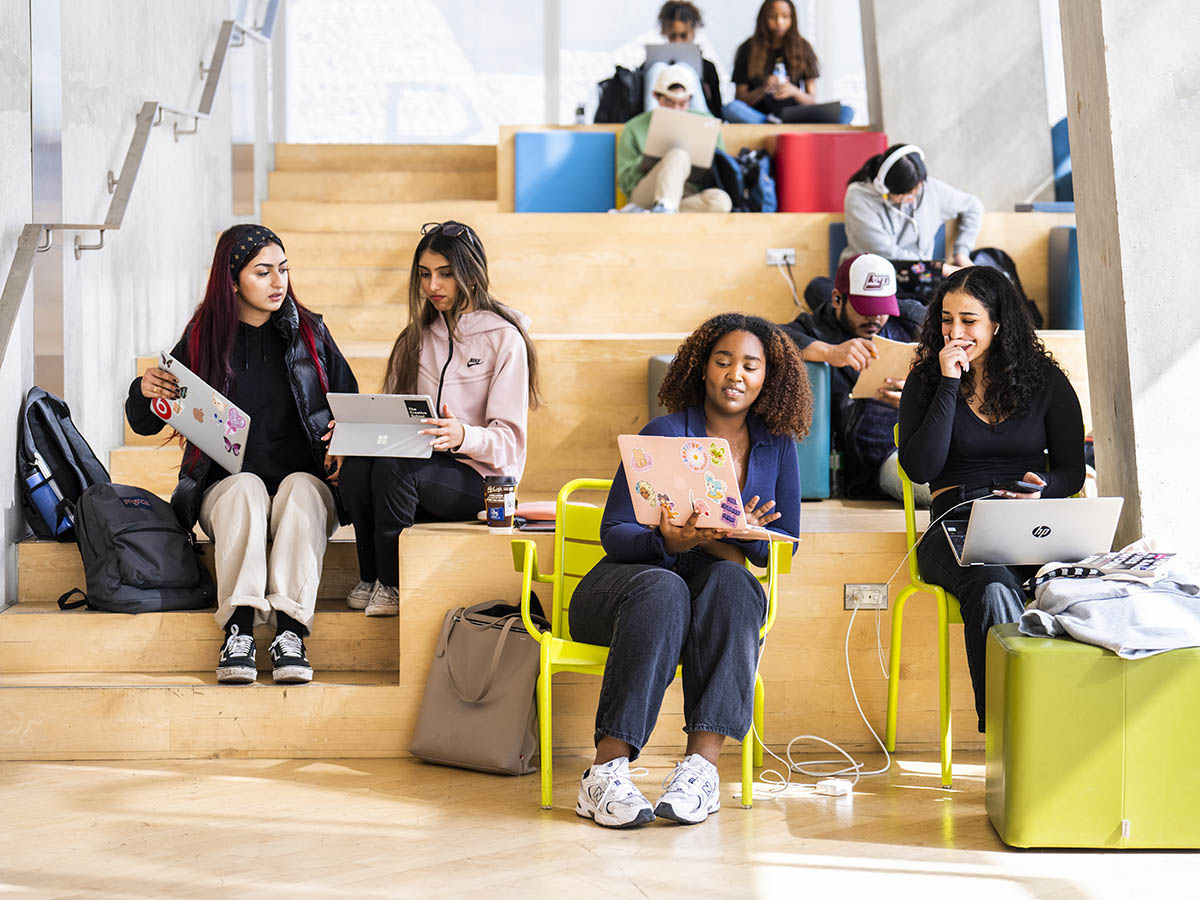
TMU is deeply committed to expanding access to postsecondary education for students facing legal, financial, or social barriers. The university offers a wide range of scholarships, bursaries and awards to support equitable participation and success, including funding opportunities for students from equity-deserving groups. By promoting affordability and reducing barriers, TMU aims to create an environment where all qualified students can thrive and pursue their educational goals.
- The Sanctuary Scholars program offered at TMU via the Office of Social Innovation provides an access pathway specifically for students who hold precarious immigration status. While students with precarious immigration status can enroll in school at the elementary and secondary levels in Ontario, accessing the post-secondary level is often very difficult or even impossible. Sanctuary Scholars may have completed all of their education in Ontario, or may be coming to Canada with high school or even university-level education, but they cannot join their friends and peers in pursuing post-secondary education. This is why at TMU we have worked hard to develop a new access pathway specifically for Sanctuary Scholars.
- Sanctuary Scholar students can study in nearly all departments and programs at TMU. The program allows eligible students to access undergraduate degrees at TMU at domestic tuition fee rates instead of international tuition rates. Access to support to help navigate the university and address any status-related barriers or obstacles is also provided.
- The World University Services of Canada (WUSC) Local Committee is a group of TMU students that facilitates the Student Refugee Program (SRP). The SRP sponsors and supports students with refugee backgrounds to come to Canada to study and become permanent residents. At TMU, we call these students "WUSC Scholars." The committee’s duties include providing resettlement support to students with refugee backgrounds by offering connections, academic support, and integration support through the SRP.
- Through the program, TMU has sponsored a total of 12 WUSC scholars to date. These students have come to TMU to study at the undergraduate level from various countries of asylum including Kenya, Malaysia, Jordan, Lebanon, and Malawi. WUSC scholars have studied in the Faculty of Science, Faculty of Arts and Faculty of Engineering and Architectural Science, and Faculty of Community Services.
- TMU offers a tuition bursary for students who grew up in extended society care (previously known as Crown Wards) in Canada, and are currently enrolled in an OSAP-approved program at the institution. The tuition bursary will cover 50% of a student's tuition and ancillary costs. Several other scholarship and bursary programs are in place to support access to education for students from disadvantaged or underrepresented groups, including Indigenous students and students with disabilities.
Through community outreach and global engagement, TMU extends educational opportunities far beyond the classroom. Faculty and staff regularly lead initiatives that bring science, technology, engineering and math (STEM) learning to children and youth, with a focus on fostering curiosity and encouraging future participation in higher education. TMU also works with international partners to share knowledge and build capacity in communities around the world, helping to expand access to quality education on a global scale.
- Toronto Metropolitan University's Early Learning Centre (ELC) has been providing early learning and care to the community since 1963. The ELC is the school of Early Childhood Studies licensed laboratory early learning and child care centre that provides care for children between the ages of 18 months to five years. Early Childhood Educators create opportunities for children that promote their freedom of expression and enable them to be responsible for their own learning, form positive relationships and actively engage in stimulating experiences that respect their views and ideas. Visit the centre’s website to learn more about registering a child for a spot at the ELC. The EarlyON Child and Family Centre on campus is a place for families to gather, explore, engage with others and have access to resources that will support the development of their child’s sense of belonging, identity, dispositions and independence. The centre hosts free drop-in activities for young children of varying ages.
- SciXchange is the outreach office for the Faculty of Science. The centre offers innovative outreach programs that reach a wide-ranging audience of youths and adults while actively addressing traditional imbalances in STEM disciplines. SciXchange delivers numerous initiatives and partnerships, including Soapbox Science, which showcases the work of women and non-binary scientists; Let’s Talk Science, which delivers free, hands-on engagement opportunities to schools and the community; Eureka Camp, which is accessible to children with financial need; and the Stoodis Science program, which engages First Nations, Inuit and Métis high school students. More information about SciXchange’s educational programs, Indigenous outreach, and events can be found on the office’s website.
- The Peel District School Board and TMU’s School of Medicine, Faculty of Community Services and Student Affairs office are collaborating on the Future of Healthcare Initiative. The project allows students to explore, engage and experience the field of health care through mentorship and coaching, a speaker series, a university course offering, and experiential learning opportunities. The aim is to encourage students to consider post-secondary education and careers in health care and related fields.
- This initiative also includes an admissions pathway that intends to strengthen and increase the volume of applications from students from diverse backgrounds and equity-deserving communities to programs including those in science, community services and medicine.
- P2E x TMU Community Tutoring is a collaboration between the Pathways to Education program at Regent Park Community Health Centre and the Student Life and Learning Support unit at TMU. The program offers high school students a variety of support services aimed at fostering academic success and personal growth. Through this collaboration, TMU undergraduate student tutors provide academic tutoring and mentoring to students in grades from the Regent Park neighbourhood, helping them succeed in their classes while also preparing them for their future beyond high school.