SDG 17: Partnerships for the Goals
SDG 17: Partnerships for the Goals
Sustainable development requires collaboration. At Toronto Metropolitan University, we are committed to working closely with our partners to advance progress on the Sustainable Development Goals. From government to industry and NGOs to other institutions like ours, we are collaborating with a range of partners by building relationships, collecting and sharing data and best practices, and being responsible corporate citizens together.
Tied for 62nd in the world for impact on SDG 17: Partnerships for the Goals (2023 Times Higher Education Impact Rankings).
Our goals in action

TMU is committed to making meaningful education on the SDGs available to all students to prepare them to take action on challenges facing our world today. Our faculty members and researchers are teaching and studying sustainability through hundreds of courses, programs and research initiatives, empowering students of any academic background to advance their sustainability knowledge and skills during their time at the university.
- TMU offers a range of academic options with a sustainability focus, including individual courses and degrees at both the undergraduate and graduate levels as well as certificate programs.
- Additional initiatives on campus to provide education about the SDGs include the Hack the World event at the Innovation Boost Zone and the English Language Institute’s annual SDG Solutions Day in which students work in teams to develop ideas to tackle the SDGs.
- Outside of coursework, TMU holds a number of events throughout the year to give students the opportunity to learn about sustainable development. Among them, climate action awareness events during TMU Climate Week, the GRADVision Fundamentals professional development program hosted in partnership with the Graduate Leadership Institute and the Office of Social Innovation, and a sustainability-focused campus tour that offers attendees a fresh perspective on sustainable design and operations.
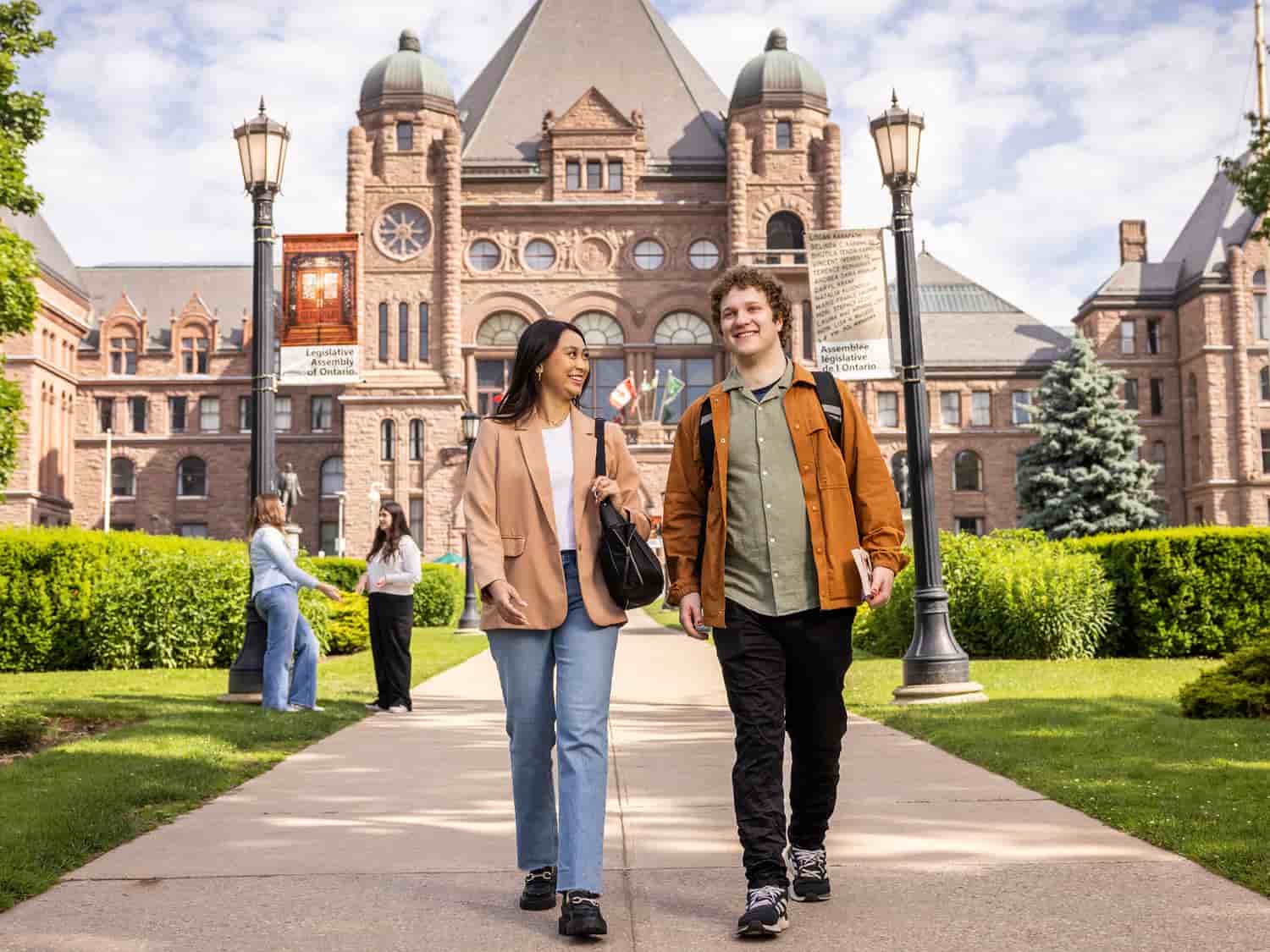
TMU actively contributes to developing policies to tackle the SDGs, working with governments, NGOs and other partners to identify challenges and develop strategies and solutions to address sustainability challenges.
- The Diversity Institute at the Ted Rogers School of Management (TRSM) is working with partners to provide tools to support organizations implementing the Government of Canada’s 50-30 Challenge (external link) to help advance gender parity and increase diversity in leadership. This includes the Diversity Assessment Toolkit, more than 500 best practices and training programs.
- TMU Faculty of Science researchers are working with Colombian communities, policymakers and students to bring water security to rural communities in Colombia.
- The Geoffrey F. Bruce Graduate and Postdoctoral Fellowships support the next generation of freshwater leaders, policy researchers and practitioners and increase excellence in public policy to ensure the sustainability of Canada’s freshwater resources. Bruce Fellows generate critical recommendations that contribute to Canadian freshwater resources policy.
- The Centre for Urban Energy is working with Toronto Hydro and Halton Hills Hydro to research clean energy storage systems and to develop forecasting and modelling for the planning and operating of power systems that include solar and wind power generators. Another project with Toronto Hydro seeks to (PDF file) improve electricity capacity and affordability.
- TMU Mathematics professor Alexey Rubtsov served on the federal government’s Financial Industry Forum on Artificial Intelligence, an initiative to help banks, investment firms and other financial institutions safely and ethically use AI and reduce bias in AI-generated decision-making.
- TMU Geography and Environmental Studies professor Dave Atkinson and his team have been working with Inuit communities in Nunavut to gather data and build local environmental monitoring capacity to manage and protect their environments. The research team has used data showing altered permafrost conditions, carbon balance changes and greening of the Arctic vegetation to create process models that can inform policymakers on changes to Arctic ecosystems and can also help forecast potential future impacts.
- TMU is a member of the Sustainable Development Solutions Network (external link) , which mobilizes the world’s leading academic and research institutes and leverages their strengths to help promote practical solutions to sustainable development challenges.

TMU researchers are engaged in collaborations with international partners in academia and beyond to gather, measure and analyze data related to the SDGs. This work cuts across disciplines and faculties.
- Complex Migration Flows and Multiple Drivers in Comparative Perspective (MEMO) is a multidisciplinary research partnership between 19 research organizations and community partners, service providers, NGOs and other organizations from around the world that aims to uncover new knowledge and develop a framework for better understanding migration.
- The Urban Sanctuary, Migrant Solidarity, and Hospitality in Global Perspective partnership brings together academics and partners in government and NGOs to co-develop and collect, measure and share evidence-based knowledge and data related to the policies and practices of accommodating vulnerable and precarious migrants and refugees in major urban centres in Africa, Europe, North America and Latin America.
- TMU Politics and Public Administration professor Chris Gore is part of a global collaboration to gather data and evaluate strategies to make cities safer, more inclusive and more resilient in the face of climate change. Research focuses on 20 cities from Europe, North America, Asia, East Asia, Africa and Latin America. A preliminary finding from Gore’s team saw that cities with a historically strong climate action backdrop shifted focus to improving social equity and reducing vulnerabilities.
- The International and Canadian Child Rights Partnership seeks to explore and better understand the connection between children’s rights to participation and protection. The partnership includes young people with lived experience, 40 researchers and 30 partner organizations from universities, NGOs, major human rights institutions, and governments from Canada and across the Americas, Africa, Europe, Asia and Oceania.
- TMU Science professor Stephanie Melles participated in an international research effort on salinization, an increase in salt concentration. Findings showed that significant damage to freshwater lake ecosystems across North America and Europe occurs at levels of salt pollution far below the ranges that government regulators have deemed safe.
- TMU Chemistry professor and principal investigator in TMU’s Emerging Contaminants Lab, Roxanna Suehring, was part of an international research team led by the Fisheries Research Institute in Germany to explore just how toxic plastic fish lures are. Suehring, based on her work and expertise in contaminants in plastics, was responsible for identifying contaminants. Results show that 10 of the 16 baits examined released various plasticizers, including known harmful phthalates. In addition, 45 other persistent, mobile and toxic plastic additives were detected.
- TMU’s School of Public Policy and Democratic Innovation is an active contributor to the Global Center for Climate Change and Transboundary Waters (external link) , which leads innovative research to understand and generate resilience to water crises in transboundary regions. Leveraging international expertise, it studies water resources spanning the North American geopolitical boundaries and aims to engage vulnerable communities around the world.
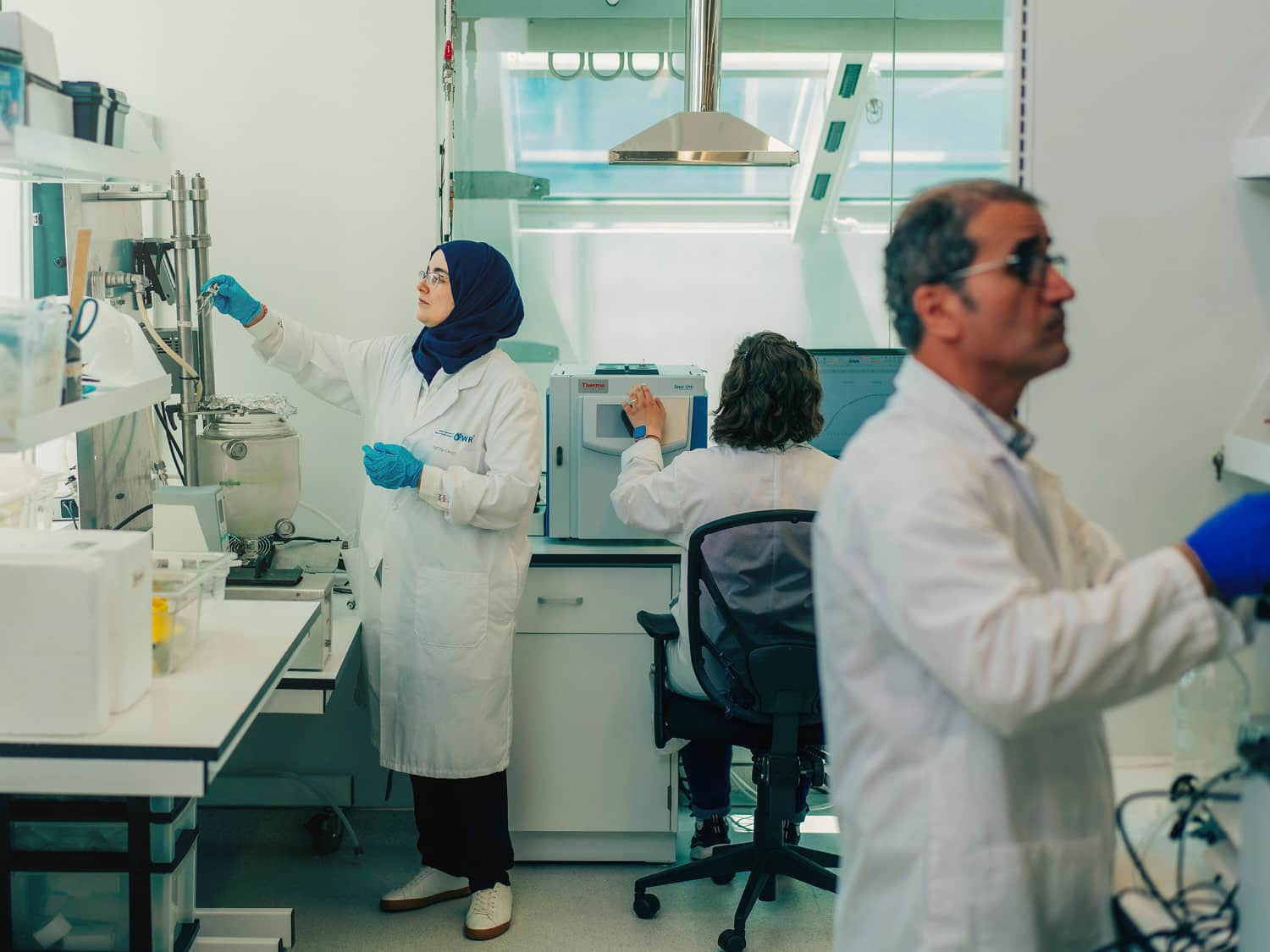
TMU faculty members, research institutes and students collaborate with partners in Canada and abroad to disseminate knowledge, exchange ideas and develop best practices to support progress on tackling the SDGs. These partnerships include research initiatives with industry, collaborations with academic institutions and grants for pilot projects to test solutions to sustainability challenges.
- Led by TMU’s Centre for Urban Energy, the NSERC Energy Storage Technology Network will drive progress in energy storage in Canada by bringing together researchers, technology companies, utilities and government agencies. The network is developing next-generation energy storage technologies and products for the Canadian and international utility sector markets.
- Faculty members from TMU’s Faculty of Engineering and Architectural Science and Ted Rogers School of Management are contributing to the Volt-Age project with initiatives focused on integrating cutting-edge technologies for carbon-neutral buildings, advanced energy storage, smart grids and the electrification of transportation.
- Researchers at TMU’s Faculty of Science work with Jet Ice to develop evidence-based practices towards more sustainable, environmentally friendly ice creation and water management. The team will explore several aspects of ice-making in the creation of their best practice guidelines, including water purification and recycling, reducing consumption, and determining if ice logos or equipment cause contaminants to leach into meltwater.
- In April 2024, TMU Entrepreneurship and Strategy professor Dave Valliere co-created and ran a train-the-trainer workshop for early career researchers in Uganda at Kyambogo University in collaboration with Academics Without Borders. The program’s objective was to train early career researchers on how to do higher quality research, how to be more competitive in applying for international grants, and how to publish in higher quality international journals.
- Six researchers and cybersecurity experts from TMU and the private sector are bridging the gap between academia and industry through the Catalyst Fellowship program at Rogers Cybersecure Catalyst. Their research will carve a path for more trustworthy algorithms and their by-products, including more reliable online reviews and novel systems for locating and monitoring cyber threats, and provide a better understanding of current security systems and their vulnerability to harmful and disruptive attacks.
- The Urban Sanctuary, Migrant Solidarity, and Hospitality in Global Perspective partnership brings together dozens of academics and partner organizations to co-develop and share evidence-based knowledge related to the policies and practices of accommodating vulnerable and precarious migrants and refugees in major urban centres in Africa, Europe, North America, and Latin America. The project is organized into four continental research hubs located in North America, Latin America, Africa, and Europe.
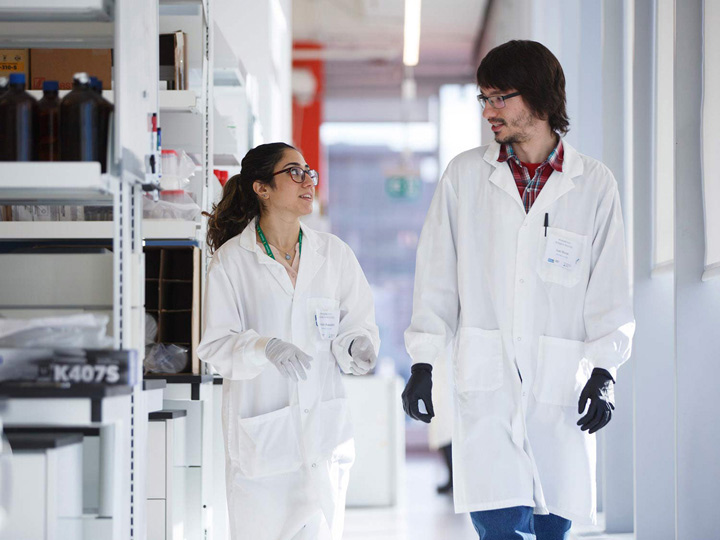
Progress on the SDGs depends on partnerships not only among researchers and institutions, but also beyond academia. At TMU, we are proud to engage in cross-sectoral dialogue with governments, industry and nonprofits to exchange ideas and leverage the roles of various organizations in advancing progress.
- The Ted Rogers Indigenous in Business student group at TMU hosted and organizes the Reconciliation in Business Conference, which won Best Indigenous Relations Initiative in the Canadian Council for the Advancement of Education’s 2023 Prix d’Excellence Celebration. The annual conference brings together leaders from Indigenous communities, industry, law and academia to discuss and advance Indigenous representation.
- The Centre for Free Expression hosted 16 virtual public panels and conversations in 2023–24, reaching audiences across Canada and the world. Topics included protecting civil liberties and the challenges of AI for human rights and democracy.
- Wendy Cukier of TMU’s Diversity Institute hosted a panel at the Amplify Leadership Summit (external link) , discussing topics such as Canadian labour market trends, critical needs to newcomer integration and the barriers faced by newcomers. She also participated in an Ontario Chamber of Commerce webinar series on how equity, diversity and inclusion can drive growth and innovation in business and presented at a conference for small businesses attended by industry and government leaders.
- The Migration Disrupted conference hosted at TMU in May 2024 by Bridging Divides and the CERC in Migration and Integration brought together international researchers and leaders in business and government to discuss how rapid technological transformation is reshaping the future of migration in Canada and around the world.
- In June 2024, TMU hosted its first annual symposium on Child Sex Trafficking & Online Child Sexual Exploitation. The event brought together domestic and international professionals in policing, law, technology, finance, journalism, child protection, family/social services, healthcare, education, academia, Indigenous advocacy and more — some of whom were survivors themselves. The group gathered to reimagine the possibilities for sharing promising practices, innovative ideas and collaborative partnerships.

TMU is proud to conduct educational outreach beyond campus to share knowledge and create learning opportunities about the SDGs in the local community.
- TMU shares stories of alumni who are working to protect our planet in different ways, from using upcycled materials in clothing to reducing energy waste in buildings and developing more responsible tourism practices.
- Educational outreach events for young people in our local community have included he SciXchange program for Indigenous communities, the FuturEng event to empower young women and girls to pursue STEM education and careers, and a three-day intensive workshop for students and their teachers at the Kapapamahchakwew - Wandering Spirit School that combined engineering design principles with Indigenous Ways of Knowing.
- The Newcomer Entrepreneur Hub at the Diversity Institute provides mentorship and training on topics such as finance, procurement and social media to help immigrants and refugees looking to start their own businesses.
- DMZ Innisfil (external link) is a community-driven business accelerator and incubator dedicated to supporting entrepreneurs and business owners in the town of Innisfil.
- Generation Climate (external link) is a national youth-driven initiative launched at The Dais at TMU focused on combating climate change misinformation through face-to-face conversations, online training and local climate action projects.
- The WUSC Toronto Metropolitan University Local Committee is a group of students that raises awareness about international development issues. The committee also facilitates the Student Refugee Program, which sponsors and supports students with refugee backgrounds to come to Canada to study and become permanent residents.
- TMU nursing professors Margareth Zanchetta and Kateryna Metersky collaborated with Academics Without Borders, the University of Brasilia and the Federal University of Pernambuco to launch a capacity-building project to provide culturally sensitive, trauma-informed healthcare for Brazil’s rapidly growing population of immigrants, refugees and stateless individuals.
- The Sanctuary Scholars program offered via TMU’s Office of Social Innovation provides an access pathway for students who hold precarious immigration status. The program allows eligible students to access any TMU undergraduate degree or program at domestic tuition fee rates, and supports them in navigating the university and addressing any status-related barriers or obstacles.
- The Chang School of Continuing Education at TMU offers Gateway for International Professionals, a series of programs that accurately assess the skills of international professionals and provide them with the education and experience needed to succeed in the Canadian workplace at levels that correspond with their qualifications.
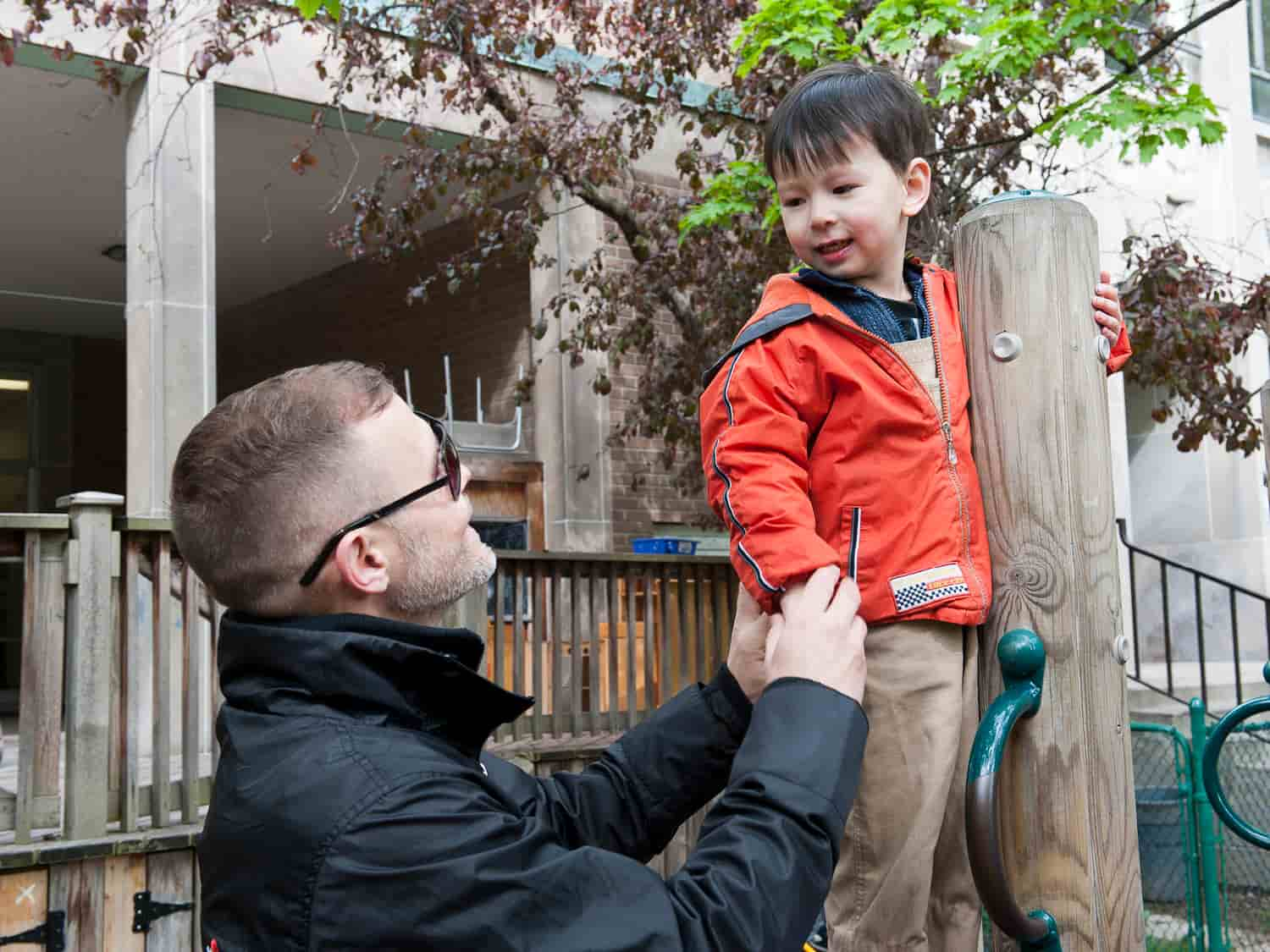
TMU works with NGOs to tackle the SDGs through a variety of initiatives. These include opportunities for students to volunteer in support of sustainable development efforts, partnerships with nonprofits on shared research projects, and the development and dissemination of educational resources to help community members in their efforts to achieve progress towards the goals.
- Sustainability-focused student volunteering programs with NGOs include: the Living Planet @ Campus program with WWF Canada, which offers students opportunities to build their resumé and contribute to positive change, such as community clean-ups and hackathon competitions; architecture students building an inclusive playground for neurodivergent youth at Camp Winston; and community organizations partnering with students in our forthcoming medical school on community-based advocacy projects.
- Research programs in place through collaborations with NGOs include: the Inclusive Early Childhood Service System (IECSS) study and a Department of Architecture partnership with Sustainable Buildings Canada to optimize energy retrofits (external link) .
- Educational resources related to sustainable development developed and shared through collaborations with NGOs include: TMU’s School of Child and Youth Care and the Chang School of Continuing Education working with Right To Play to upskill and certify Indigenous child and youth practitioners (external link) ; TMU partnering with the Indigenous Primary Health Care Council to eliminate inequities and disparities that negatively impact Indigenous people within the medical system; TMU’s Office of Social Innovation participates in the Inclusive PSE (external link) partnership with Eviance and other community organizations to scale up innovative and inclusive approaches to Universal Design for Learning in post-secondary education as a pathway for people with disabilities to obtain decent work; and the Diversity Institute’s Diversity Assessment Tool, a free application that’s publicly available for any organization to use to assess progress on equity and inclusion and receive recommendations and examples of where improvements can be made.