Rick Westhead brings hockey’s hard truths to TMU
Content warning: This story involves discussion of sexual assault.
In May 2022, TSN journalist Rick Westhead was scouting for a film location in Serbia when his phone rang. He rarely answered unknown callers.
But when the same number called four times, he picked up.
The call lasted less than a minute.
But what Westhead learned would lead to one of the most explosive sports investigations in Canadian history — and the foundation of his new book, We Breed Lions, an examination of power and accountability in hockey.
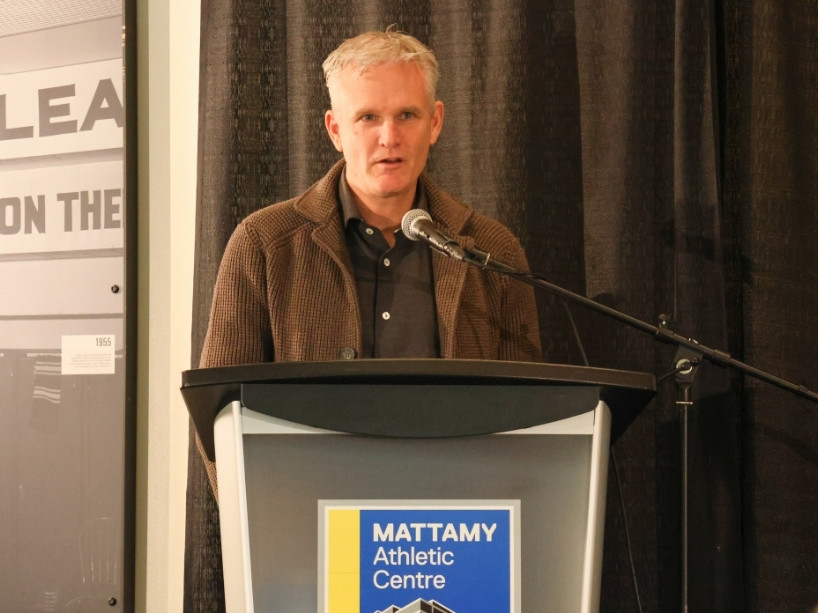
On Jan. 19 at TMU’s Mattamy Athletic Centre, Westhead spoke about the book, his career and the case that shook the nation.
Journalism and RTA Sport Media students, varsity athletes and community members hung on every word.
“The question that I always come at this with is, how did we get here?” Westhead said, referring to the recent sexual assault trial in London, Ont., involving members of the 2018 Canadian World Junior hockey team. “How is it that there were 10 men in that hotel room with E.M., and not one man in that situation said, ‘Guys, this isn't right.’”
“That was the central question that really drove the reporting,” he said.
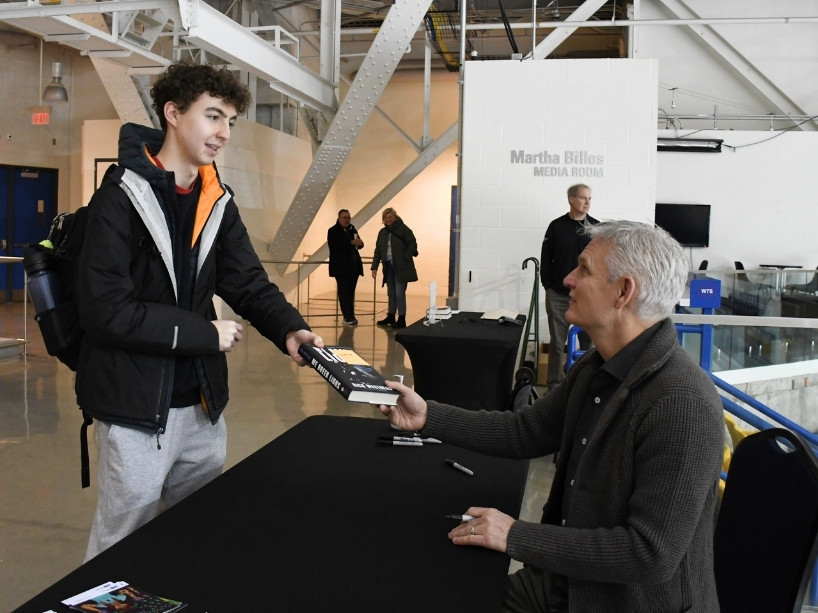
Rick Westhead, right, told journalism students that while the industry can be challenging, those who have a burning desire to tell stories should “keep going”. (Photo: Melissa Croteau)
“Rick’s work forces us to confront the fact that silence protects systems, not people, that culture does not change by accident, and that accountability begins with honesty and transparency,” said event co-organizer and RTA Sport Media professor Laurel Walzak.
Sport Media student Prima Andriolo said the conversation was especially important for students.
“We’re redefining what respect, consent and integrity should look like in sport, in school, in friendships and in life,” she said.
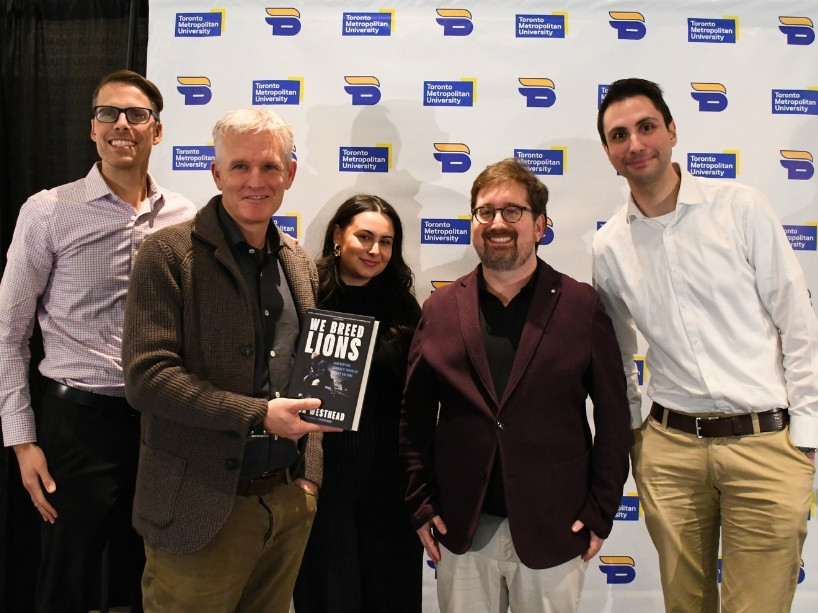
Rick Westhead holds his book, We Breed Lions, next to event organizers Andrew Petit, director, recreation, equity & active well-being, left, and on the right, student Prima Andriolo, professor Stephen Sheps and safe-sport specialist, and instructor Frankie Collura. (Photo: Melissa Croteau)
Student journalist to award-winning reporter
Westhead shared his journey from TMU student journalist to award-winning investigative reporter.
“I cannot tell you how many people told me I wasn't good enough,” he said. “I was told ‘no’ by more people than I can count.”
“So, if you feel like this is something you have to do, if it’s burning in you to tell stories, just chase it. Keep going.”
His first break came unexpectedly.
“The New York Times had a sick reporter who couldn't make it to Ottawa to cover an NHL game, so I got a call from a sports editor one day. I thought it was a friend playing a prank, and I almost hung up the phone. I wound up driving to Ottawa, and that turned into a regular job, freelancing for the Times.”
Price to pay
Westhead emphasized the importance of earning trust from sources and taking time to get the story right.
He also acknowledged the cost of holding people and organizations accountable.
“But that doesn’t scare me. I'm a journalist. I'm doing my job, and without this, without media holding organizations like Hockey Canada accountable, we're just going to have more cases of sexual assault covered up and pushed under the rug,” he said.
The July 2025 acquittal of all five current and former NHL players in the sexual assault trial in London, Ont., “reignited debate over whether the justice system adequately serves survivors of sexual violence,” Rick Westhead wrote in his coverage. (Photo: Krystal Fernandes)
A pattern of abuse
It was the tip Westhead received in Serbia that led to his investigation and coverage of the sexual assault trial involving five current or former NHL players – all members of the 2018 Canadian World Junior hockey team at the time – and a plaintiff known as E.M.
The case shocked the nation: The accused were superstars. The charges took years to lay. And it was revealed that Hockey Canada had created a secret fund from minor hockey fees to pay off victims of sexual assault.
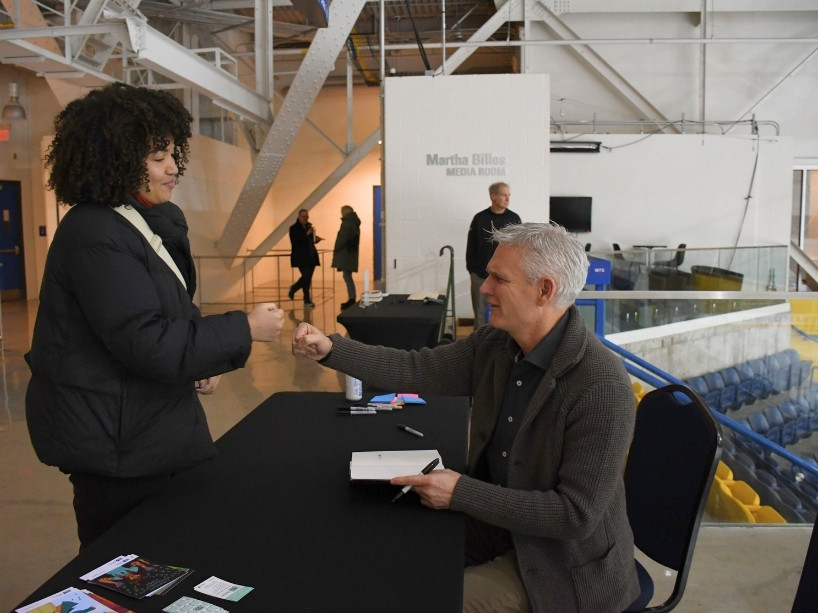
Rick Westhead, above with a young woman at his book signing, told the audience that while he loved hockey, “You can still look at it critically and say, ‘How did we get here, and how can it be better?'” (Photo: Melissa Croteau)
Westhead quickly points out that the case of E.M. isn’t unique. His reporting opened the floodgates for others to come forward, including:
- An investigation in Halifax of an alleged sexual assault involving members of Canada's 2003 World Junior team
- Two Quebec Major Junior Hockey League players pleading guilty to sexually assaulting a young woman after their championship
- Three other Quebec Major Junior Hockey League players convicted of sexual assault involving a 15-year-old girl
- A 17-year-old Oakville Rangers player who died at an overnight “team building” event
The stories are endless.
The culture problem
While the issues aren’t exclusive to hockey, as Westhead explains, the sport’s culture warrants particular scrutiny.
In Canada, hockey places enormous pressure on young players, with families investing significant sums in the hope their child will “make it,” and some athletes are sent away from home at a young age to live with host (billet) families.
Young players are granted special treatment, fueling oversized egos and a fear that losing hockey means losing everything.
In dressing rooms ruled by older players, hazing, misogyny and homophobia can thrive, reinforced by a desperate need to belong and a “boys will be boys” mentality.
To illustrate, a player shared with Westhead that once on the team bus, older players told rookies to strip naked, go into the bathroom with the lights off and pick coins up from the floor.
When asked why he didn’t tell the coach, he said, “The coach was on the bus.”
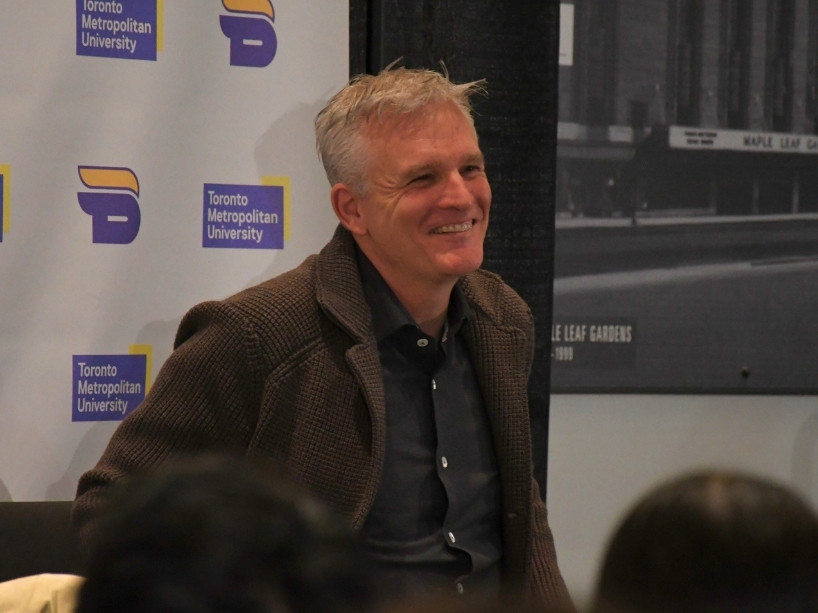
Prior to working at TSN, Rick Westhead was a foreign correspondent for the Toronto Star, reporting from Afghanistan, China and Saudi Arabia. (Photo: Melissa Croteau)
Hope for change
Despite hockey’s troubled culture, Westhead offers hope – highlighting a minor hockey league program in Hamilton, Ont., Coaching Boys Into Men.
Boys in the program visit women’s shelters and discuss topics like consent.
“I was blown away,” said Westhead. “Not only were the kids interested in talking about this, they led the conversations.”
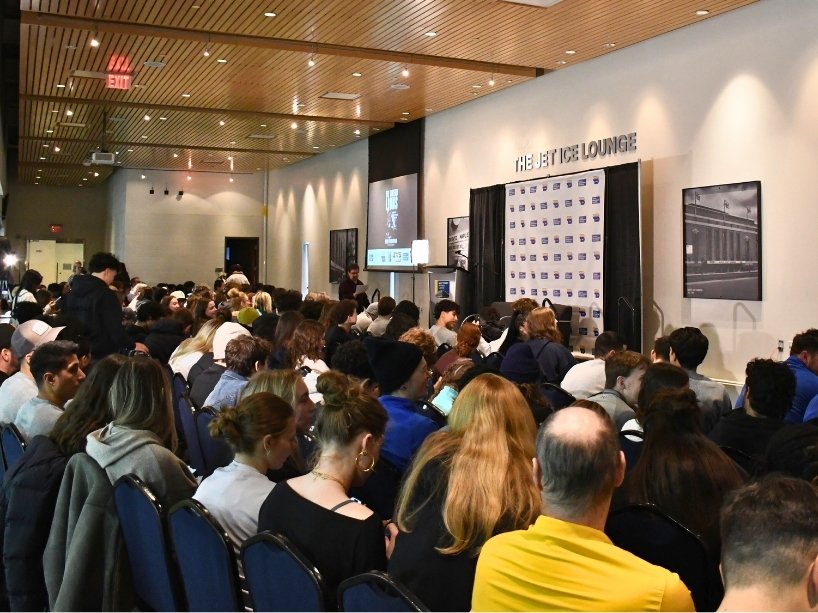
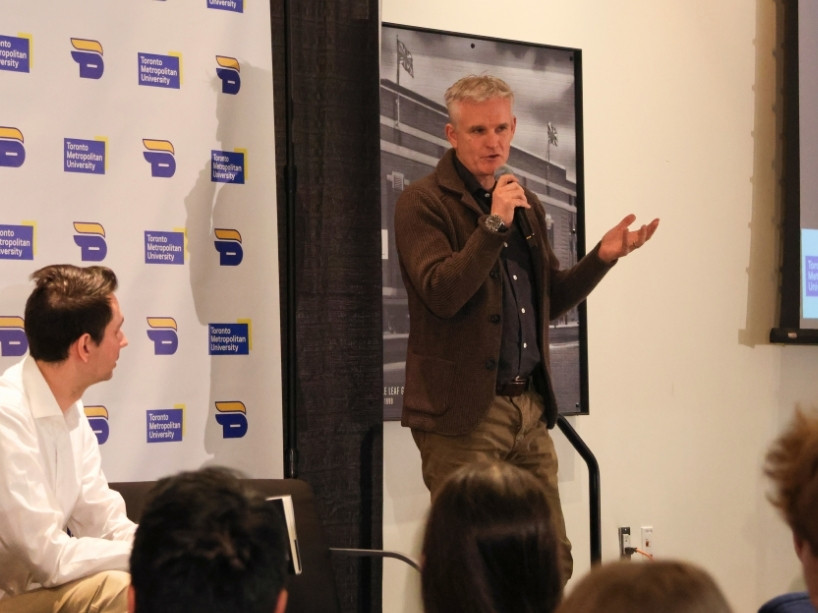
TMU’s speaking event with Rick Westhead was organized by RTA School of Media, Sport Media, TMU Athletics & Recreation and the GXSLab. (Photo: Melissa Croteau)
At a recent Ottawa speaking engagement, Westhead asked roughly 50 20-year-old men how many had conversations about consent with their parents growing up.
“Only three out of 50 raised their hand,” he said. “It made me think, maybe this can be hockey’s redemption story.”
With other signs of change emerging — like the hit show Heated Rivalry, which centres around gay hockey players — Westhead encouraged the audience to be optimistic.
“I know there's amazing people in sports. I coached hockey, I play hockey. I love it. But that does not mean that two things can't be true. You can love the sport deeply, and you can still look at it critically and say, ‘How did we get here, and how can it be better?’”
All proceeds from the book, We Breed Lions: Confronting Canada’s Troubled Hockey Culture, are donated to the Toronto Rape Crisis Centre.