How TMU’s drone research helps connect remote Indigenous communities
Getting basic supplies or medical care is difficult for people living in remote communities.
The COVID-19 pandemic and recent wildfires made these problems even worse. Many northern and Indigenous communities couldn’t access essential services because of shortages and limited transportation.
Now, TMU is working with the National Research Council of Canada (NRC) (external link) to find a solution: developing advanced drone technology could make life easier, and safer, for people living in hard-to-reach areas.
How the research works
Professor Farrokh Janabi-Sharifi of TMU’s Faculty of Engineering and Architectural Science (FEAS) leads the team. They’re developing drones that can fly long distances without pilots, avoid collisions and land on their own in rough terrain.
“What was unique about this project is that Indigenous community members were involved from day one,” says Janabi-Sharifi. “They took part in our field experiments, learned about the technology and offered valuable input on how it could best serve their communities.”
Real-world testing
The team partnered with InDro Robotics, the Cowichan Tribes on Vancouver Island and two other Canadian universities for this project – the first of its kind.
The Cowichan Tribes, the largest single First Nations Band in British Columbia, were active partners in testing the system.
During one test, a drone successfully flew six kilometres across open water between Vancouver Island and Salt Spring Island. It delivered a small package, showing how drones could transport medicine, food or other essentials to places that roads or boats don’t reach.
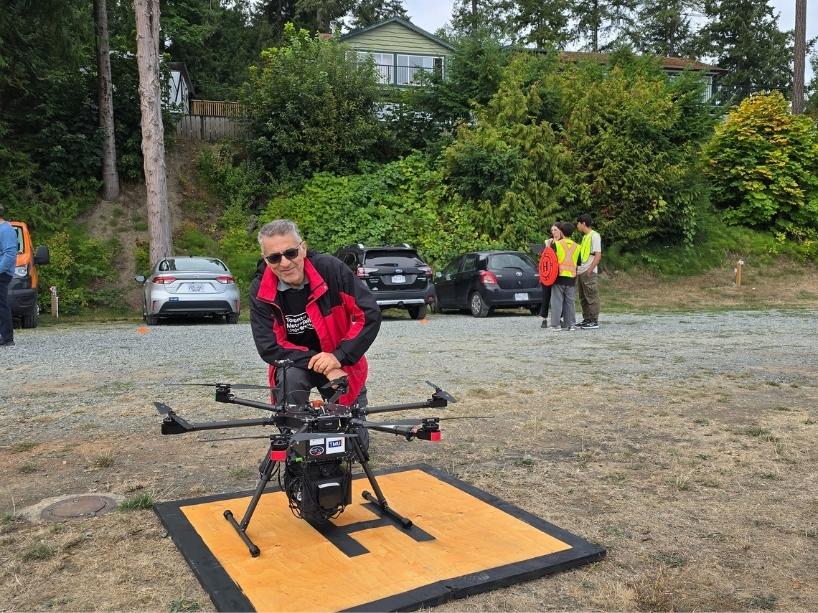
Professor Farrokh Janabi-Sharifi with one of the drones co-developed by TMU’s research team, featuring AI-powered navigation and advanced sensing systems to deliver supplies and support remote and Indigenous communities.
Why this matters
For Janabi-Sharifi, this work goes beyond the technology itself. It’s about making an impact on people’s lives.
Many Indigenous communities, he explains, have isolated houses or “hunting cabins” where people stay for weeks. During the pandemic, these sites sheltered vulnerable people with conditions like diabetes or weak immune systems. But their isolation made accessing health care difficult.
The TMU research team developed AI-powered algorithms that help drones:
- Plan their own flight paths
- Avoid obstacles
- Land safely
- Pick up and carry small objects
This next stage of the project is expected to be completed in early 2026 and delivered to the NRC and community partners.
A project with big potential
While the project started to help remote Indigenous communities, Janabi-Sharifi says the technology has wider uses.
Autonomous drones could help northern towns and mining camps, areas affected by wildfires or floods, search and rescue operations and even environmental monitoring.
“This technology started as a way to help Indigenous communities,” he says. “But it can also be adapted to serve other remote or isolated areas across Canada and beyond.”
The project aligns with TMU’s goals of innovation in mobility, community partnership and Indigenous collaboration. Graduate researchers on the TMU team were co-supervised by NRC experts, gaining specific experience in robotics, mechatronics and automation.
Building partnerships
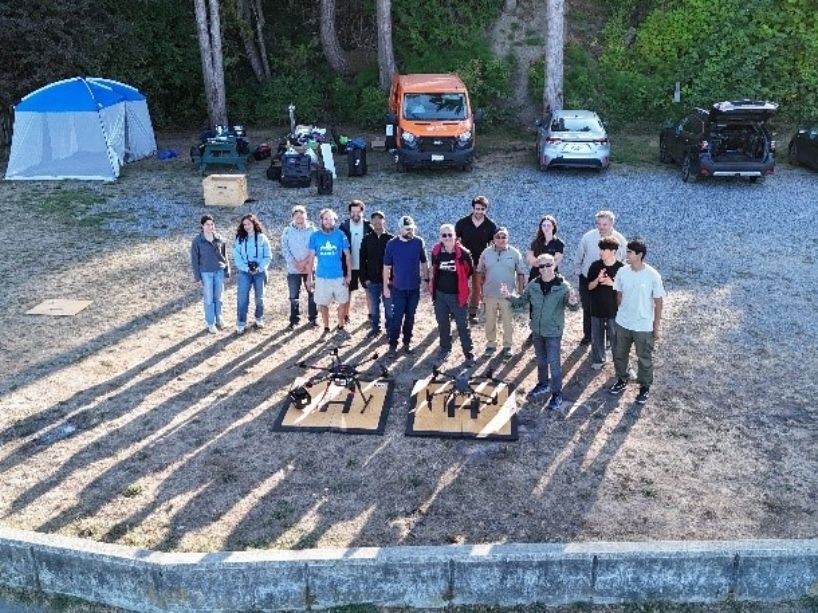
TMU project team, together with researchers from the National Research Council, the University of Victoria and the University of Ottawa, stand with the two drones used in testing with Indigenous community partners.
The project builds relationships between researchers, industry and Indigenous partners that could shape future innovations.
“This collaboration shows what’s possible when universities, government and communities work together,” says Janabi-Sharifi. “It’s a milestone for TMU, and for Canada’s leadership in autonomous systems research. The NRC’s technical expertise and support were instrumental in advancing the project and demonstrating the strength of Canada’s innovation ecosystem.”
For Indigenous communities, it supports traditional ways of living, while staying connected to health care and essential services.
TMU, the NRC and research partners are showing how science, engineering and strong government-industry partnerships can transform logistics in remote communities.
From emergency response and environmental monitoring to medical supply delivery and communications, the potential applications are endless. But for Janabi-Sharifi and team, the goal remains simple - to use technology in service of people.