TMU students win big at international research competition
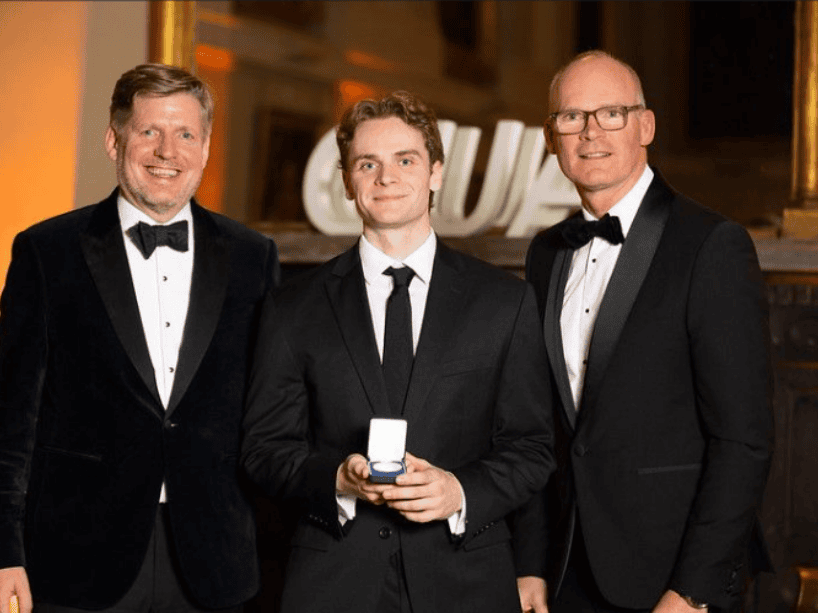
Eleven TMU students took home top prizes at this year's Global Undergraduate Awards (external link) , a prestigious international competition that recognizes outstanding undergraduate research.
The students traveled to Dublin, Ireland, in November to accept their awards alongside winners from around the world. Their research covered topics from preventing financial crises to improving food literacy to training brain surgeons.
“Congratulations to these students on their remarkable achievement,” says Jen McMillen, vice-provost, students. “Their hard work, curiosity, and innovative thinking are shining examples of the exceptional talent within TMU’s undergraduate community. Being recognized on a global stage underscores the impact that their research can have far beyond the classroom.”
We spoke with three of TMU’s award recipients to learn more about their research.
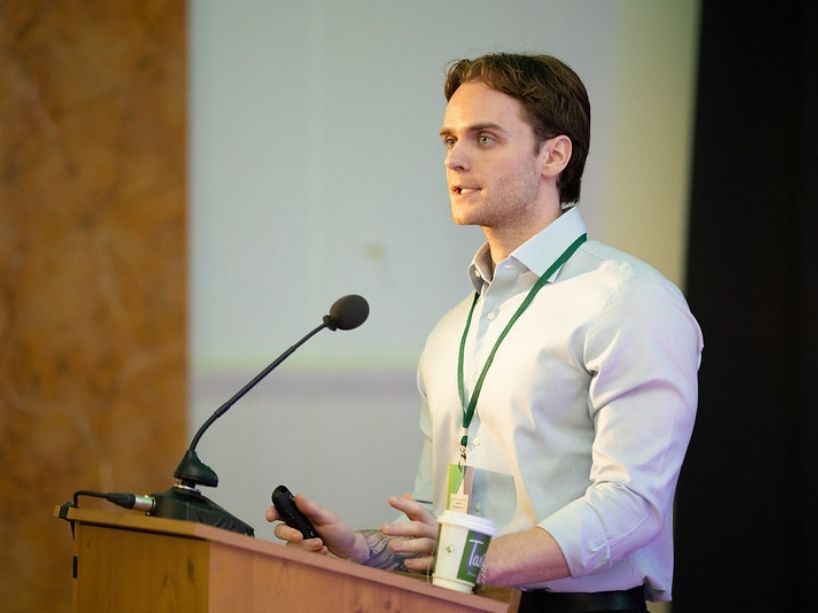
In his award winning paper, Cameron Schmidt explores how governments can step in early to prevent financial crises, using math and game theory to predict economic panic before it happens.
Name: Cameron Schmidt
Program: Economics
Commendation: Global Winner
Cameron Schmidt won the competition's top prize for his paper on how governments can stop financial crises before they start.
His research uses game theory – a type of math that studies strategic decision-making – to predict how changes in investor beliefs can trigger large-scale market reactions. Think of it like forecasting a bank run before it happens.
“A crisis doesn’t always occur because the economy is in a bad state,” he explains. “It’s often because people believe it is and act in ways that create an eventual crisis. My research analyzed when it’s worth it for governments to intervene and when it’s better to let markets correct themselves.”
Schmidt’s path at TMU was unusual. He started in business law and worked full-time in construction, while taking a full time course load, including summers. A final-year thesis course gave him the chance to dive deep into research under his supervisor, Haomiao Yu.
“TMU’s flexibility made it possible for me to craft my own path,” he says.
Now pursuing a master’s in statistics at Carleton University, Schmidt has advice for other students: “Take it day by day, give yourself space to explore different ideas, and don’t be afraid to pivot,” he says. “It’s the curiosity and process that ultimately make the experience meaningful.”
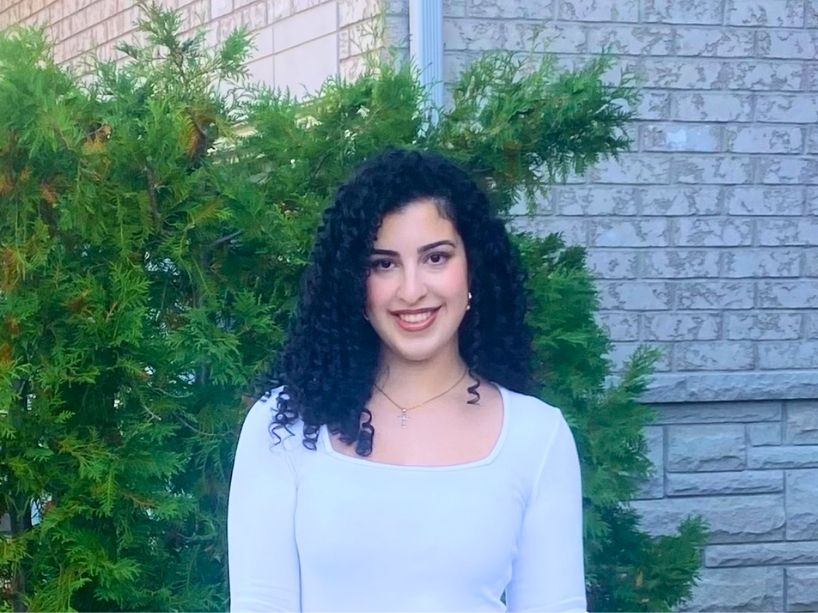
Lilian Auraha, regional winner, researched how front-of-package nutrition labels influence consumer behavior. Her award-winning work highlights how clear, accessible labeling can guide healthier choices, drive improvements in food products, and support broader public health.
Name: Lilian Auraha
Program: Nutrition
Commendation: Regional Winner
Lilian Auraha studied something we all see every day: nutrition labels on food packaging. Her research found that clear, easy-to-read labels help people make healthier choices.
"It's exciting," she says about winning, "To know that topics such as equity and accessible nutrition matter on a global level motivates me to keep working toward making a real impact."
Auraha reviewed 10 years of studies on food packaging labels. She found these labels do three important things:.
- Help consumers make better decisions
- Encourage food companies to create healthier products
- Give people more control over their food choices
"The overconsumption of processed foods and the rising rates of chronic disease further emphasize the role that food labels play in informing healthier food choices."
Her research also examined the politics behind food labels. Public health organizations support them, but some food manufacturers resist changes that could hurt their profits. Auraha credits school of nutrition associate professor Jessica Wegener for encouraging her to pursue the topic.
Working with families in childcare settings further inspired her focus. She saw how even small pieces of information can help parents choose better foods for their children.
Now pursuing a master’s in nutrition communication at TMU, Auraha plans to become a dietitian focused on family nutrition and community education. “This experience confirmed my passion for helping families access healthier foods and make informed choices,” she says. “It also showed me that every voice matters and that research can truly make an impact in global health-care conversations.”

Ayisha Azizi, a TMU biomedical engineering graduate and regional winner at the Global Undergraduate Awards, designed and built a low-cost, radiation-free, patient-specific simulator that helps neurosurgeons practice high-risk procedures safely before entering the operating room.
Name: Ayisha Azizi
Program: Biomedical engineering
Commendation: Regional Winner
Ayisha Azizi and her team tackled a major problem in medical training: how can brain surgeons practice complex procedures without putting anyone at risk?
Traditional training equipment uses real radiation and costs millions of dollars, and isn't tailored to individual patients. Most teaching environments can't afford it.
Azizi's team created a simulator that costs much less and uses zero radiation. It includes:
- 3D-printed transparent models of patient anatomy
- High-resolution cameras and LED lights
- A motorized arm that mimics real operating room equipment
“The idea was to design something functional and accessible,” she explains. “If medical practitioners can practise repeatedly – without radiation, without huge costs – it creates safer outcomes for everyone, especially patients.”
The project was a team effort with TMU students Syeda Zubia Imam, Merjan Jabarkhil and Clement Solsona, under the supervision of professor Victor Yang.
“We put a great deal of dedication and effort into this project, so to have it recognized on a global stage felt incredibly rewarding. Knowing that the importance of our work was acknowledged on such a scale reinforces its importance and motivates me to continue developing tools that can improve patient safety and outcomes worldwide."
In January, Azizi will return to TMU to begin her master’s in biomedical engineering under the supervision of CRC chair in systems and devices for cardiovascular interventions, Ali Tavallaei. She’ll continue her work and research on medical devices and imaging tools for improving procedural outcomes.
Her advice for current students: “Stay curious. Engineering can be challenging at times, but if you hold onto the reason you started, it becomes meaningful. And don’t be afraid of leadership roles – those experiences pushed me out of my comfort zone and helped me grow tremendously."
There were 11 TMU students recognized at the Global Undergraduate Awards this year:
- Global Winner
- Cameron Schmidt
- Regional Winners/Highly Commended:
- Lilian Auraha
- Ayisha Azizi
- Syeda Zubia Imam
- Merjan Jabarkhil
- Sofya Rudovskaya
- Clement Solsona
- Highly Commended:
- Winnifred Adelaide Blair
- Ragave Mahendran
- Shobiya Sivanathan
- Vedaant Vyas
Related stories: