TMU marks Orange Shirt Day with research on residential school child labour
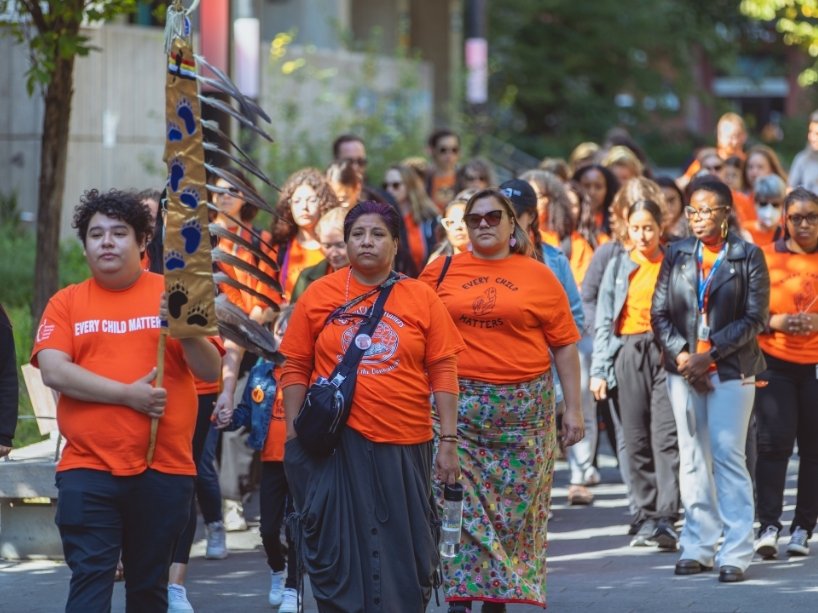
TMU community members participate in a memorial walk on Orange Shirt Day. As part of TMU activities on September 30, Orange Shirt Day historian Mary Jane Logan McCallum will present findings from her groundbreaking book on one of Canada’s first residential schools.
When six-year-old Phyllis Webstad arrived at St. Joseph's Mission near Williams Lake, British Columbia for the first day of school, she didn’t understand why her brand new orange shirt, gifted by her grandmother, was taken from her.
Webstad survived one year of the Mission School from 1973 to 1974.
Forty years later, on Sept. 30, 2013, Phyllis Webstad founded Orange Shirt Day.
She is also the founder and ambassador of the Orange Shirt Society (external link) , and tours the country telling her story and raising awareness about the impacts of the residential school system.
She’s the author of several books, including the Orange Shirt Story and Phyllis’s Orange Shirt for younger children.
This September 30, TMU will honour survivors like Phyllis Webstad during Ozaawaa Babigoyaan Giizhigad / Orange Shirt Day with a special presentation by historian Mary Jane Logan McCallum, whose research sheds new light on the experiences of children in Canada's residential school system.
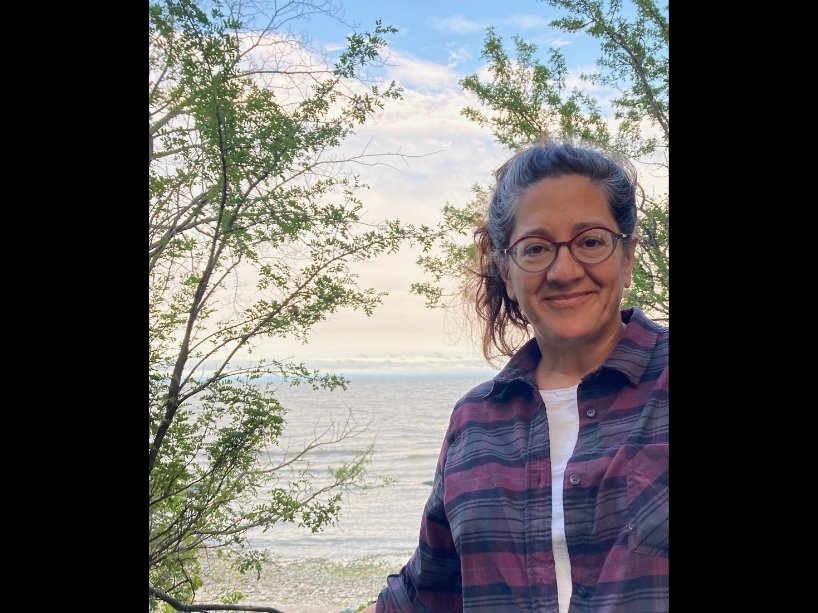
Mary Jane Logan McCallum is a historian and professor at the University of Winnipeg. She will be presenting research from her book, Nii Ndahlohke, on forced child labour in residential schools at TMU on Sept. 30. (Photo courtesy of Mary Jane Logan McCallum)
For Mary Jane Logan McCallum, a historian and professor at the University of Winnipeg, Phyllis Webstad’s story helped to increase interest in her research.
McCallum is the Canada Research Chair in Indigenous People, History and Archives, and a band member (external link) of the Munsee Delaware Nation.
Her groundbreaking research reveals how residential schools systematically exploited First Nations children's labour to keep the institutions running.
McCallum recently published Nii Ndahlohke: Boys’ and Girls’ Work at Mount Elgin Industrial School, 1890–1915 (external link) about forced student labour at one of the first residential schools in Canada.
She will be presenting research from her book at TMU for Ozaawaa Babigoyaan Giizhigad / Orange Shirt Day on Sept. 30 at 9 a.m.
Focusing on the history of Mount Elgin Industrial School, the book traces how residential schools relied heavily on the unpaid labour of Indigenous students.
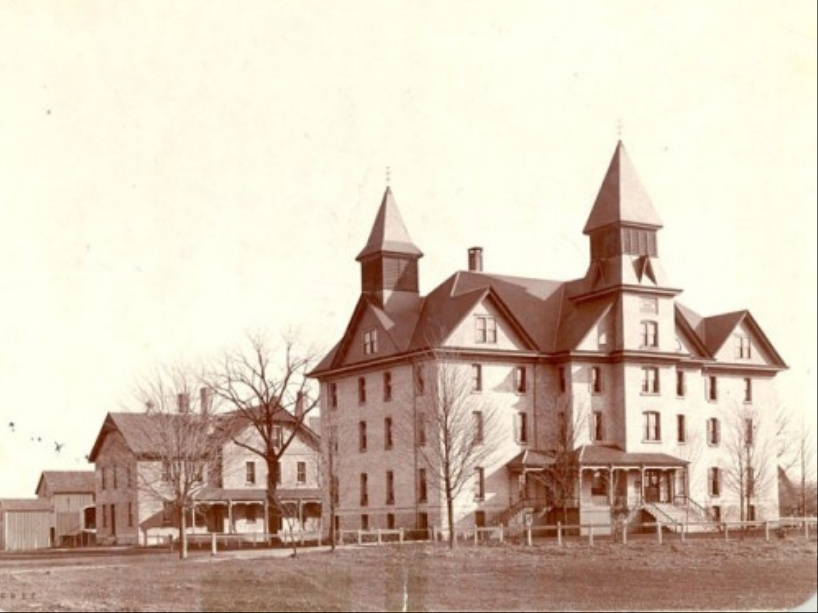
Mount Elgin Industrial School located on Chippewas of the Thames First Nation west of London, Ontario, was one of the first Indian residential schools in Canada. (Photo: United Church of Canada Archives, ca. 1909.)
This system was funded by federal government grants.
“But that grant was never actually enough to run the school and pay for all of the things that were needed at the school,” explained McCallum.
To cover the shortfalls, the schools depended on children’s forced work.
The book highlights how these practices contributed to a cycle of inequality across Canada.
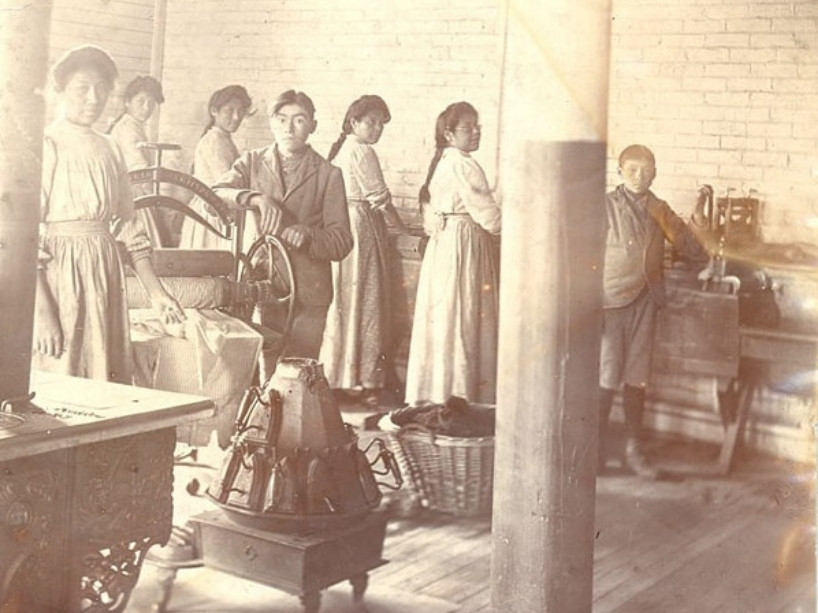
Girls’ work included “domestic” tasks, like laundry, cleaning and food preparation. This labour helped to sustain the operations of the school amidst federal underfunding. (Photo: United Church of Canada Archives, ca. 1909.)
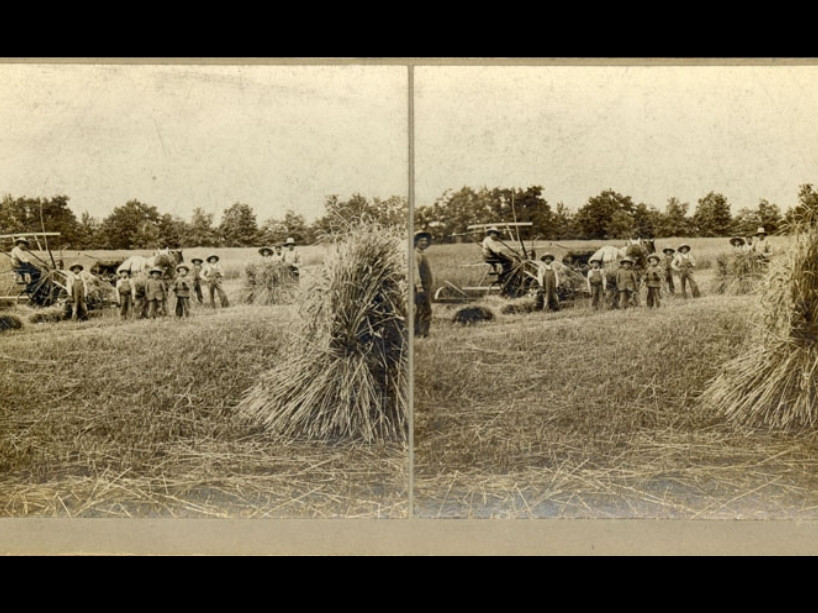
Boys at Mount Elgin Farm spent half their days working in the barn and fields, often performing menial tasks rather than learning the trade of farming. (Photo: United Church of Canada Archives, ca. 1909.)
Before Orange Shirt Day and the release of the Truth and Reconciliation Reports, McCallum says there was not much public interest or awareness in the history of residential schools.
“I kind of did my work a bit in obscurity. It was not a subject of interest in Canadian history. This was not something that people commemorated or thought about or discussed publicly," she said.
Learning from TMU’s journey
Having read TMU's Standing Strong Task Force Report & Recommendations (Mash Koh Wee Kah Pooh Win), McCallum says that there's a lot that other institutions can learn from TMU and our history.
“There's lots that we can learn from TMU about reflecting on our institutions and their own histories and complicity in colonialism, whether that is in land theft or in residential schools,” she says. “I'm really looking forward to coming and being there.”
Wear orange and join us on Tuesday, Sept. 30
"Through Indigenous events such as Ozaawaa Babigoyaan Giizhigad (Orange Shirt Day), we are committed to promoting Indigenous perspectives and worldviews while fostering respectful dialogue and strengthening relationships across our community and circles," said Crystal Osawamick Wiinkaushkwe (Sweetgrass Woman), who is the E-nankiid Anishinaabe Maawnjidowinan miiniwaa shki-maajiishkaachiganan (Manager of Indigenous events and special projects), university events and ceremonies in the Office of the President and Office of the Vice-President, Equity and Community Inclusion.
All TMU community members are invited to join the Ozaawaa Babigoyaan Giizhigad / Orange Shirt Day events to honour and commemorate the survivors of Indian Residential Schools and remember the children who did not return home.
“Ongoing education, which means learning and unlearning, are essential to fulfilling the Truth and Reconciliation Commission’s Calls to Action,” said Tanya (Toni) De Mello, Vice President, Equity and Community Inclusion.
The day begins with an opening, followed by McCallum’s presentation, an interactive craft session, an Indigenous Feast, a silent memorial walk on campus and a live broadcast from Parliament Hill.
Attendees are encouraged to wear orange to show solidarity and respect to survivors and their families. Learn how and where to get an Orange Shirt.
Registration is required for the day’s events. You can choose which events you plan to attend on the registration form.