Profits before people? Activist and business ethics expert weighs in on Pride sponsorship losses
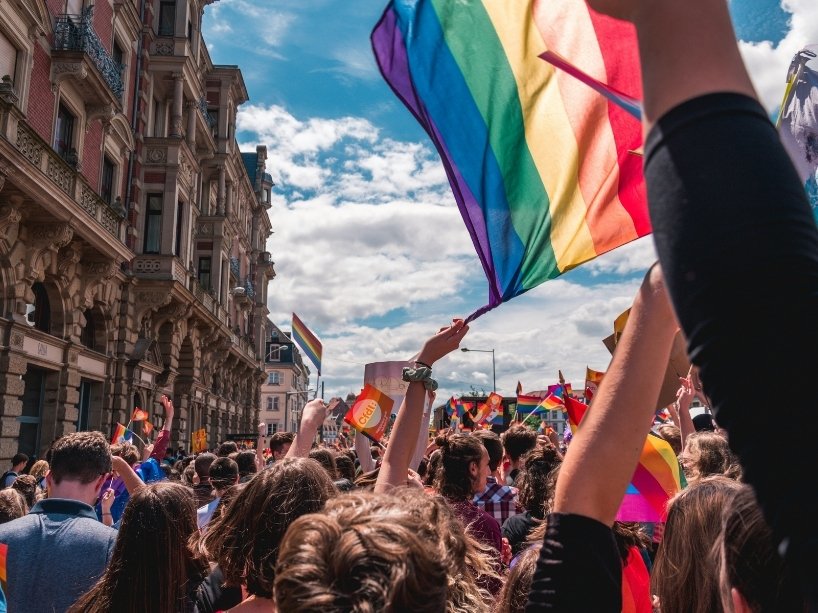
Ted Rogers School of Management Professor Alison Kemper was on the front lines of the fight for LGBTQ2S+ equality of rights in Canada. Once a marker of legitimacy, she says corporate sponsorship of social causes requires careful consideration in the face of evolving business priorities and political landscapes. (Photo: Margaux Bellott/Unsplash)
Have we too easily accepted corporate sponsorships as evidence of allyship? Alison Kemper, associate professor, entrepreneurship & strategy at the Ted Rogers School of Management, believes this is the case.
Recent decisions by major sponsors Google and Home Depot to withdraw from this year’s Toronto Pride reflect broader shifts in corporate approaches to Diversity, Equity and Inclusion (DEI) programs, influenced by changing political climates and business consideration, says Kemper.
“Corporations ultimately act in ways that maximize their profits,” she says. “With growing political pressures in the U.S. to roll back these initiatives, many companies are retreating.” The trend reveals how business considerations often drive corporate social responsibility decisions.
After a career as a non-profit leader, Kemper now researches the impacts of social and environmental issues on business strategy. She examines critical issues that arise from the interactions between businesses and their social and environmental contexts, and evolving ideas around corporate social responsibility.
“The Trump administration is making demands on American researchers and multinational corporations,” says Kemper. “Because of the overwhelming and sudden nature of these retrogressive policies, many institutions and corporations are complying.”
Major U.S. corporations are scaling back DEI programs amid growing concerns over political backlash and the potential legal risks, especially in the wake of the repeal of affirmative action and shifting federal policies.
Recent policy developments include executive orders affecting federal DEI programs and increase legal scrutiny of corporate diversity initiatives. These changes have created pressure for companies to reevaluate their existing programs and commitments.
With many companies headquartered in the U.S., this trend has filtered through to corporate policy and decision-making in Canada as well.
“It’s clear that there’s no reason to anthropomorphize corporations and attribute queer-positive attitudes to them,” said Kemper. “Corporate participation in Pride events is the result of a calculation. And when the variables in that calculation shift, so does their participation.”

Alison Kemper, professor, entrepreneurship & strategy at the Ted Rogers School of Management, says corporations act in ways that maximize their profits, and that the current political landscape in the U.S. is impacting Pride-related sponsorships in Canada.
Timing and impact
Pride Toronto announced the loss of two additional sponsors, Google and Home Depot, just one day before Pride programming began in June.
Kemper notes that the timing of these withdrawals, with financial commitments already in place, would create significant challenges for the organization.
“It’s highly unlikely that they made a sudden decision to turn off the tab and more likely that they have known for a while,” she says. “The sponsors left Pride Toronto holding the bag— having used a budget that depended on this income.”
Kemper’s life has been deeply interwoven with LGBTQ2S+ rights movement in Canada for nearly four decades. A queer activist, she was deeply involved in the early struggle for same-sex marriage rights, benefits coverage for same-sex couples and more.
The message is clear, she says. These developments illustrate that corporate partnerships are business relationships.
“If they believe that they will get better access to consumer markets, to better labour pools, to social goodwill or anything else that will help them attract business, they will do it. However, in the current global political climate, there are many disincentives to maintaining commitments to DEI.”
Even major technology companies with significant market influence will conform to political pressures to protect their bottom line, she says.
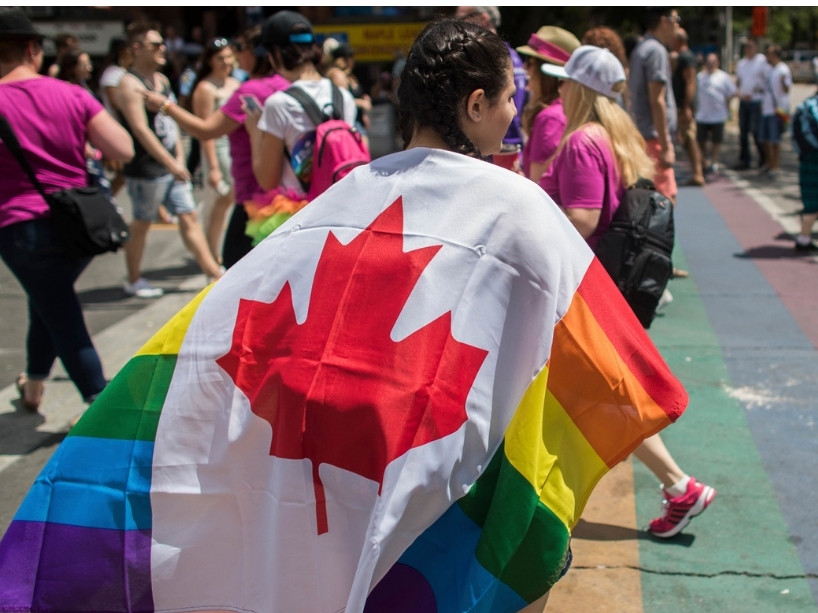
The head of Canada’s largest Pride festival publicized the withdrawal of support from major corporate sponsors, headquartered in the U.S., just one day before the start of Pride month. This announcement comes as a number of corporations abandon DEI initiatives to avoid being seen as favourable to LGBTQ initiatives as a result of shifting political winds.
Corporate sponsorships and social legitimacy
The Black Lives Matter protests in the U.S. spurred by the death of George Floyd as a result of interactions with police in 2020, drew attention to the impacts of systemic racism in America and around the world. These protests set in motion calls to corporate America to show support for DEI beyond “performative” messages on social media by taking concrete, tangible actions.
In response, companies pledged support for equity and set benchmarks for progress. Corporate backing has historically provided validation for social causes while allowing brands to align with values important to their consumers.
“In the 90s, when I was actively part of this process, we loved to get corporate sponsors because it was a little mark of legitimacy when we didn’t have very many,” recalls Kemper of early LGBTQ2S+ activism efforts in Canada.
“Without anyone noticing, it evolved,” she says. “By 2015 or so, being a Pride sponsor enhanced the reputation of the corporation in the broader community, not just in the LGBTQ2S+ community.”
The end of corporate sponsorships, Kemper says, is only one small part of a worrying trend towards erasure of sexual minorities and other marginalized groups. She believes transgender youth are the most susceptible to the impacts of this trend including increased violence.
“For many years, we have thought that being queer was becoming an ordinary part of Canadian life,” said Kemper. “The end of corporate sponsorships makes it clear that for the foreseeable future, queer rights will need to continue to be part of the struggle.”
“These companies’ support of Pride was a small deterrent to dangerous forces arrayed against vulnerable people,” said Kemper.
Rethinking corporate sponsorships
Recently, Pride Toronto announced it had a $900K shortfall with the sudden loss of major sponsorships.
“I think we need to reconsider the relationship of queer movements and corporate sponsors,” says Kemper. “We need to think carefully about how social movements are organized and remain successful.”
SEIU Healthcare, a union representing frontline health workers in Ontario, is a recent sponsor and expressed their belief that solidarity means action, not just words. Rethinking the role of sponsorship and inviting community groups, unions and other non-corporate forms of support can allow for more genuine, grassroots engagement.
In the struggle for equality, Kemper says, being queer has also meant being transgressive. Pride events serve both celebratory and advocacy purposes, she explains. They represent community resilience while continuing the work toward equality and recognition.
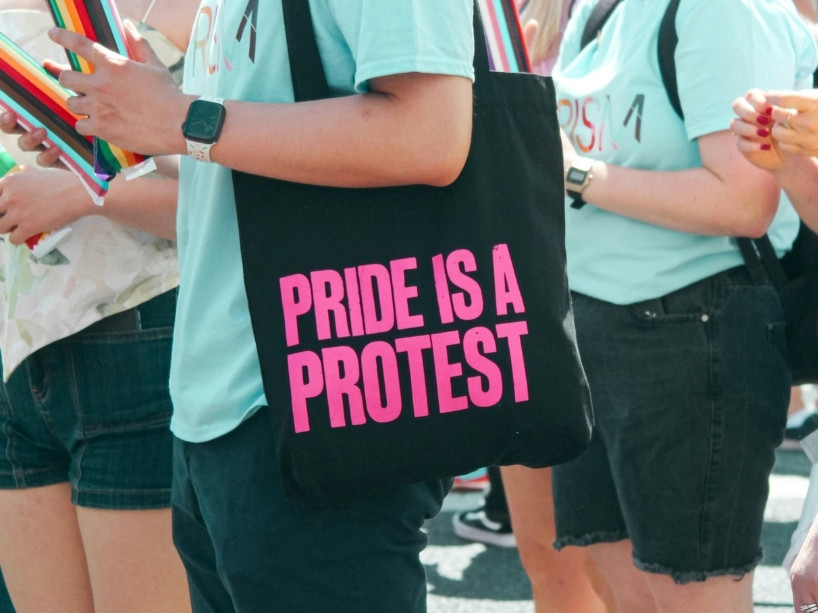
Pride parades are powerful symbols of the ongoing struggle for LGBTQ2S+ human rights. They represent a celebration of the community's resilience and a continuation of the fight for equality and recognition, building upon the struggles of earlier activists. Photo by Sophie Popplewell (external link) on Unsplash (external link)
So is there a way for organizations such as Pride Toronto to navigate changing corporate priorities, values and partnership decisions?
On this point, Kemper is straightforward and frank.
“Alignment between transgressive movements and Fortune 50 companies is unlikely to be a long-term reality,” she says. “If these organizations are going to accept corporate money, which I believe is extremely likely, they need to at least ensure that the donation is received before the expenditures occur.”
Related: