Are federal subsidies really solving food insecurity in the Canadian north?
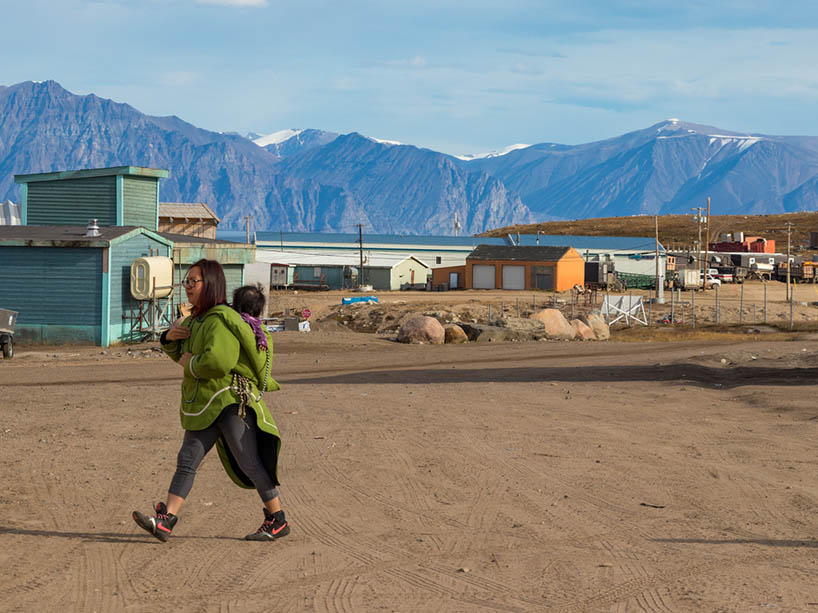
Findings show that for every dollar of subsidy paid to grocery stores in northern communities, prices for consumers fell by only 67 cents on average.
Access to food is an ongoing problem in northern communities and their mainly Indigenous residents. The government’s Nutrition North Canada (external link) program subsidizes nutritious food and some essential non-food items to make them more affordable and accessible to people in these remote communities. But are subsidies really solving the problem?
New research (external link) published in the Journal of Public Economics shows that federal funds sent to grocery stores aren’t fully reaching the consumers. Despite the government’s accountability measures and pledges by retailers to pass along subsidies to shoppers, food prices fell by only 67 cents on average for every one dollar of subsidy paid to retailers.
“What we’re seeing is that a substantial part of the approximately $130 million a year in federal funds that are intended to support the nutrition of Canada's most food insecure population, appears to be captured by large retailers,” says Nicholas Li, co-author of the study and professor of economics at TMU. Published in collaboration with Tracey Galloway, professor of anthropology at the University of Toronto, the research focuses on subsidy increases made in October 2016 and January 2019.
“Our findings show that existing accountability measures by the government are insufficient and there are few credible penalties the government could inflict on retailers lest prices go up even more or worse, a retailer is forced to shut down or exit the community altogether,” Li says.
Northern communities that qualify for food subsidies have little retail competition – most communities have only one or two grocery stores. “The dominant retailer is the North West Company, the successor of Hudson Bay Company's Northern retail division and fur trading outposts, which arose out of a historic monopoly on trade and may have stunted the development of a more robust, competitive, Indigenous led retail economy,” says Li.
Keeping monopolistic retailers accountable
Findings also suggest that people living in communities with a retail monopoly, meaning just one store, end up receiving a lower share of the subsidy from retailers – as low as 26 cents per dollar – compared to communities with two or more retailers. Only seven of the communities included in the study have more than two grocery stores, and the majority of them, about 80 per cent, either have a monopoly or duopoly.
The study looked at more than 80 remote communities, split evenly between Inuit-majority communities in the Northwest Territories, Nunavut, Northern Quebec and Labrador, and First Nations communities mostly in Ontario and Manitoba. The average community has about 1,000 residents, most of them lack year-round access by road, water or rail and are more than 1,000 kilometres away from the nearest service hub.
“Because of their remoteness, perishable goods are shipped by air and are extremely expensive – think two to three times the prices here in Toronto,” says Li. “The dual burden they face of low incomes combined with high food prices means there is an urgent need to find solutions and enhance food security in these regions.”
The Nutrition North Canada program undergoes periodic reviews, and Li considers greater transparency around prices to be part of the solution. Social and political pressure could then help keep retailers compliant, he says.
“In the long term, revisiting the form of the subsidy is worth considering. Recent changes in the program have increased support for community harvesting or community-based programs to address food insecurity. These are popular in the communities and may provide some competition or alternatives to just paying more subsidies to the retailers,” Li says.
Li has another research project underway that looks at whether cash transfers might be a more viable alternative and less subject to capture by monopolistic retailers.