Full-service access to education
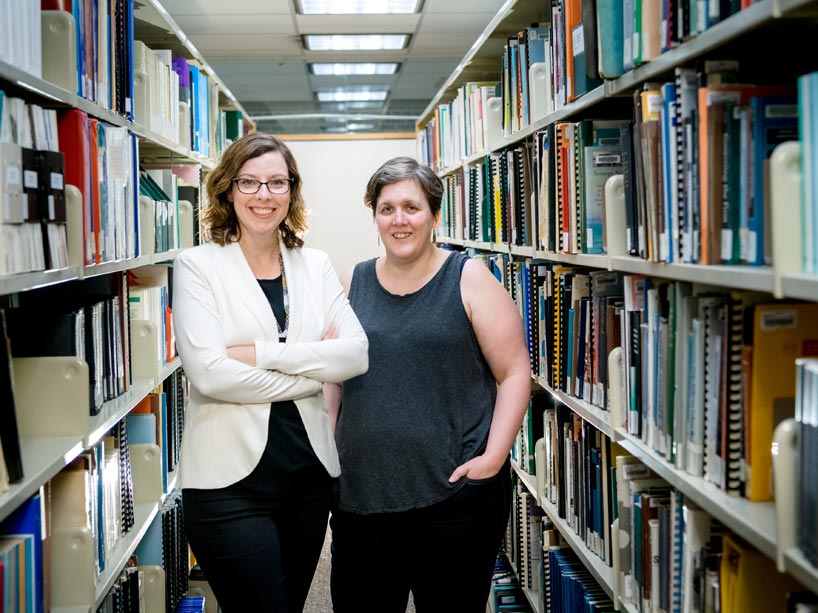
Kelly Dermody (left), librarian of e-learning and accessibility services, and Kraigen Brown, accessible formats and captioning technician, work together to create equal access to course materials. Photo credit: Clifton Li.
Marisol Pestana follows the same routine at the start of every academic term. The third-year disability studies student, who has low vision, collects course outlines from her various classes and brings them to Ryerson Library’s Accessibility Services. There, staff retrieve or create electronic versions of Pestana’s assigned, hard-copy textbooks, enabling her to access the digitized material via the JAWS text-to-speech screen-reading software on her computer.
The impact of the service can’t be overstated, says Pestana. “Without it, I wouldn’t be able to read my course materials or complete my assignments.”
That feedback means a great deal to Kelly Dermody, librarian of e-learning and accessibility services. Together with Kraigen Brown and Sonya Panangaden (on leave), accessible formats and captioning technicians, Dermody works to ensure all Ryerson students, faculty and staff have equal access to course materials and the library’s facilities, services and collections.
In particular, the team assists students with a perceptual disability, which prevents or inhibits them from reading or hearing a literary, musical, dramatic or artistic work in its original format. The disability may result from an impairment related to sight, hearing or comprehension, or the inability to focus or move one’s eyes or hold or manipulate a book.
In keeping with a key principle of Universal Design for Learning (UDL) – there isn’t a one-size-fits-all method of presenting information – professors can submit a request before courses begin to Library Accessibility Services to create course materials in a broad range of accessible formats. They include large print, MP3, braille, PDF and MS Word.
“We can also request readable PDFs from textbook publishers and scan materials in-house for assistive devices,” Dermody says. “In addition, we can work with faculty to add video closed captioning to course content.”
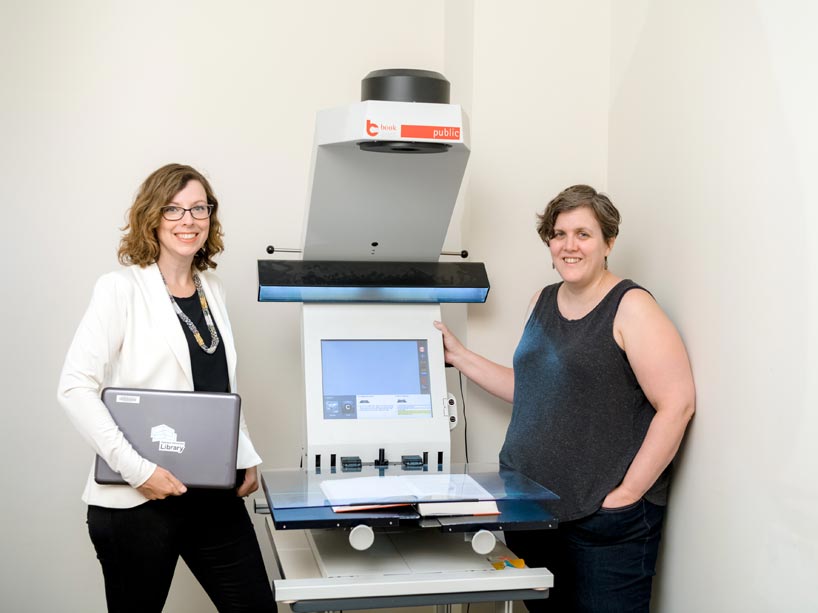
Dermody, left, and Brown, offer a range of accessibility services, including closed captioning, readable PDFs and scanning materials for assistive devices. Photo credit: Clifton Li.
Currently, the office’s database of accessible course materials contains more than 3,000 items and roughly 300 readings or textbooks are added each year. Once students have registered with Academic Accommodation Support, they can work with Library Accessibility Services to obtain accessible course readings or classroom handouts, and even library books and articles by request.
Disability studies instructor Chelsea Jones says it’s critical to consider the needs of all learners when designing courses, especially those offered online. Jones, who wrote about the topic last year in University Affairs (external link) magazine, says “gestures of access,” including transcripts, live captioning and American Sign Language interpretation, are at the heart of UDL strategies.
She, for example, has worked with Ryerson librarians to provide students with transcripts and has consulted with course developers on ways to improve accessibility within online courses. Examples include building interactive activities and connecting with students on a more personal level by facilitating webinar discussions. In 2015, Jones also worked with Ryerson’s Learning and Teaching Office to create five films that bring activist guest speakers into her online courses.
“When online learning seems distant and disembodied, it's important to bring in a human element,” Jones says.
For more information about developing and providing accessible classroom materials and course readings, please visit Library Accessibility Services.