A bridge to education

Spanning the Gaps program transforms lives through education. Photo Christopher Boffoli.
When Tali Ajimal first applied to Ryerson University, she was living at a shelter, working several jobs, and carrying the trauma of abuse. She didn’t get in.
But a fortunate phone call from Ryerson offered her a different path to post-secondary education.
Ten years ago, Ajimal joined the first cohort of Bridges to Ryerson, now known as the Transition Foundations program, offered by Spanning the Gaps – Access to Post-Secondary Education, a Ryerson University initiative designed to reach out to communities that are underrepresented in the university. Founded on the belief that education can help break cycles of inter-generational poverty and social exclusion, Spanning the Gaps is one of the ways Ryerson is working with the community beyond the campus.
Transition Foundations program
Each year, the Transition Foundations program welcomes new students. Through Ryerson’s G. Raymond Chang School of Continuing Education, the students, on a part-time basis, complete three or more courses in academic foundational writing, research and critical reasoning skills they’ll need to succeed in university. Meanwhile, the Spanning team provides holistic support to help mature learners stick to their goal.
“Access is not just about bringing students to Ryerson, but ensuring students are given the resources needed to successfully complete their undergraduate studies and find work, or progress further into graduate education,” said Michael Benarroch, provost and vice-president, academic. “Post-secondary education is a powerful tool, and though it is not the only path to success, in many fields it is a requirement and a point of differentiation for applicants in the competitive workforce.”
The Transition Foundations Program and its staff equip students with a myriad of learning strategies. All students in the program are supported by a case-coordinator, an academic success facilitator and instructors – who provide specialized training and coaching for students.
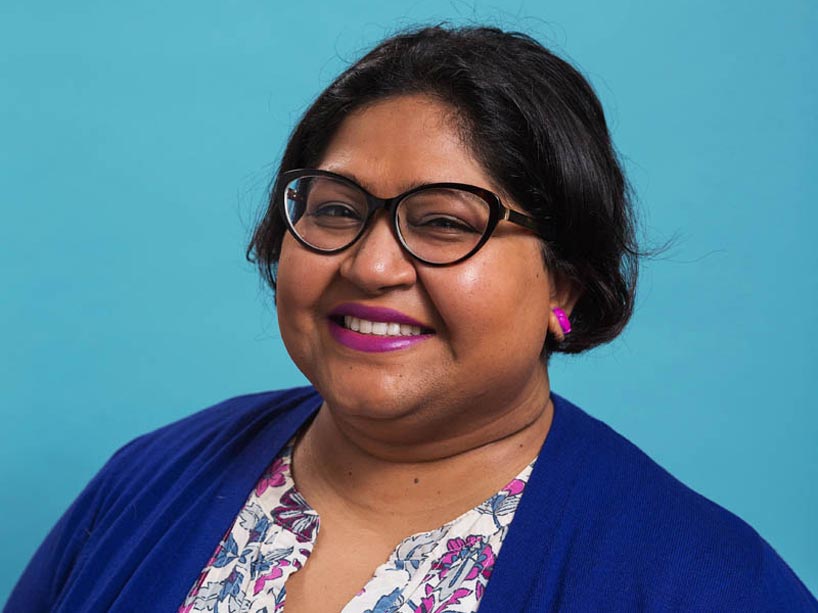
The courses are first-year university-level courses that build in difficulty and intensity, explains Janice Pinto, pictured left, lead case co-ordinator for Spanning the Gaps, as a way to cultivate resilience.
For Ajimal, pictured below to the right, the support was transformative. She left home after her stepfather sexually assaulted her and her mother told her she was lying. “I didn’t trust anybody,” Ajimal remembers. But the Spanning the Gaps staff kept calling Ajimal and checking in. They helped her write the letter to financial aid that explained why she didn’t have parental support, something that brought back painful, intense emotions.
“I started to trust them. I felt like they genuinely cared about my success. I didn’t want to disappoint them.”

Meeting the challenges
From counselling to helping with housing to addressing learning disabilities, the Transition Foundations program takes an intense, 360-degree approach to helping students succeed. The students are often the first in their family to attend university. Many students are balancing several roles and responsibilities, Pinto says. They are single parents, working multiple jobs, commuting, taking care of family members and committing to classes two or three nights a week.
To add to the challenge, many students are also battling trauma and anxiety.
Many of the students are living with learning exceptionalities and disabilities, which are sometimes only diagnosed after they’ve been assessed by specialized educators at Ryerson.
“Our goal at Spanning the Gaps is to increase post-secondary participation among students who might not otherwise have the opportunity to attend university,” says Marie Bountrogianni, dean, The Chang School. “We aim to support each student with their educational journey and help them reach their full potential.”
The Transition Foundations program shows students early on that they’re smarter than they think, and that they can succeed in university. That confidence boost was life-changing for Daniel Mohammed, pictured below, left. In high school his “slightly wayward” behaviour led teachers to see him as a disturbance.
Though he had always secretly dreamed of university, his marks weren’t high enough, so he went into the construction trade. But his interest in university only grew. At age 25, he heard about an information night for Spanning the Gaps, and enrolled for the next year.
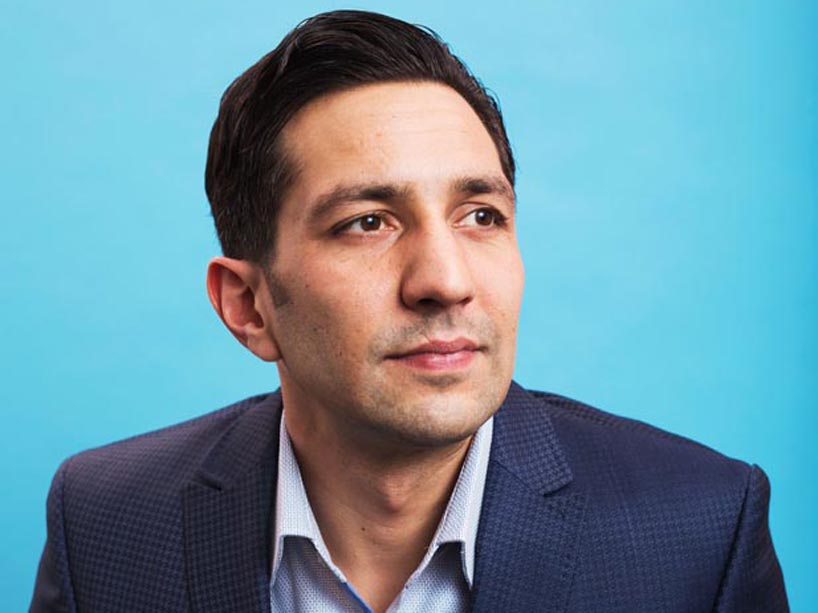
“The math support was really important because I’d been out of school for so long, and, with anything, if you don’t do it for a while, you kind of lose it,” he says. “The professors were very personable. You didn’t feel apprehensive to approach them.”
“I felt as if they would not allow me to fail. It’s not like they would bend rules or anything but they were on it. Are you okay? Is there anything we can do to help?” recalls Mohammed.
Becoming role models
Mohammed completed his bachelor’s degree in marketing at Ryerson and is now the marketing research and analytics manager of the Women’s Executive Network, where he encourages top companies to be more equitable, diverse and inclusive.
Ajimal completed her undergraduate degree in sociology at Ryerson and is a program assistant for the business management office in the Ted Rogers School of Management at Ryerson University.
Like Ajimal and Mohammed, many alumni of the program go on to support diverse voices in their workplaces and communities and they’re an asset to their university peers. “They’re incredible role models,” says Pinto. “There’s a lot of resilience, determination and expertise already built in them.”
This is an edited version of a story that originally appeared in the winter 2018 edition of Ryerson University Magazine. Find out more at Ryerson Access to Education.