TMU’s Serviceberry Tour: A Berry Blissful Foraging Harvest
In celebration of National Pollinator Week, TMU students, faculty, staff, and community members gathered on June 19, 2025 to take part in the first serviceberry foraging tour. Serviceberry, also known as saskatoon or juneberry, is a native shrub that produces sweet, blueberry-like fruits in early summer. These berries are not only edible and delicious but also play an important role in supporting local pollinators and wildlife.
The event was hosted by the Sustainability Office, the Urban Farm, the Centre for Studies in Food Security, and a faculty member from the School of Social Work. Participants had the opportunity to learn about and sample the fruit from over 20 serviceberry shrubs growing across the TMU campus. The event highlighted the importance of urban foraging (yes, there are edible trees on our campus!), fostering a pollinator-friendly environment in the heart of the city.
We started at the TMU Pollinator Garden, located along Nelson Mandela Walk. Erica Wilkinson welcomed the attendees to start the tour by introducing participants to the pollinator plants in the garden and how these, along with the serviceberry trees, provide food and shelter for native insects, birds, and mammals. Jomanah Hafez from the TMU Wildlife Club highlighted the importance of developing and protecting pollinator habitats, emphasizing their vital role in urban ecosystems. Before beginning the tour, Dr. Yukari Seko from the Centre for Studies in Food Security shared tips for ethical foraging:
- Take only what you need: Take no more than 1/3 of what’s available to ensure the plant can continue to thrive and our non-human friends can still access food.
- Know Before You Go: Make sure you’ve properly identified the plant and confirmed it’s safe to eat. Never harvest protected or endangered species.
- Harvest in the Middle of the Season: Avoid foraging at the very beginning or end of the season.
Participants then began their walk along Gerrard Street East, sampling serviceberries at Eric Palin Hall (EPH) and Pitman Hall Residence. During the tour, Dr. Chizuru Nobe-Ghelani shared the variety of edible plants in the area, then we strolled back along the Nelson Mandela walk.
More than just a walk, the serviceberry tour was an invitation to reflect on the land and its cultivating relationship, that we are called to be noble stewards of nature.
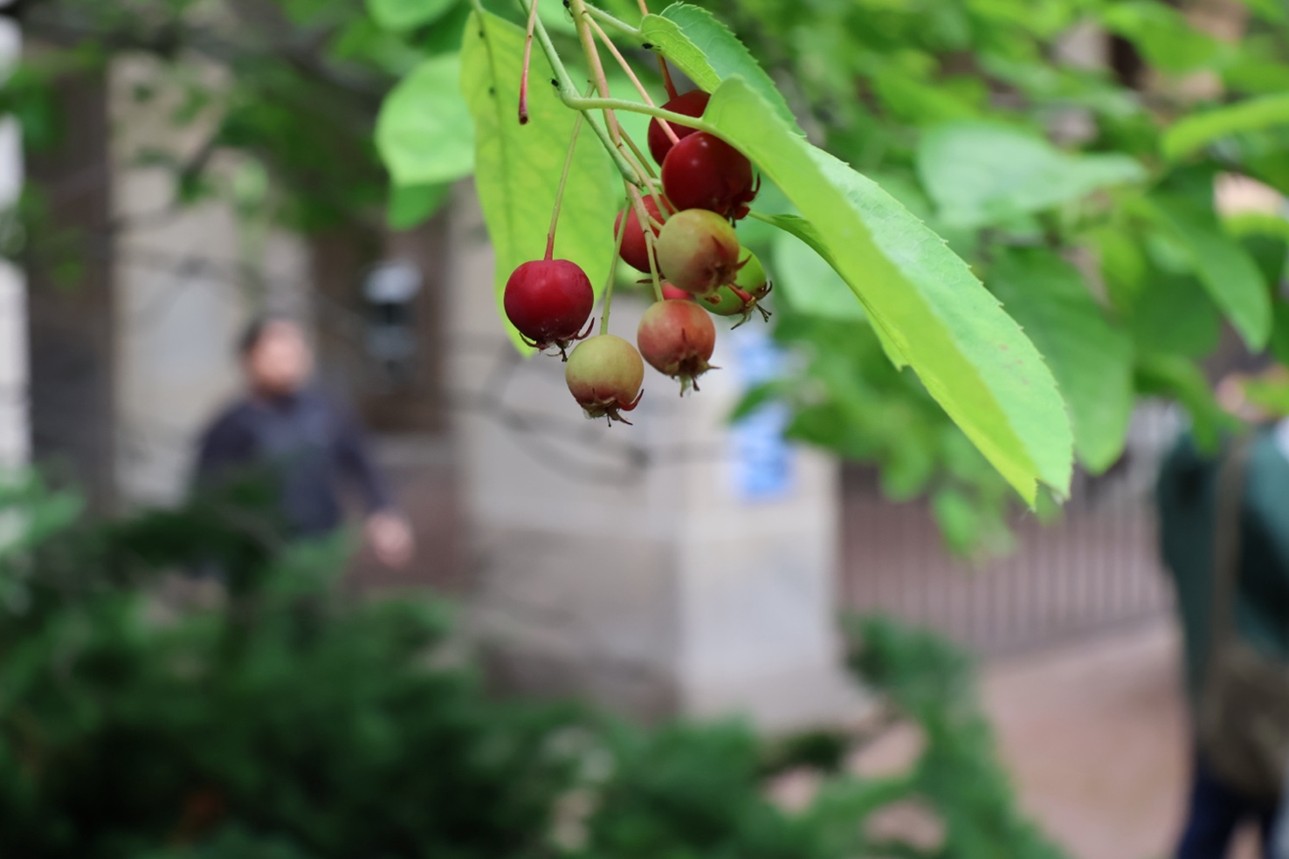
Across the TMU campus, there are over 20 areas where these Serviceberry bushes are located. Photo by: France Natera
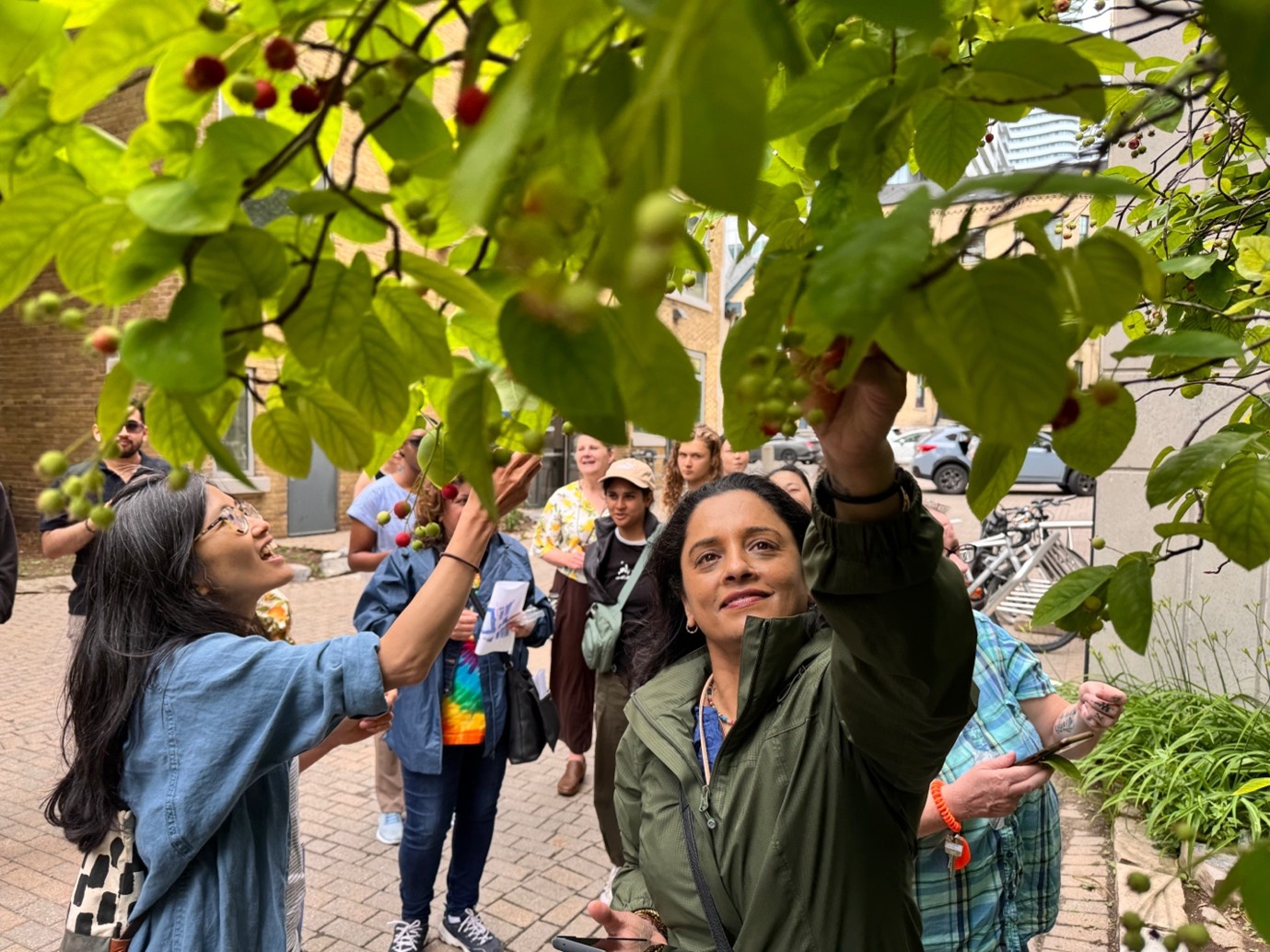
Participants get to pick and taste the serviceberries after choosing the ripe ones based on its color. Photo by: France Natera
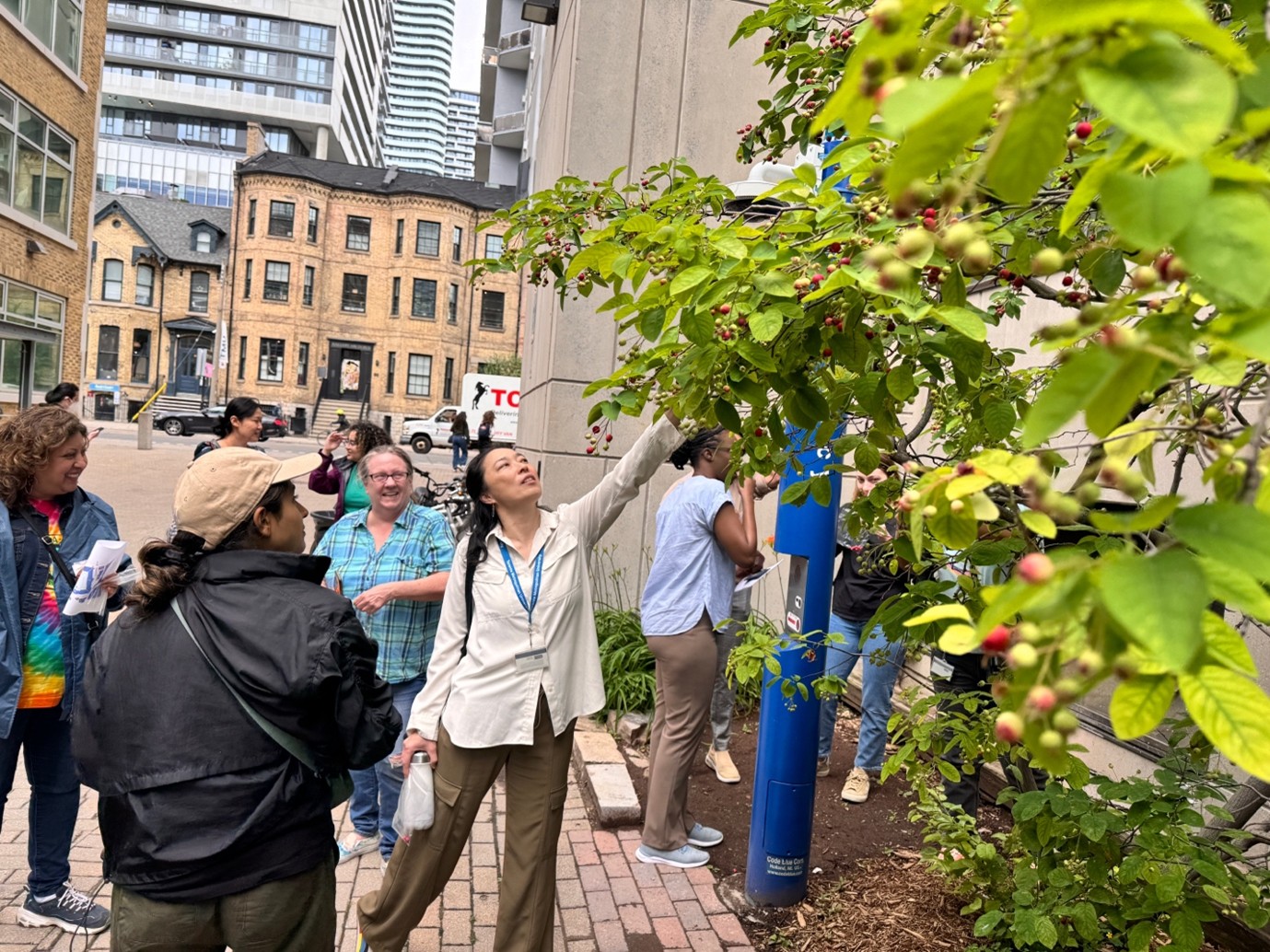
A group of attendees briefly stopping by Eric Palin Hall (EPH) to sample serviceberries. Photo by: France Natera
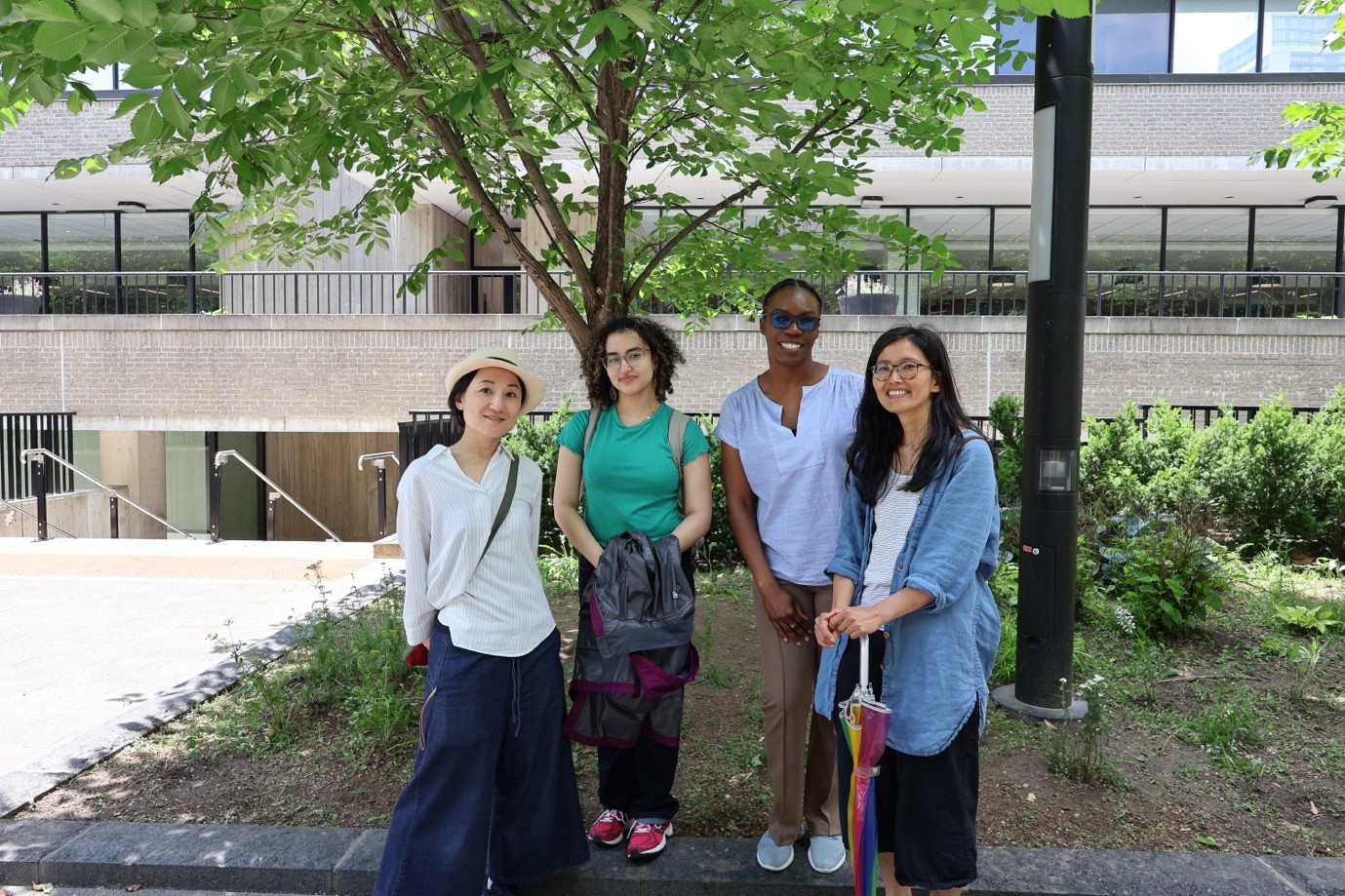
This Year’s Serviceberry Tour + Sampling event hosts are Dr. Yukari Seko from the Centre for Studies in Food Security, Jomanah Hafez from the TMU Wildlife Club, Erica Wilkinson from the Sustainability Office, and Dr. Chizuru Nobe-Ghelani from the School of Social Work. (From left to right) Photo by: France Natera