New Faculty Hires: Fall 2025

This fall, FCS welcomed 12 professors in seven of our schools. Some are new to TMU. Others are familiar faces. Each one brings unique talents, perspectives and personality to the faculty. Here’s what they shared about themselves, their teaching and their research.
School of Child and Youth Care

Professor Alamdar brings to TMU over a decade of experience in post-secondary teaching with York University's Human Rights and Equity program, and with various college Community Services programs. She has a strong interdisciplinary background— including social and political thought, law and criminlogy. Her scholarship and practice span many areas relevant to child and youth care, including justice for children, human rights, trauma, and social determinants of health of immigrants and refugees and disability. As a gender- based violence counselor, she’s also involved in a critical government funded project aimed at supporting all individuals at risk of, currently experiencing, or are survivors of gender-based violence.
What advice could you share with students in your field?
Use your time efficiently and try to learn new things as much as possible. When you encounter hardship and possible failure in life, don’t give up, but work on your resiliency while fighting to protect your life, rights and humanity. Be a gentle, caring and compassionate human who respects others and embraces helping others equitably.

Professor Webber’s research radically centres Black, Afro-Indigenous, and Indigenous youth in Turtle Island and expands into the Caribbean. She is deeply connected to her Little Jamaica community, where she works alongside community members as agents of change. Her efforts focus on addressing housing precarity, advancing community-defined wellness, challenging anti-Black and anti-Indigenous racism, affirming Black identity, confronting gender-based violence, and promoting transformative justice. Grounded in youth leadership and lived experience, her work challenges systemic inequities while advancing liberatory futures rooted in care, self-determination, and collective healing.
What do you enjoy doing in your spare time?
Lots of things! Traveling (especially to the Caribbean), acting and performing, creative writing, dancing, fitness, eating well and just taking care of the self, and expressing identity through fashion. I also love engaging with youth in the community, and hosting and bringing people together with good food and music.
Daphne Cockwell School of Nursing

Professor Straus (they/she) is a queer, autistic and disabled nurse scholar and educator who, since age 14, has been working with neurodivergent and disabled children, youth, adults, and their families. Their research focuses on neurodivergent, disabled, and 2SLGBTQIA+ well-being, equity, access and belonging using critical qualitative, intersectional, and arts-based approaches. They are particularly passionate about challenging stereotypes that contribute to exclusion, discrimination, and stigma in health care, education, and communities.
What do you enjoy doing in your spare time?
In summer, I enjoy my backyard patio, pool and garden. In winter, it’s watching crime dramas, medical dramas, and science fiction series or playing pool at the local billiards hall. I also volunteer weekly at an animal sanctuary in rural Niagara where I help care for the 80+ cats who reside there!
School of Disability Studies

Professor McEwan was the Tanis Doe Post-Doctoral Fellow in Gender, Disability, and Social Justice at TMU’s School of Disability Studies from 2022 to 2024. During that time, she actually developed liberal studies course DST 601 – Mad Poetics – which she taught in fall 2024. Her research focuses on cultural representations of madness, disability and transness from a position of lived experience, using literary, rhetorical, and cultural analysis to consider how language opens up spaces of autonomy and response to dominant cultural forms.
What do you enjoy doing in your spare time?
Outside of being a prof, I like spending time with my two dogs and a cat — all rescues — at the park near our house. I also really enjoy 60s-80s feminist sci-fi novels and have a collection of mass market paperbacks that I add to my partner and my vintage mass market collection. I’m also a big fan of Jeopardy!
School of Early Childhood Studies

Before joining TMU, professor Kovinthan Levi previously served as an assistant professor (teaching stream) at the University of Toronto's Ontario Institute for Studies in Education (OISE). She also formerly served as an elementary teacher with the Toronto District School Board, and education policy analyst with Global Affairs Canada, and has conducted research and worked in South Asia, Sub-Saharan Africa, and Central America.
What is your research program?
My interests include refugee education, multilingual language learners/English language learners, peace and conflict education, teacher education and early childhood education. As a former refugee-background student, I’m now excited to explore how we can create more inclusive and equitable learning spaces for newcomer children — including projects that partner with refugee-background and precarious status students and their families to support community-driven solutions to the challenges they face in accessing quality education.
Midwifery Education Program

Professor Abdel-Fattah is a TMU alumna (Midwifery ‘13) and a practicing midwife. She enjoys working with a diverse urban population and is passionate about increasing access to midwifery and sexual and reproductive health care for socioeconomically disadvantaged people. With two passions — maternal and newborn health care and travel — she has explored maternal and child health care in various areas including Antigua, the Canadian Arctic, Tanzania and India.
What advice can you share with students?
Stay curious. People are socially, culturally and biologically complex and our knowledge continues to advance and evolve. Success in healthcare comes with curiosity, openness and a desire to continue to learn, adapt and grow as your career unfolds.
Visit Prof. Abdel-Fattah’s bio page

Professor Booth is a settler of mostly British Isles descent, born and raised in Toronto / Tkaronto, and parent to a teen. She has studied cultural studies, theatre, English literature, gender studies, midwifery, and most recently, education and Indigenous health. They’re also TMU alumni and became a registered midwife in 2002 after graduating from the Midwifery Education Program. From 2005 on, she has worked alongside the Indigenous midwives who started Seventh Generation Midwives Toronto and the Toronto Birth Centre.
What do you enjoy doing in your spare time?
I like to spend time outdoors — making attempts at gardening, going for hikes and walks, or better yet, getting on the water when possible in a canoe or kayak. I'm not a huge winter outdoors person, though!
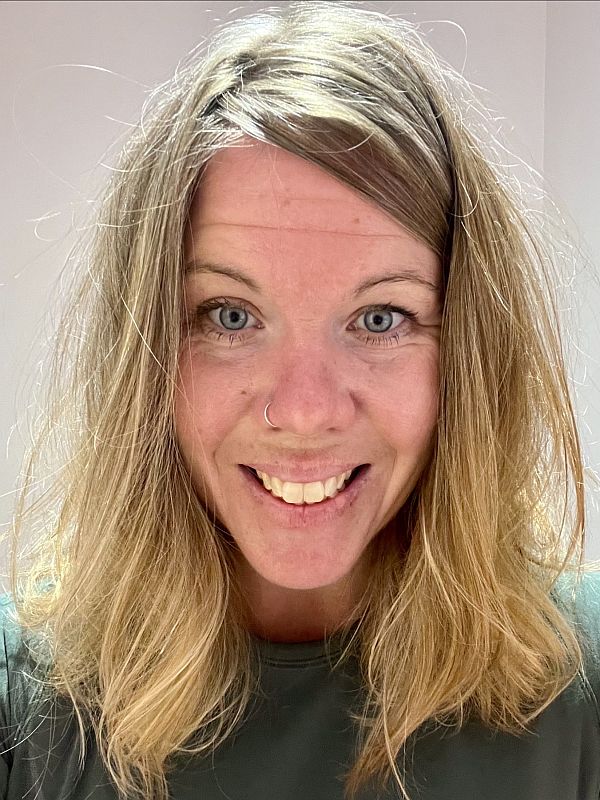
Professor Middleton is both a social worker and midwife. As a social worker, she worked at the community and national levels, primarily in sexual and reproductive health. After gaining experience as a trauma therapist with sexual assault victims, she later became motivated to become a midwife to facilitate safe passage for people giving birth.
What is your research program?
I specialize in birth trauma healing and perinatal mental health for both the birthing person and the family unit. My research program explores the lived experience of psychological birth trauma using intersectional feminist trauma theory. In particular, I explore how individuals heal and move on from birth trauma, and will be exploring methods to improve communication and centre the individual giving birth in order to reduce birth trauma.
School of Occupational and Public Health

Professor Olding is a public health researcher specializing in community-based, participatory, ethnographic, and qualitative methods. Her work focuses on harm reduction, HIV prevention, and improving health care for people who use drugs. Over the past decade, she has partnered with drug user organizations and service providers to support program development and community responses to the ongoing overdose crisis.
What do you enjoy doing in your spare time?
I enjoy reading speculative fiction — stories that break from ordinary life and invite us to imagine different realities. I’m especially drawn to horror, a genre experiencing a resurgence as a powerful lens for exploring systemic violence, collective trauma, resistance, and survival. Lately, I’ve been reading a lot of queer and Indigenous horror — preferably curled up with my dog and a cup of coffee!
School of Urban and Regional Planning

Professor Haseeb is an urban planner by profession and a TMU alumna with a PhD in Environmental Applied Science and Management. Her research focuses on transportation, sustainability and the built environment, using quantitative methods to address contemporary urban challenges. Her work highlights pathways toward sustainable mobility and has been featured in top journals such as Transportation Research Part A, Case Studies on Transport Policy, and Journal of Transport Geography.
What advice could you share with students in your field?
Stay curious and pay attention to what’s happening around you in planning — from local transportation projects to regional policy debates that shape communities. Build strong technical expertise in analytical and quantitative methods, but also learn to connect data with lived experiences. Effective planning integrates rigorous technical skills with an understanding of social contexts and the complex dynamics that shape everyday life.

Professor Mandhan's work focuses on unearthing and incorporating culture into the planning and design of cities. She has worked on a range of collaborative city building projects in the Greater Toronto Area, the United States, the United Arab Emirates, and India. Her current research program focuses on understanding how culture impacts the perception and use of spaces in the city by diverse populations, and the role of planning practitioners in creating spaces that are more culturally-safe and inclusive.
What advice can you share with aspiring urban planners?
Learn by doing! That’s so important in such a highly applied field as planning. Do internships, volunteer, attend public meetings, participate in walking tours and events, meet other planners, and don’t be shy to ask questions. A lot of planning learning happens outside of the classroom. So, engage with your cities with an open mind and lots of curiosity.

Professor Wen brings to TMU a background in academia and non-profit, mostly in the U.S. (New York, Washington, D.C., and Texas). She has taught in urban planning programs and collaborated with labor unions on strategic research and advocacy. Her scholarship now focuses on urban economics, public finance, and community development.
What do you enjoy doing in your spare time?
I like playing musical instruments, studying languages, writing stories, making games, and exploring places with my dog (and sometimes my two cats).