Midwifery student pulls the curtain back on parenthood
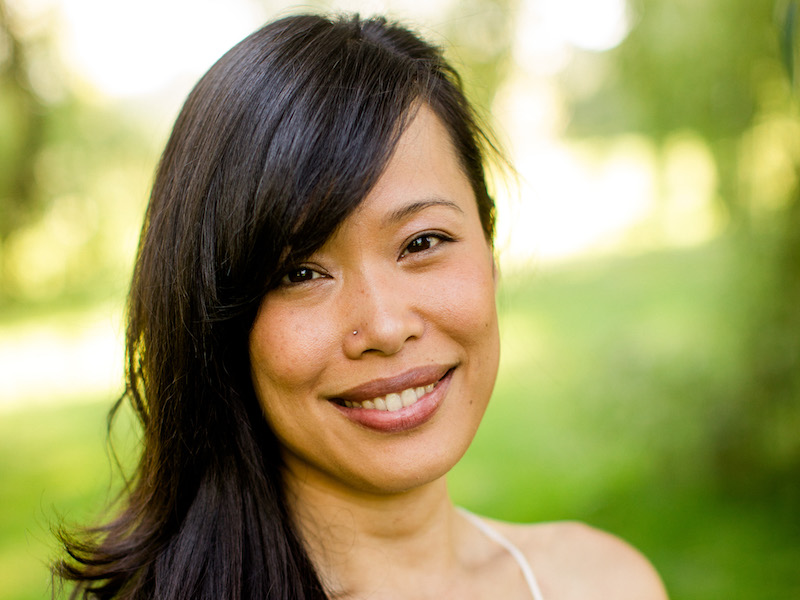
Mai Ngo, the Ryerson midwifery student who created The Birth Talks podcast about intersectional feminism in pregnancy, birth and parenting. Photo: Bartek & Magda | http://www.bartekandmagda.com (external link)
Mai Ngo is a midwifery student at Ryerson who believes that the way giving birth and parenthood is portrayed in media and among women and gender-diverse folk does not show all sides of pregnancy, birth and parenting.
She wanted a way to show the real challenges of parenthood and giving birth, not only from her own perspective, but from the view of people who have had many different experiences.
Ngo started The Birth Talks (external link, opens in new window) , an intersectional feminist podcast, to tell these stories. Intersectionality describes how different factors of discrimination can meet to affect someone's life. Intersectional feminism allows the fight for gender equality to be inclusive for everyone.
I spoke to Ngo about how she got the podcast started and where she wants it to go in the future.
How has your experience at Ryerson shaped the podcast?
I think being part of the Midwifery Education Program is actually one of the reasons why I was inspired to do the podcast. In one of the first classes I took, we talked a lot about power and privilege within midwifery, and how we practice with clients and within the field. I noticed that a lot of people in the class had different opinions on what it meant to be a midwife and how it was to work with pregnant people and families. I was really surprised by the different range of perspectives, and the fact that there is still a lot of power and privilege that play out within the profession. That inspired me around the importance of talking about intersectional feminist lenses within midwifery. I think that’s definitely shaped a lot of the podcast.
Why is an intersectional feminist perspective important?
Midwifery has traditionally been a women-led profession, however, I think because it’s been a marginalized profession for so long, it’s had to look at how to fit in with mainstream medical practices and it’s had to change with the evolution of intersectional feminism. When it was regulated in Ontario back in the 1990s, it had to compromise a lot of its feminist values in order to fit in with the more mainstream medical community. Having a feminist perspective in midwifery helps to ensure that all people can have not only a safe birth but also a birth that they want. Intersectionality is important because things work differently for different people and different cultures do things differently. We want to make sure that we are not imposing Western culture on everybody because we don't know what the best way to give birth is and it could be different for everybody. Everybody has different experiences and they are all valid. We want to bring all types of stories to the podcast so that people can decide what works for them.
What is your most memorable story from the podcast?
I actually really like the one on Feministing in the 21st Century (Season 1, Episode 3) (external link, opens in new window) . It was about Indigenous birth activists and what their views of feminism and being a birth worker are in this current day and age. I really enjoyed that episode because they challenged me in terms of thinking about feminism in a different way.
Did getting a Femmy Award inspire you to go further with the podcast or change the way you see your work?
I think it was really uplifting to get it and be in a room with hundreds of other feminists in Ottawa. At the time my podcast was really new, and I knew midwifery students and people within the midwifery community were listening to it, but I didn’t know that other people were accessing it, so that was really motivational. It didn’t change the way that I was doing the podcast but it definitely gave me a lot of energy to keep telling stories that weren’t being told in the mainstream media. Doing intersectional feminist work is always a fine line between “am I offending people?” and “is this well-received?” The fact that it got that support was very energizing.
How do you think this podcast might grow in the future?
I love the storytelling aspect but for me it’s always about how it connects back to the community. Last year I partnered up with Branch Out Theatre and we did a performance called The Birth Talks Presents. We brought together ten women-identified folk from across different lived experiences who told their stories on stage. We worked with them for six weeks so that they could write their stories and learn how to perform them. I think if we could bring The Birth Talks podcast more into the community as a healing and storytelling tool, that’s something I would love to see more of. We’re pairing up with the Ottawa Birth and Wellness Center for the next series coming up in February.