Expanding Scholarly, Research & Creative (SRC) Activity
In the 2023–24 period, Toronto Metropolitan University’s (TMU) overall research funding reached $95.8 million. TMU attracts and nourishes local, national and international strategic partnerships and collaborations to support cross-disciplinary scholarly, research and creative (SRC) activities that address complex real-world challenges.
Tri-Agency Funding
Canada Excellence Research Chair Program
The Canada Excellence Research Chair (CERC) program is known worldwide as one of the most prestigious of its kind. This $8-million, eight-year program is funded by the Tri-agency Institutional Programs Secretariat.
In the 2023–2024 fiscal period, TMU’s Faculty of Community Services gained a new CERC in Health Equity and Community Wellbeing. Karen Soldatic, a communication and culture professor, will lead this transformative research initiative, collaborating directly with diverse, marginalized communities to expand understanding, practice and delivery of health outcomes for all community members.
Canada Research Chairs Program
Administered by the Tri-Agencies, the Canada Research Chairs (CRC) Program attracts and retains world-class researchers in the humanities, engineering, and the natural, health and social sciences.
In this fiscal year, TMU saw two newly named CRCs awarded to emerging researchers who demonstrated the potential to become globally acclaimed scholars.
April Khademi (Biomedical Engineering), the new Tier 2 Canada Research Chair in AI for Medical Imaging, will focus on designing and deploying artificial intelligence (AI) and machine learning tools to augment the workflows of radiologists and pathologists and drive more efficient and accurate diagnoses.
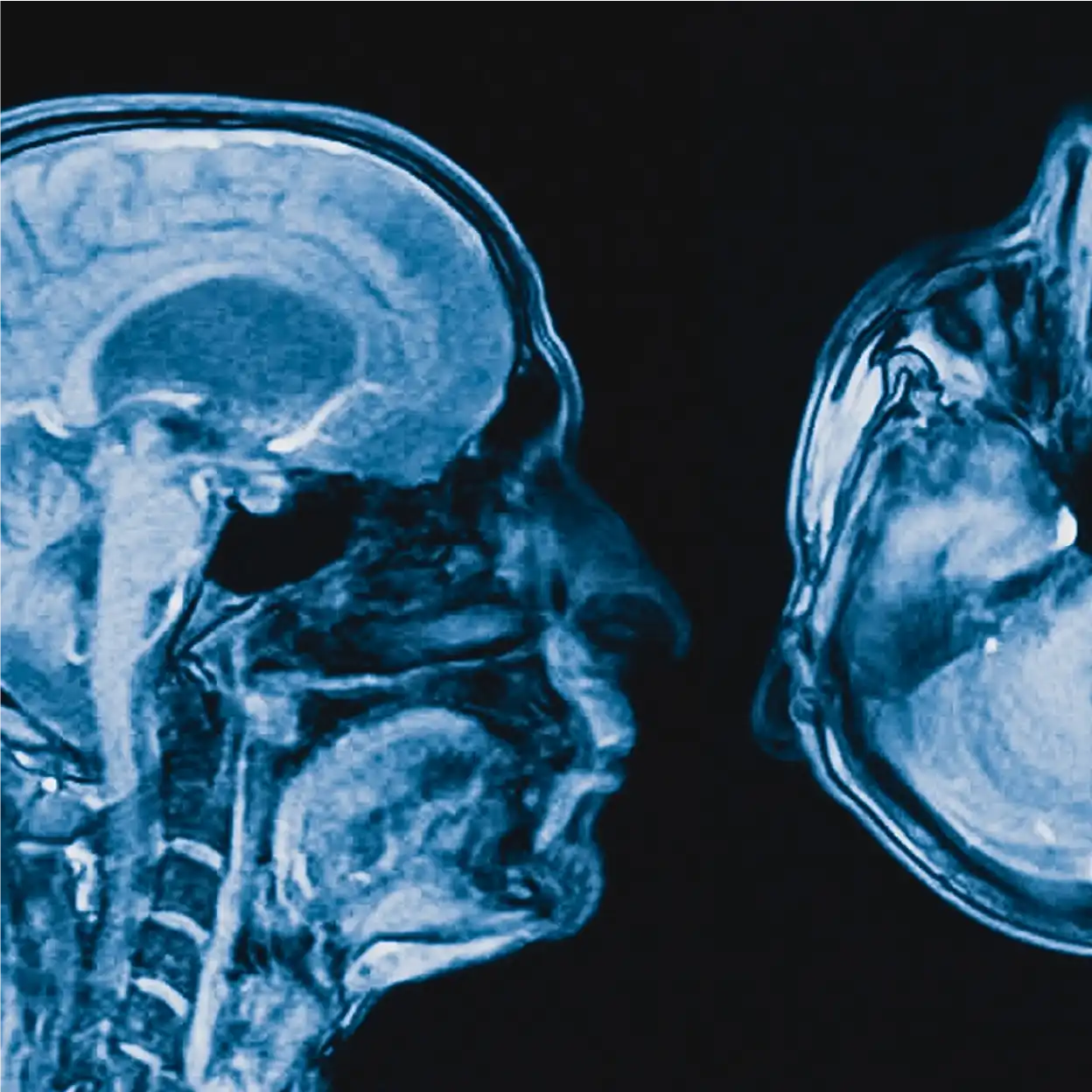
M. Natasha Rajah (Psychology), the new Tier 1 Canada Research Chair in Sex, Gender and Diversity in Brain Health, Memory and Aging, will work to develop a more inclusive understanding of the trajectories of cognitive aging and healthy and pathological brains using magnetic resonance imaging (MRI) and cognitive testing of adults from diverse backgrounds.



Total Tri-Agency funding


Canadian Institutes of Health Research (CIHR) funding

Natural Sciences and Engineering Research Council of Canada (NSERC) funding

Social Sciences and Humanities Research Council (SSHRC) funding
Canadian Institutes of Health Research (CIHR)
Costin Antonescu (Chemistry and Biology) received a Project Grant to improve our understanding of the signalling proteins that transmit signals for cell growth and division, which also drive tumour progression. This work could provide opportunities for the development of new cancer treatments.
Dafna Sussman (Electrical, Computer, and Biomedical Engineering) received a Project Grant to validate an easy-to-use radiological software package to automate or assist in the evaluation of fetal MRIs to help triage MR images, predict abnormalities and reduce the backlog of waiting times for exams.
Scott Tsai (Mechanical, Industrial, and Mechatronics Engineering) received a Project Grant to develop a non-invasive technology for cancer biomarker isolation, leading to a liquid biopsy for prostate cancer.
Natural Sciences & Engineering Research Council of Canada (NSERC)
Aliaa Alnaggar (Mechanical, Industrial and Mechatronics Engineering) received a Discovery Grant for her work modelling uncertainty related to crowdsourced delivery systems to help create systems that are sustainable, efficient, reliable and consider worker welfare.
Behrang Keshavarz (Psychology) received a Discovery Grant to advance our fundamental understanding of vection, the feeling of being in motion when you are not in motion, which will support the development of virtual reality applications used for training simulations, rehabilitation and entertainment.
Jenn McArthur (Architectural Science) received an Alliance Grant to develop and apply digital twin technologies, virtual versions of physical objects or systems, to optimize building performance, including the reduction of energy consumption.
Claire Oswald (Geography and Environmental Studies) received a Discovery Grant to study the cumulative impacts of climate change and urbanization on the water cycle and water quality to inform the management and governance of urban water resources.
Social Sciences & Humanities Research Council of Canada (SSHRC)
Janelle Brady (Early Childhood Studies) received Insight Development Grant funding to clarify how anti-Black racism can be disrupted, confronted and challenged in the early childhood education and care context, engaging the concept of Black refusal, which rejects the status quo within a system that denies Blackness.
Lynn Lavallée (Social Work) received support through an Insight Development Grant to engage Indigenous women, two-spirit (2S), transgender and non-binary people in traditional ceremonial activities and teachings and build a network of ceremonialist and traditional knowledge holders.
Nicholas Li (Economics) received an Insight Development Grant to evaluate a federal subsidy program that was implemented to improve food affordability, nutrition and food security in Canada’s remote Northern communities.
New Frontiers in Research Fund (NFRF)
The NFRF is housed within SSHRC on behalf of all three of Canada’s federal research funding agencies.
Kelly McShane (Business Management) received funding through the New Frontiers in Research Fund International Joint Initiative for Research in Climate Change Adaptation and Mitigation to collaboratively investigate how conservation agriculture can empower smallholder women farmers and mitigate climate-related risks to their living standards, food security and health.
Krishnan Venkatakrishnan (Mechanical, Industrial, and Mechatronics Engineering) received funding through the New Frontiers in Research Fund Exploration stream to research a first-of-its-kind nanoisotope generating technique that could lead to new opportunities in early cancer diagnosis, cancer nano-immunotherapy and rapid diagnosis of virus/bacterial infection.

Municipal, Provincial & Non-Tri-Agency Federal Funding
Non-Tri-Agency Federal Funding
Ian Young (Occupational and Public Health) received funding from the Public Health Agency of Canada to investigate, identify and characterize the risks of acute illness in humans and companion animals due to toxic cyanobacterial blooms exposure in targeted, popular freshwater beaches in Ontario and Manitoba.

Total municipal, provincial and non-Tri-Agency federal funding

Total non-Tri-Agency federal funding

Provincial Funding
Tara Collins (Child and Youth Care) received support from the Ontario Ministry of Colleges and Universities for her work with the International and Canadian Child Rights Partnership to create the first integrated knowledge base of relational practices, ethical frameworks and child rights education initiatives for equitable intergenerational partnerships.
John Enright and co-investigator Reza Faieghi (Aerospace Engineering) received support from the Ontario Centres of Excellence (now the Ontario Centre of Innovation) to investigate technologies that can enable the operation of aerial vehicles in indoor environments such as warehouses and factories to assist workers.
Esther Ignagni (Disability Studies) received support from the Ministry for Seniors and Accessibility through Ontario's Enabling Change program for a collaboration with Ontario disability networks to develop a health-care curriculum that foregrounds the expertise of disabled people.

Total provincial funding

Total municipal funding
Municipal Funding
Yemi Adediji (Urban and Regional Planning) partnered with The City of Toronto to develop an evaluation framework to help prevent crime through the design of physical infrastructure like pedestrian bridges, tunnels and transit shelters.
Kathryn Underwood (Early Childhood Studies) partnered with The Regional Municipality of Durham to evaluate the activities, impacts and efficacy of special needs resourcing services for childcare from the standpoint of staff, childcare centres, family support programs, families, and other stakeholders.
Christopher Wellen (Geography and Environmental Studies) partnered with The Lake Simcoe Region Conservation Authority to study the management and impacts of increased winter salt use on the Lake Simcoe watershed.
Industry & Non-Government Funding
TMU’s research collaborations with industry, not-for-profit and community partners facilitate innovative solutions to real-world problems, benefiting Canadians through improved health care, social equity, culture, science, technology and economics.
Cheri Bradish (Marketing Management) received support from Canadian Tire Jumpstart Charities, which selected The Future of Sport Lab as its sole academic partner for its Women’s Sport Initiative to support the next generation of female leaders in sport innovation.
Nicole Ineese-Nash (Early Childhood Studies) worked with Nishnawbe Aski Nation Corporate Services to help define what high quality Indigenous Early Learning and Child Care (ELCC) means to First Nations and to support the ongoing education and training of ELCC leaders, management and staff.
Hayden King (Sociology) received support from the Definity Insurance Foundation to build the research infrastructure of the Yellowhead Institute for a range of projects that centre Indigenous voices, empower Indigenous communities, influence government policy and transform structures that discriminate against Indigenous people.
Mehrab Mehrvar (Chemical Engineering) received support from the Rideau Hall Foundation to establish water security and resilience in reserves and dispersed communities of northern Colombia, ensuring access to safe drinking water and sewage treatment facilities.

Total industry and non-government funding
Industry funding
Foundation and non-profit funding