Need career inspo? See how TMU arts grads are landing top-tier careers
What kind of job can you get with an arts degree? Pretty much anything you set your mind to.
From English to economics, TMU students in the Faculty of Arts are learning how to solve problems locally and globally. An arts degree teaches you how to become a leader, how to use creativity and data together and how to help people in your community and beyond.
Three Faculty of Arts alumni share how their degrees and their time as TMU students laid the foundation for their successful careers.
Sharon Seilman, geographic analysis ’14
Director, Climate Strategy at Manulife

Sharon Seilman began her career using spatial analytics to help cities reach their climate goals. Now, she’s leading the enterprise-wide climate strategy at a major global company.
Purpose and impact have defined Sharon Seilman’s career path.
After graduating with her bachelor of arts in geographic analysis with a minor in political science, she continued to pursue more education at TMU. She earned a post-graduate certificate in applied digital geography and geographic information systems (GIS). Then, she followed that with her master’s in civil engineering.
She has influenced climate strategy on both a local and global level. She started working in GIS using spatial analytics to design low-carbon energy systems and move cities toward net-zero emissions. With each new role, the reach of her work expanded.
“From the City of Toronto to TD Bank and now Manulife, I have moved from local implementation to global influence, connecting data with decisions and strategy with impact,” she said. “My journey has been anything but conventional.”
At Manulife, she leads the enterprise-wide climate strategy. She uses data to help her map this strategy out, as well as understand risks and opportunities and shape long-term resilience. She says her mandate is to turn ambition to action, including integrating decarbonization and climate risk into core business functions.
'Accelerating impact'
“It’s about accelerating impact at scale and positioning the organization to shape a future where climate-related risks and opportunities are not just managed, but leveraged as catalysts for transformation,” said Seilman.
Seilman credits TMU for teaching her how to think strategically, ask questions and challenge conventional thinking. She adds, her geographic analysis degree was not just about maps.
“It was about understanding how data, economics, location and policy converge to shape outcomes. It taught me to think systemically and strategically, to identify patterns, connect the dots and apply insights in ways that influence real-world decisions” she said.
“The combination of technical training and real-world application gave me the confidence to tackle complex challenges and the agility to adapt as the pace of change accelerates. Most importantly, TMU taught me to lead with impact – a principle that still guides my work today,” said Seilman.
Steve O'Hearn, criminology ’14
Supervisor of youth programs at Halton Children's Aid Society
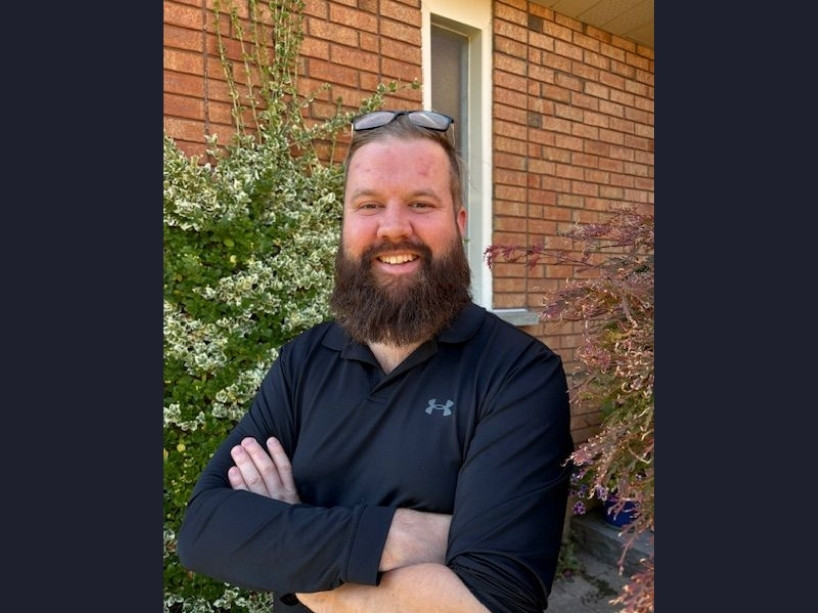
A single course at TMU inspired Steven O’Hearn to pursue his rewarding career helping at-risk and homeless youth.
A course on homelessness at TMU inspired Steven O’Hearn (criminology ’14) to pursue a career helping at-risk and homeless youth.
“We did an experiment where we stood outside asking for money with our hats in hand. It made me realise how unhoused people are viewed. It gave me a passion for wanting to support at-risk and homeless youth,” said O’Hearn.
He started working in group homes and youth shelters and eventually came to manage the youth shelter. He found it to be rewarding work.
“My work comes with so much gratitude that youth want to work with us,” he said.
Today, O’Hearn is the supervisor of youth programs for Halton Children's Aid Society. He works with youth aged 16 to 24 and supports them in achieving their housing, education and employment goals.
'Love seeing youth succeed'
“My day-to-day duties include supporting all of the staff and securing funding for future projects,” said O’Hearn. “I love seeing youth succeed and move forward.”
For O’Hearn, critical thinking and problem solving are two of the most valuable skills he learned as an arts student at TMU. He also gained a deep understanding of different cultures and how to serve different communities.
Since every day at his work presents a new challenge, these skills help O’Hearn take a client-centred approach to finding solutions.
“It makes all the difference,” he said.
Gayle Ramsay, geographic analysis ’90
Chief data and analytics officer and head, customer lifecycle management, personal and business banking Canada at BMO
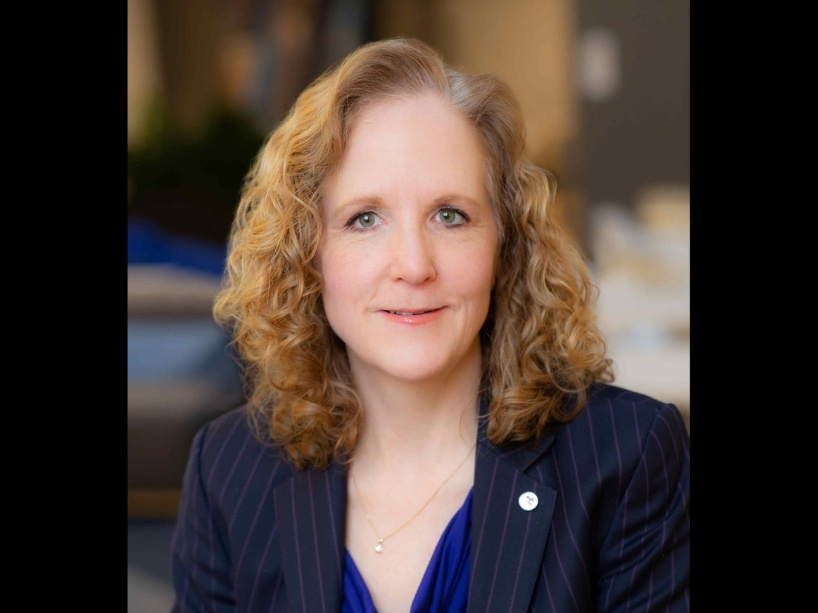
Gayle Ramsay’s expansive career includes leadership roles at major financial institutions and a telecommunications company.
The start of Gayle Ramsay’s (geographic analysis ’90) career aligned with her geography degree. But today she leads an advanced data and analytics team that focuses on growth and customer loyalty in banking.
“I had never expected that I would be in the career I am in today when I first graduated from TMU,” said Ramsay. “It has been an amazing ride so far.”
The geography program taught Ramsay how to assess data and find real-world solutions in areas such as real-estate development and business location. One of her first jobs involved assessing, making recommendations and building the future of a retail branch network for a large financial institution.
Next, she moved into data and analytics, which became the foundation of her career for years to come.
Playing a critical role
In senior and executive positions, she worked on direct marketing, developed a company-wide marketing strategy and led the implementation of the brand, advertising, customer analytics and digital marketing capabilities. She also developed strategies to provide retail clients with products and services that meet their everyday banking needs.
In her current position at BMO, Ramsay plays a critical role. As a leader, she is responsible for helping her team learn to use analytical insights and machine learning to build stronger, more personalized client relationships. Her work is driving long-term value creation for her company.
“My arts degree helped me with my ability to assemble a large set of information and use critical thinking to derive insights and develop a strategy to drive business outcomes,” she said.
“TMU taught me to look at a problem and assess all the relevant facts to make effective decisions. It also taught me to focus on the strategy but also to develop a comprehensive plan on how to implement the strategy. As I like to call it the ‘What and the How’,” she said.
As for particularly helpful classes, Ramsay mentioned the retail location, consumer research and statistics courses.
Learning transferable and technical skills
Despite taking different programs, Seilman, O’Hearn and Ramsay all learned how to think critically, solve problems and become effective leaders – skills that are needed in every job sector. TMU and the Faculty of Arts helped them find their passions and purposes and gave them the technical skills to succeed.
Learn more about the Faculty of Arts’ thirteen undergraduate programs and unlock endless career possibilities.
Related Stories: