TMU prof's film chosen as Canada’s Oscar submission
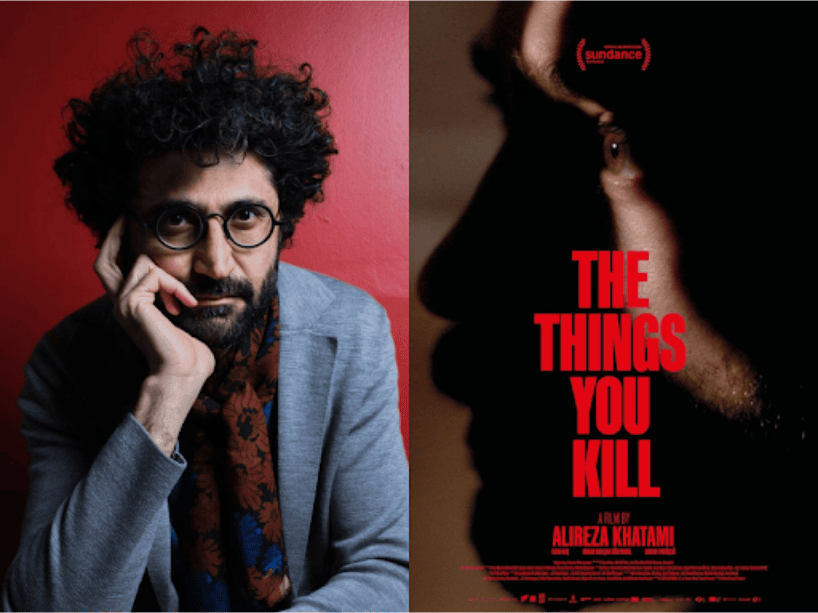
A Toronto Metropolitan University (TMU) professor is gaining international attention for his psychological thriller, The Things You Kill, Canada’s official entry for Best International Feature at the 98th Academy Awards.
Image Arts professor Alireza Khatami’s film has already won top honours at the Sundance Film Festival, with the World Cinema Dramatic Directing Award.
Critics have praised the film for its intense storytelling, suspense and exploration of themes like memory and grief. It tells the story of a university professor who convinces his gardener to take revenge for his mother’s death.
Q&A with Alireza Khatami

We caught up with Khatami to hear more about his film and how he brings his craft of filmmaking to TMU classrooms.
What inspired you to create this film, and what was it like to translate something so intimate into a psychological thriller?
I have always believed that the most personal stories can become the most universal when told honestly. By shaping my story into a psychological thriller, I was able to give the audience both an emotional entry point and a sense of mystery that mirrors how memory works: fragmented, unsettling, never fully clear. It was less about translating my private life into cinema and more about creating a space where audiences could confront their own fears and doubts through the story.
How does it feel to have your work selected as Canada’s submission for Academy Award consideration?
It’s profoundly meaningful to me because this film began as a very small, fragile idea and now it carries the hopes of an entire country on a global stage. I don’t see it as a personal victory so much as a recognition of the collective effort of our team, who brought their courage and artistry to every frame. To have a film that wrestles with grief, memory and patriarchy representing Canada, a country that still rolls red carpets for the King of England, carries its own layers of irony.
What challenges did you face in bringing this story to the screen, and how did you navigate them?
The biggest challenges were both practical and emotional. On the practical side, we were working across multiple countries, languages and funding systems, which made every step, from casting to post-production, a puzzle. On the emotional side, the subject matter demanded vulnerability from everyone involved, and we had to create an environment where the cast and crew felt safe enough to go to those raw places. I navigated this by being transparent about my own connection to the material and by encouraging open dialogue, even when it slowed things down. That honesty ultimately strengthened the film.
What do you hope audiences will take away from this film?
I hope they leave with more questions than answers. The film isn’t designed to provide resolution but to create a haunting space where audiences can sit with ambiguity. If it sparks conversations about power, violence and the ways we construct our own identity, both personally and collectively, then it has done its job. And for cinephiles, I hope they enjoy the formal risks we’ve taken and find joy in how the film plays with cinematic language.
How does your experience as a filmmaker shape the way you teach and mentor students at TMU?
I approach teaching the same way I approach filmmaking: with a commitment to risk-taking and truthfulness. Having navigated the complex realities of independent cinema, from funding and production to festival politics and distribution, I try to give my students a clear-eyed view of the industry without crushing their artistic spirit. I emphasize that filmmaking is not just about craft but about building communities of trust and learning how to fight for one’s vision in a world that often demands compromise.
What advice do you give TMU students about using personal experiences as fuel for their storytelling?
I encourage students to start from their own lives but to treat those experiences as raw material rather than sacred texts. Personal stories gain power when they are transformed through craft and imagination. I tell them to ask not just, “What happened to me?” but “Why does this matter to others?” and “How can this connect to larger human questions?” Vulnerability is essential, but so is distance. The goal is to create work that is emotionally honest and yet expansive enough to resonate with people far beyond their own circle.
What lessons from the filmmaking process do you hope your students carry with them into their own creative careers?
At its core, filmmaking is a way of knowing yourself. Each project becomes a mirror that reflects not only the world you are depicting but also who you are as a creator and collaborator. I hope my students understand that the process will always involve setbacks, rejections and compromises, but those challenges are part of the journey of self-discovery. If they can approach their careers with resilience, curiosity and integrity, they will not only make art but also grow as human beings; and that growth will shine through in their work.
The road to the Oscars: what’s next?
With The Things You Kill now chosen as Canada’s submission for best international feature film, the Academy will narrow the contenders to a shortlist of 15 titles on Dec. 16. From there, the nominations will be revealed on Jan. 22, leading up to the 98th Academy Awards ceremony on March 15, 2026.