Pow Wow dancer brings Indigenous perspectives to science classroom, community
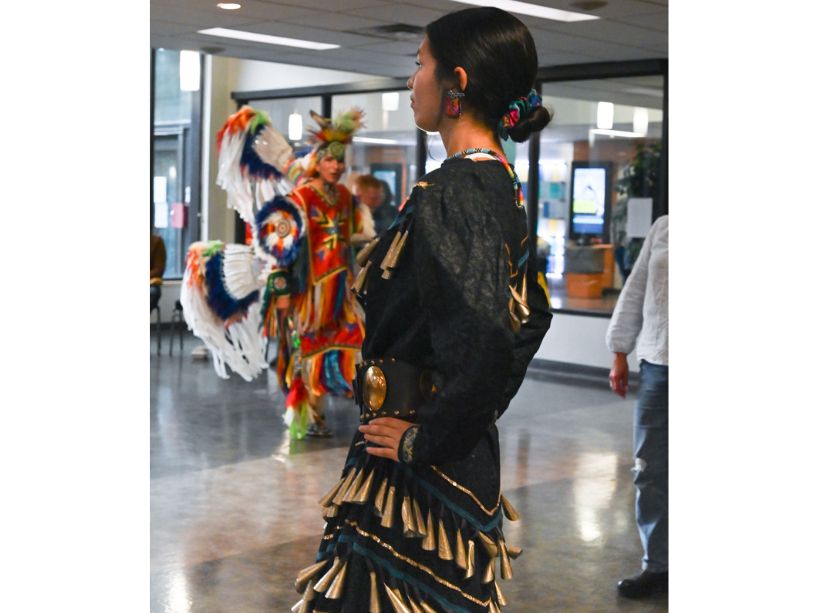
Fourth-year biomedical sciences student, Alacea Yerxa, integrates Indigenous perspectives into her course work and shares Indigenous knowledge and values on and off campus. She'll be participating in TMUs annual Pow Wow on Sep. 12. (Photo: Emma Yerxa)
Pow Wows have always been a part of Alacea Yerxa’s life and identity.
“As soon as I could walk, I was introduced into the Pow Wow circle through a ceremony,” said the fourth-year biomedical sciences student.
A Pow Wow (Pwaaganigaawin) is a social and cultural gathering where Indigenous communities come together to celebrate traditions through dance, music, regalia, food and storytelling.
“It's very engaging, welcoming and overall positive energy,” Yerxa said. “You're able to see and appreciate all the other Indigenous cultures come together for a Pow Wow.”
Walking through the quad, people will be exposed to the uplifting spirit that Indigenous celebrations have.
Yerxa mainly participates in Pow Wows as a jingle dress dancer and fancy shawl dancer. The jingle dress — regalia adorned with small cones that “jingle” when the dancer moves — is known as a healing dress, and she says wearing it means making a commitment.
“There is a deep spiritual and community connection” she said. A connection she doesn't take for granted.
Yerxa will dance with her peers and other community members in Toronto Metropolitan University’s (TMU) annual Pow Wow on Sept. 12. This year’s theme is “Honouring Mother Earth.” The event will take place outside in Kerr Hall Quad (weather permitting).
“Something really special about TMU’s Pow Wow is that it exposes a lot of people from many different backgrounds and cultural identities to Indigenous culture and celebrations,” she said.
From Treaty Three Territory to Toronto Metropolitan University
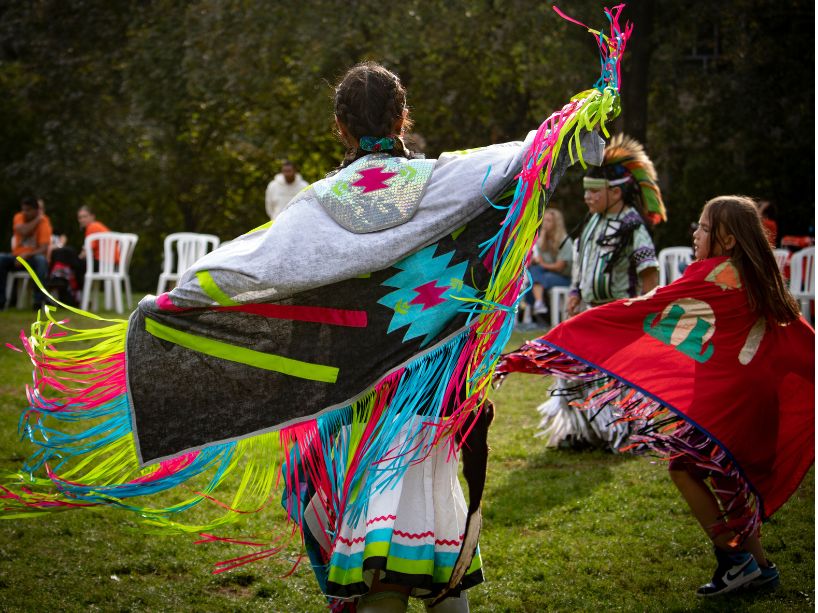
The fancy shawl dance can be seen at Indigenous Pow Wows, integrating colourful shawls that captivate onlookers and showcase a dancer's skill, while also expressing their cultural heritage.
Yerxa’s spirit name is Giizibaa Giizigoons, which means “the centre part of a whirlwind.”
She is Anishinaabe on both sides of her family, but also acknowledges her Italian ancestry on her maternal side.
She belongs to the sturgeon clan and grew up in Couchiching First Nation, located on Treaty Three Territory in Northwestern Ontario.
“I grew up on reserve my entire life, until moving to Toronto to start my first year of university.”
As Yerxa finishes her final year at TMU, she plans to pursue a master’s degree.
Incorporating Indigenous identity and perspective in STEM
Yerxa incorporates traditional Anishinaabe knowledge into her studies with the “Seven Grandfather Teachings,” which are key to fostering Mino-Bimaadiziwin, or “the good life.”
For Yerxa, integrating Indigenous knowledge and perspectives in different activities at the university “brings a holistic point of view that sometimes lacks within STEM [Science, Technology, Engineering and Mathematics].”
Yerxa acknowledges that she is not a Knowledge Keeper. Instead, she connects what she knows with STEM concepts and believes in sharing knowledge.
She points to the birch bark canoe as an early example of Indigenous engineering. Made from birch trees, the bark is lightweight, flexible and waterproof, and the canoe’s construction shows a deep understanding of natural materials.
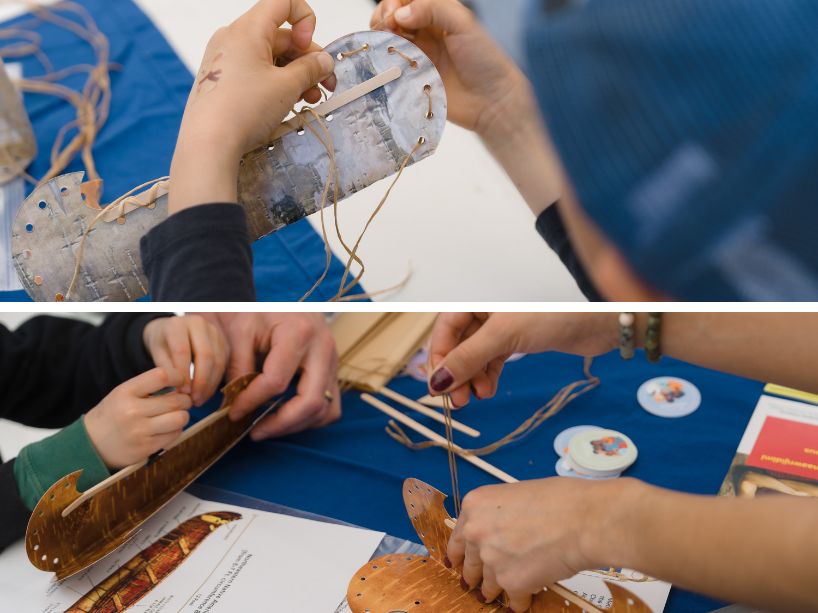
Model birch bark canoe workshop led by Alacea Yerxa explores the early engineering design process and Indigenous innovation at Science Rendezvous at TMU. This free festival makes science accessible with a day of engaging, informative and interactive events. (Photo: Clifton Li)
Yerxa explains that every part of the tree is used when making canoes — even the roots. This follows Indigenous ways of knowing and being through the Indigenous principle of minimizing waste and restoring balance within the world around us.
The knowledge, intentional design, ceremony and values behind the canoe’s construction reminds us that Indigenous hunters, gatherers and caretakers have always been engineers and scientists. History has often failed to acknowledge Indigenous contributions to science and technology.
Leadership in STEM at TMU and beyond
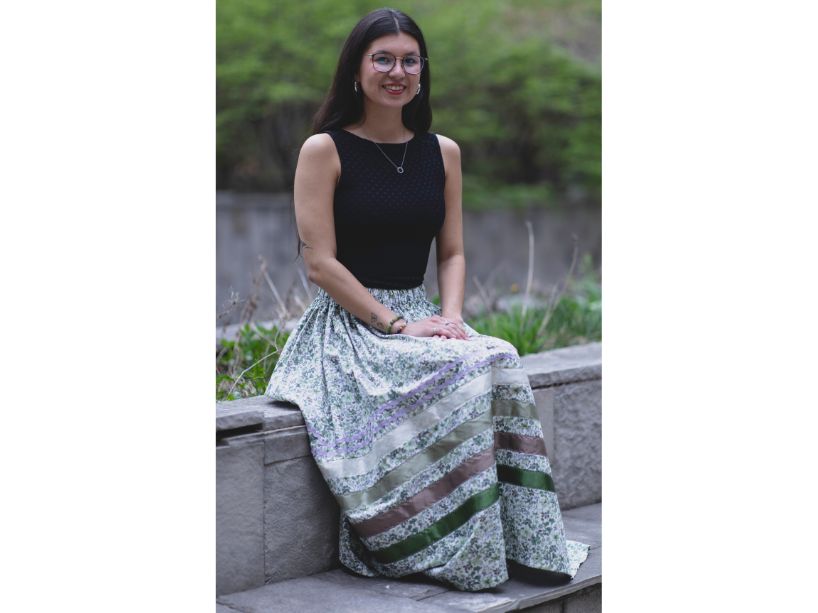
Alacea Yerxa was honoured for her biochemical research at this year's Indigenous Student Showcase and Awards Recognition event in April. She wears a traditional ribbon skirt which holds Indigenous cultural and spiritual significance, as well as a form of cultural reclamation. (Photo: Nadya Kwandibens at Red Works Photography)
Throughout her time at TMU, Yerxa has earned several awards, including the Durst Family Award for Indigenous students in the Faculty of Science for three consecutive years.
Yerxa has also received a Wipro Scholarship and the Indigenous Excellence Award for demonstrating community leadership in STEM.
Last year, she was one of two students at TMU to receive the Alan Shepard Equity, Diversity and Inclusion Award.
Outside of her studies, Yerxa is president of the Indigenous Student Association (ISA), which builds a safe and welcoming community for Indigenous students.
The ISA hosts cultural activities like drum and ribbon-skirt making while fostering relationships and networks with other students and professionals.
“I definitely prioritize relationship building, especially within the Indigenous community,” she said.
As Indigenous outreach lead in the Faculty of Engineering and Architectural Sciences, Yerxa’s work focuses on building a STEM program that incorporates Indigenous and Western knowledge, such as the early engineering design process of the birch bark canoe.
She mainly works with students from grades three to 12 at the Wandering Spirit School (Kapapamahchakwew).
There, she has facilitated student-led programs in robotics, encouraging students to be leaders in their own learning.
Yerxa’s integration of her Indigenous identity, values and perspectives into her role as a STEM student leader demonstrates a deep respect and honour for her community’s teachings and bridges academic excellence with outstanding leadership.
Join TMU’s annual Pow Wow
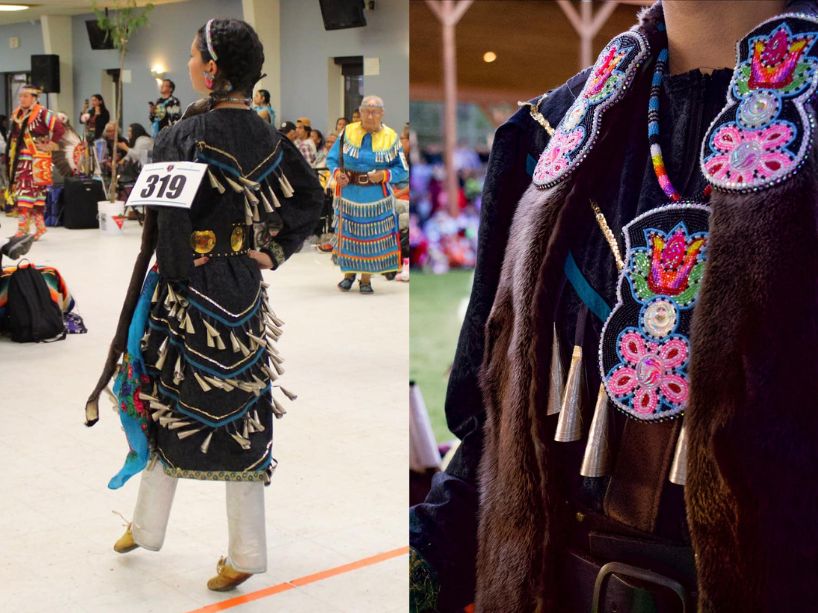
Alacea Yerxa in her jingle dress and traditional regalia as she participates in Pow Wow ceremonies. (Photo: Emma Yerxa)
Join Yerxa along with Indigenous leaders and community members at TMU’s annual Pow Wow on September 12.
Visit the website for the full description and details.
Related stories: