Fluent in care: Resident physician brings connection to the ER
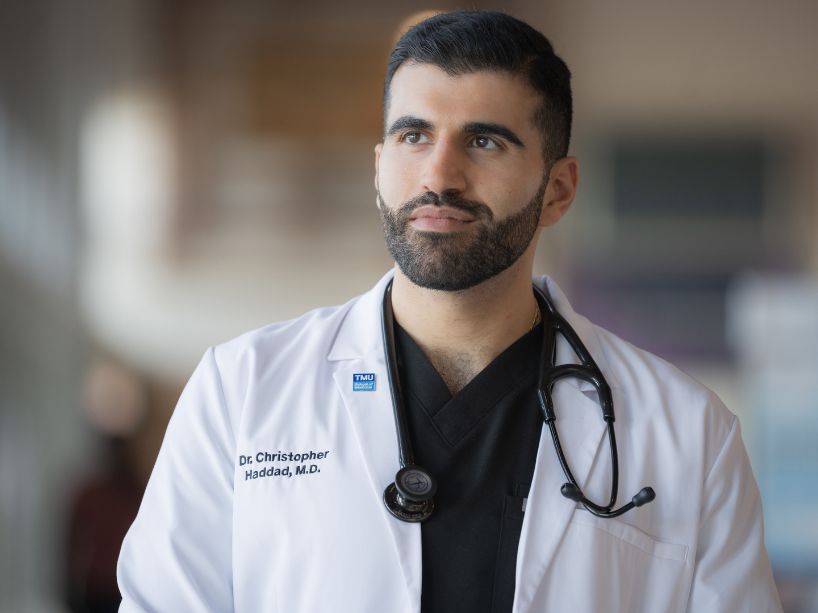
TMU School of Medicine resident physicians are already helping to boost health-care access in the region, in clinics and hospitals, and showing what community-centred care looks like. Photo credit: Alyssa K. Faoro
It was another busy evening in the emergency department this past July at Etobicoke General Hospital.
A young woman entered the ER with severe abdominal pain.
She was new in Canada and English was not her first language. Struggling to understand her care team added to her distress.
As a member site of William Osler Health System, TMU School of Medicine's clinical partner, the hospital provides a clinical learning environment to help train the next generation of physicians. One of these is TMU family medicine resident Dr. Christopher Haddad, who was working with the ER team that evening.
“The patient was in severe pain, alone and vulnerable. I knew I had to help as much as I could,” recalls Haddad.
Connection counts
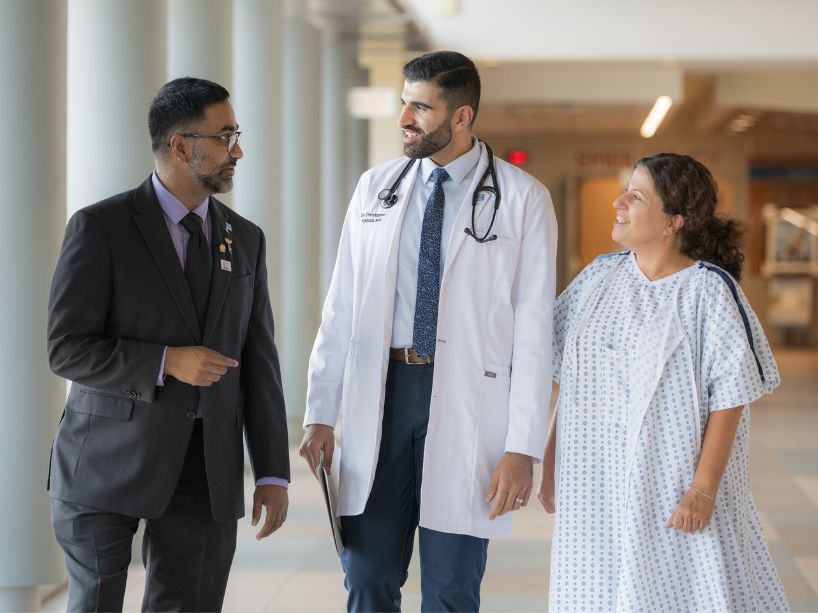
Dr. Jobin Varughese (left), interim assistant dean, primary care education, is working with resident physicians like Dr. Christopher Haddad (centre) to tackle the challenges facing primary care in Ontario. (Photo: Alyssa K. Faoro)
Haddad asked the distraught ER patient her first language. She spoke Arabic, and so did he.
In that moment, the barriers between them fell.
“The relief on her face when she realized I spoke her native language was palpable,” he said.
She explained her symptoms and history, which pointed to a reproductive issue requiring urgent care.
Haddad stayed by her side as she moved between ER doctors, specialists and nurses, ensuring there was mutual understanding every step of the way.
“Speaking Arabic allowed me to communicate her needs, guide her through the process and provide reassurance in an emergency,” he said.
My residency training experiences reinforce how clinical skills, communication and cultural competency can work in tandem to provide patient-centred care.
The call of community
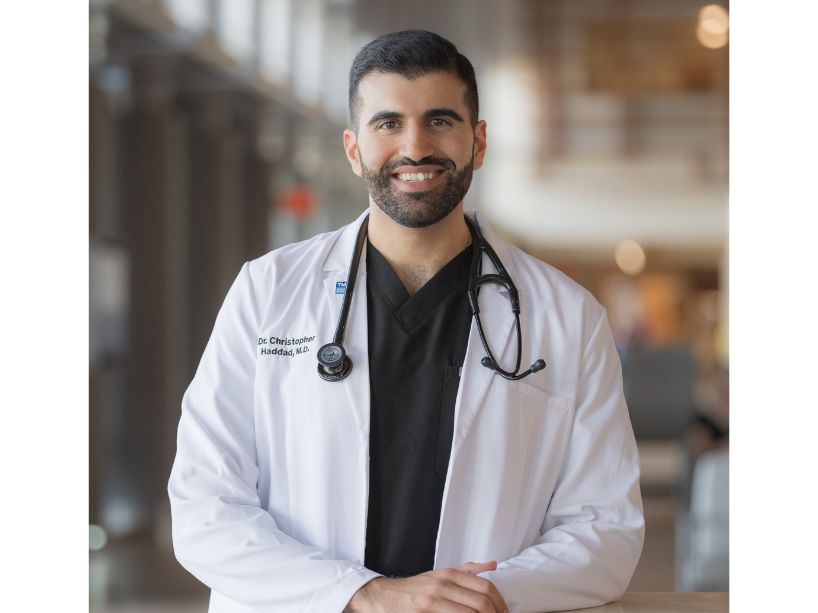
Dr. Christopher Haddad builds patient trust, breaks barriers and boosts health equity to transform health care in the community. (Photo: Alyssa K. Faoro)
Haddad is fluent in Arabic and French, and is learning Armenian. He also has a talent for connecting with people.
Born in North Etobicoke, Ont., to Lebanese immigrant parents, he moved to Brampton, Ont., (the site of TMU’s new School of Medicine) at the age of 16.
As a native English speaker, he grew up collapsing barriers for newcomers, whether translating for new immigrant students at his Rexdale, Ont., high school, or helping his parents find an Arabic-speaking family doctor.
He remembers how finding a doctor that could speak their language did more than just take care of his family’s physical needs, it also supported their social integration.
“My family doctor helped my parents navigate employment, find public services and create awareness of resources like community centres and libraries.”
Those experiences drew Haddad back to the region to fulfil his life-long calling as a physician.
“I saw a need among the communities of the region to be treated beyond the physical and to help address the social needs as well,” he says.
For Haddad, family medicine offers opportunities for dynamic, long-term care that can span everything from research and tech innovation to urgent care. All this while improving health outcomes, building relationships and providing lasting benefits to communities.
Giving back
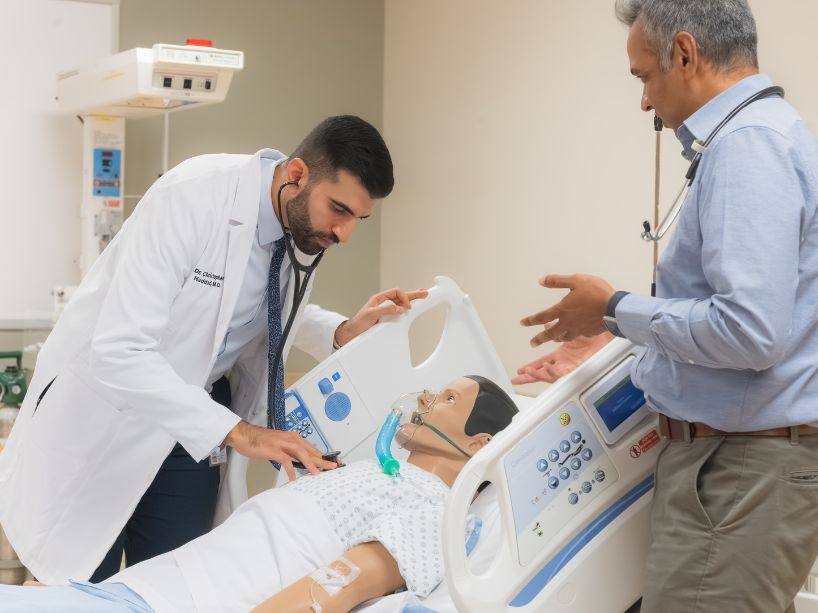
TMU School of Medicine’s state-of-the-art, high fidelity simulation labs will feature life-like medical mannequins that can breathe and respond to treatments. The highly realistic models enhance the training experience, simulating real-life scenarios and allowing students to practice in a safe environment. (Photo: Alyssa K. Faoro)
Haddad completed medical school internationally, and obtained his kinesiology degree at the University of Toronto.
He grew up volunteering in the community, and, during university, worked as a part-time personal trainer at a Brampton community centre. He was a physical trainer to clients that ranged from sixteen to their mid-seventies.
“I was able to help others, in particular my elderly clients, improve their range of motion and enhance their physical health, improve mobility and their strength over time,” said Haddad. “Being part of clients' progress over the long-term was rewarding.”
Similarly, TMU’s family medicine residency program embeds physicians in the community by placing them in the same family practice or community health centre for the full two years of training, allowing them to build relationships with patients.
The medical school’s on-site Integrated Health Centre, opening later this year, will allow patients to see the residents as their primary care physicians, supported by the clinicians and an interprofessional team.
Residents will have the opportunity to build rapport and long-term relationships with patients who could follow them into future practice.
By fostering continuity of care through consistent, coordinated and connected health care, community ties are strengthened, creating incentives to remain practising in the region after graduation.
Recently, Haddad had a newborn visit the clinic.
“I told the parents, ‘I'm going to be here for the next two years to watch her grow and provide care for your child, through all the important milestones’,” he said. “It’s rewarding building those patient relationships and being part of the community.”
“Unlike visits to an ER, where treatment addresses an immediate issue, family doctors know their patients’ medical histories and life circumstances,” said Dr. Jobin Varughese, interim assistant dean, primary care education, TMU School of Medicine and president of the Ontario College of Family Physicians.
He says that knowledge allows them to spot patterns, anticipate needs and provide preventive care that improves overall patient health.
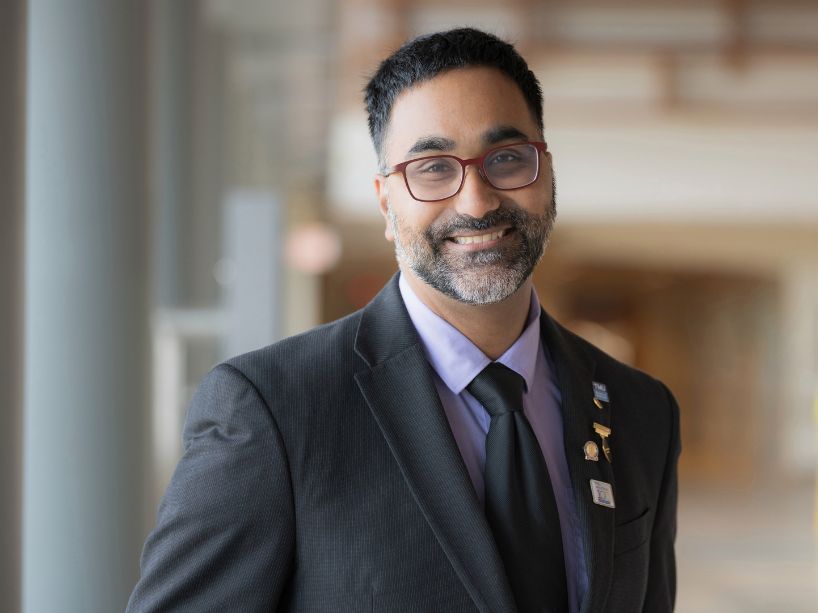
Dr. Jobin Varughese (left), interim assistant dean, primary care education, is committed to training physicians who will be ready to serve with compassion and cultural competence.
Balancing technical skill and bedside care
Local clinics like the one Haddad trains in are most eager to hire new graduates who will be proficient both in hard and soft medical skill sets.
“Soft skills are just as important as clinical procedures because they build trust, improve patient understanding and adherence, enhance safety and ensure care remains patient-centred,” said Haddad.
“On the soft skills side, we need to demonstrate active listening, the ability to clearly communicate medical information, showing respect and collaborating effectively with the care team.”
As a future primary care physician, I will work to help address systemic health-care challenges and address the family physician shortage in Canada.”
The future of health care
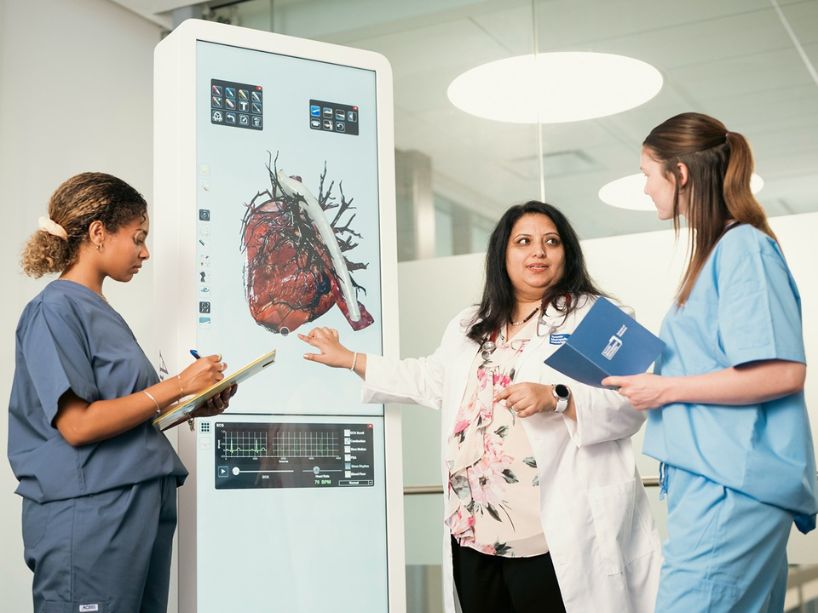
Cutting edge simulation labs at the School of Medicine will include touch screen tables for virtual dissections, allowing students to see how organs and tissues fit together in real-time.
TMU School of Medicine's residency program teaches doctors-in-training critical skills from handling complex clinical situations to connecting with patients and working effectively in teams.
The next generation of physicians will provide medical care that balances clinical efficiency with patient empathy, with the goal of contributing to greater health equity and access, one medical learner at a time.
Related stories: