TMU alum wins World Press Photo award for Afghanistan coverage
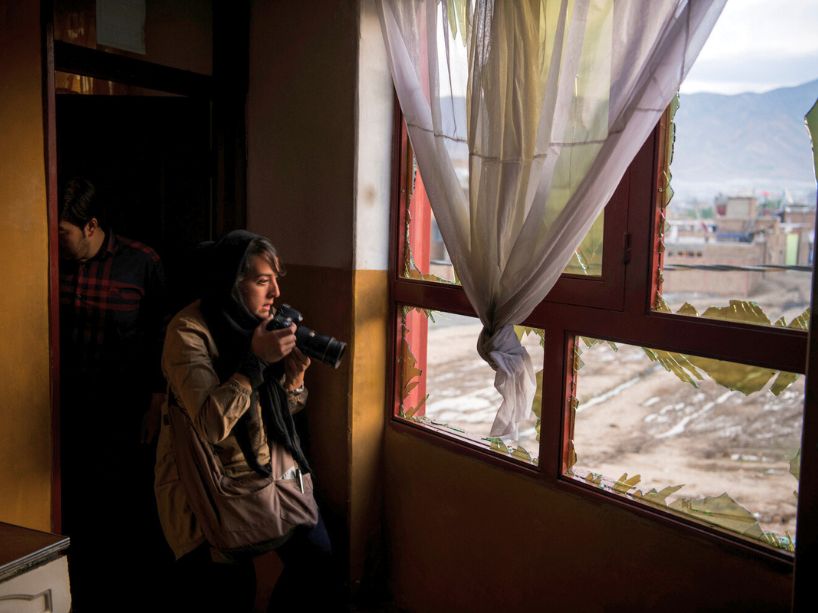
“When I started, I didn’t even know how to write a caption properly,” says Kiana Hayeri, laughing. It’s a striking confession from someone whose images now speak volumes across the pages of The New York Times, National Geographic and beyond, work that recently earned her a World Press Photo award for her intimate portraits of Afghan women.
For Iranian Canadian photojournalist and TMU grad Kiana Hayeri, storytelling has never been about being in the spotlight. It’s about illuminating the lives of others, often those navigating the margins of war, gender and youth.
Over the past decade, Hayeri has become one of the most compelling visual chroniclers of life in Afghanistan. Her powerful, poetic photographs—many of them intimate portraits of women —have been published by The New York Times, National Geographic and other major publications.
Her latest work, No Woman’s Land, sheds light on the lived experiences of Afghan women in the aftermath of the Taliban’s return to power in 2021.
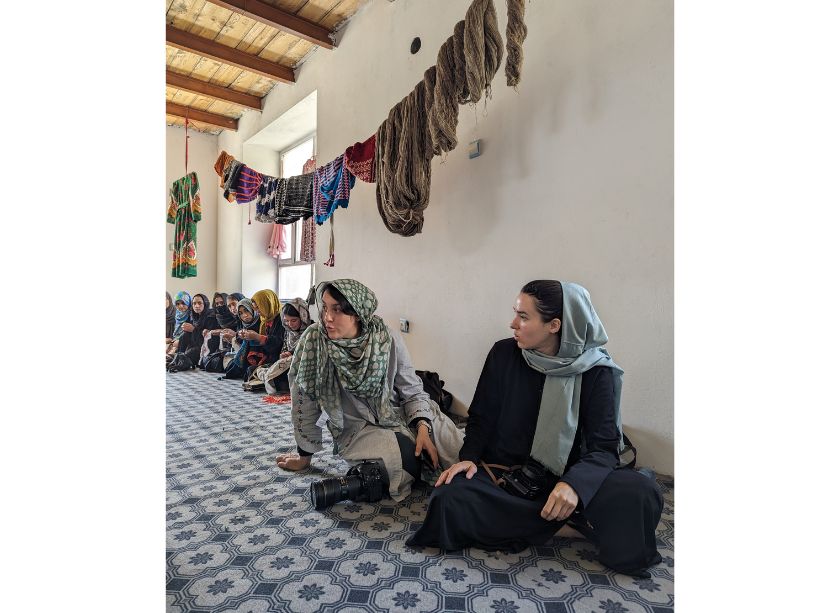
For No Woman’s Land, Kiana Hayeri and researcher Melissa Cornet travelled through seven Afghan provinces, speaking with over 100 women and girls. Their portraits were created in close collaboration with the subjects, guided by deep local ties and trust.
This year, the project earned her one of the world’s highest photojournalism honours: a 2024 World Press Photo Award (external link) , and two 2025 Pictures of the Year International (POY) award in the Issue Reporting Picture Story category. The series offers a rare, deeply personal look at the lives of Afghan women and girls, their quiet acts of resistance to systemic oppression, and the everyday realities of navigating harsh restrictions, uncertainty and isolation in the months before the Taliban takeover.
Born in Iran, Hayeri immigrated to Canada as a teenager, a formative experience that continues to shape her interest in stories of identity, migration and resilience.
“It’s always about proximity, about connection,” Hayeri says. “You want to tell stories from places where you have access, or a kind of knowledge that others don’t. That’s how you create something meaningful.”
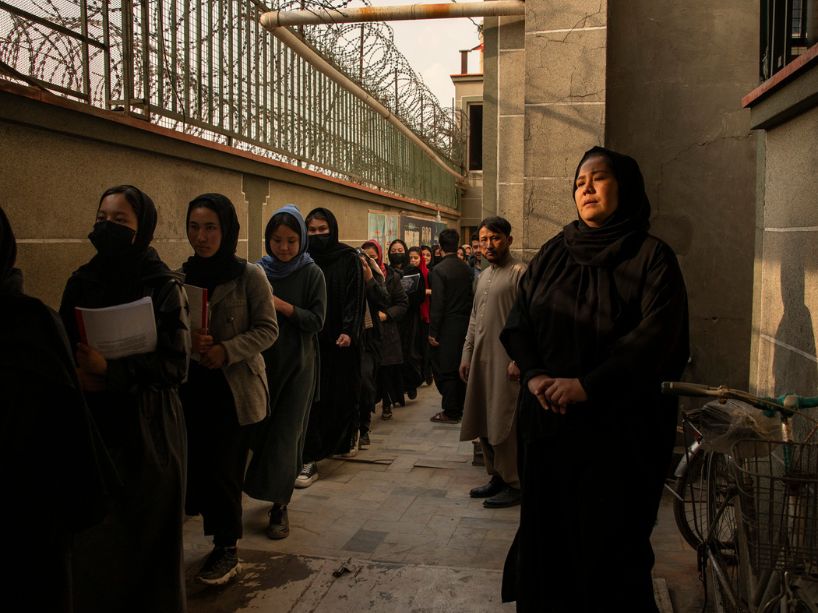
The project, conducted after the Taliban takeover, offers a rare glimpse into the daily struggles and resilience of Afghan women living under severe restrictions on their freedom, education and mobility. Above, an image of some of the 700 young women who study an American curriculum at a private Kabul institute and underground schools but cannot receive an official Afghan diploma or attend university. Photo: Kiana Hayeri
Building a foundation at TMU
A graduate of TMU’s Image Arts program, she says her time at TMU gave her a foundation in visual discipline, especially in film photography, which was still part of the core curriculum when she started.
The program’s curriculum focused on fine art and technical training at the time, but Hayeri knew her ambitions were rooted in photojournalism.
“I knew exactly what I wanted to do. I just had to find my own path,” she says, and she gradually developed her own voice.
Hayeri now splits her time between assignment work and long-term projects. She often focuses on women’s experiences in conflict zones. But she doesn’t believe aspiring journalists need to start abroad.
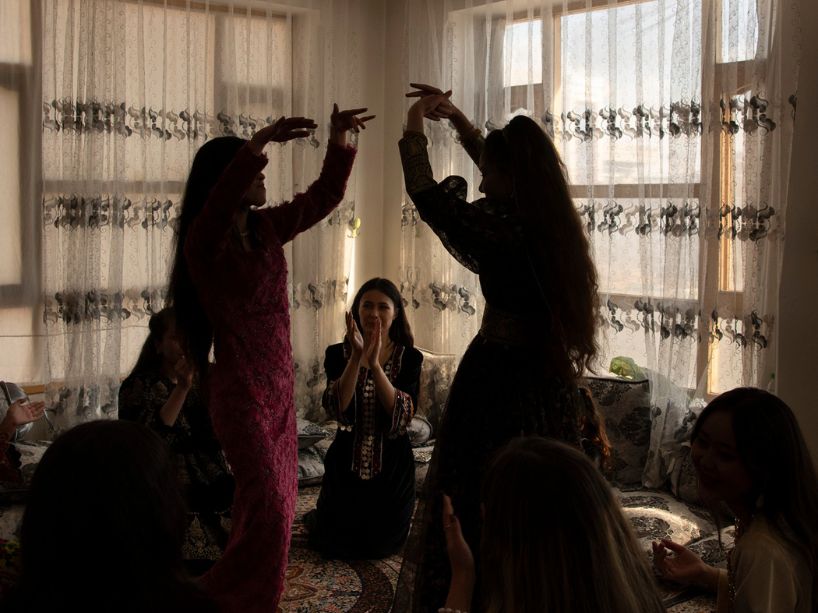
Young women gather to celebrate a friend’s birthday in Kabul, defying Taliban restrictions that ban music and dancing. Behind closed doors, Hayeri captures moments of joy where resistance quietly endures. Photo: Kiana Hayeri
For students aspiring to follow a similar path, Hayeri says, “A lot of young people think they have to go abroad to start,” she says. “But start in your own backyard. My backyard just happened to be Iran.”
She encourages emerging photographers to begin with stories they have access to—stories they understand personally. “In the past, if you could take good photos, people hired you. Now everyone takes good photos. What sets you apart is your vision, your access and your ability to see what others don’t.”
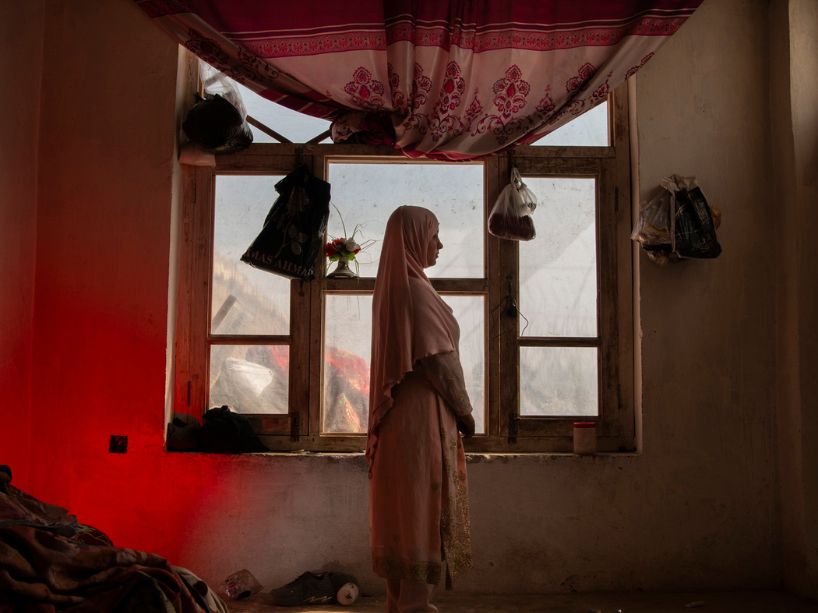
Muska, 14, formerly attended school in Pakistan, where she enjoyed reading and writing. Since returning to Jalalabad, she has been unable to continue her education. Her family has arranged her marriage to their landlord’s son in exchange for a well and solar panels. Photo: Kiana Hayeri
On No Women's Land
That philosophy has guided Hayeri ever since.
Her long-term project, No Woman’s Land, explores the lives and experiences of Afghan women in the wake of the Taliban’s return. Through in-depth conversations with over 100 women, she sought to understand what it means to be a woman in Afghanistan today. The resulting series is a testament to access, vision and restraint.
She produced the series in close partnership with women's right researcher Melissa Cornet. It goes beyond mere documentation—it amplifies the voices of the women themselves, many of whom share their stories directly with Hayeri.
“We had to knock on many, many, many doors to get yeses from women in order to get access,” she says. “Sometimes women wanted to show their faces, they wanted to appear in the picture, but we had to do a risk calculation—would it actually put them in danger or not?”
She and Cornet had ongoing conversations about how much agency they could offer the women while still protecting them. “It was a constant conversation between Melissa and I, but also with the subjects,” she explains.
This approach fosters trust and intimacy. The result? photos that reveal both vulnerability and strength.
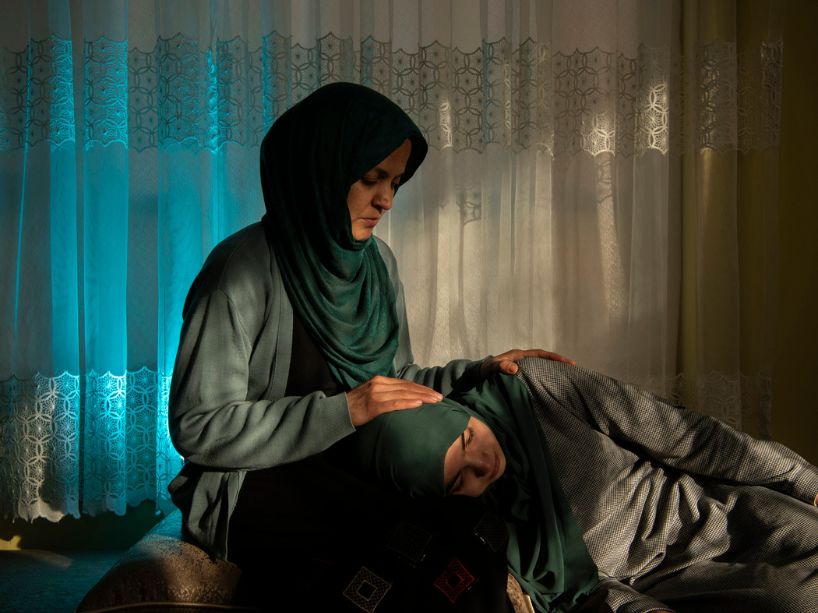
Wazhmah sits at home with her daughter Tahmeena in Kabul. Wazhmah’s education was cut short during Taliban rule in the 1990s, and now Tahmeena faces the same restrictions after being admitted to university. Photo: Kiana Hayeri
Despite the gravity of the subject matter, her portraits pulse with colour, texture and life. They’re often lit by the neon signs found in local shops, salons and restaurants. It’s a deliberate visual shift from her usual natural-light documentary style.
“Afghans love neon,” Hayeri laughs. “It was a conscious decision to use it. I wanted this project to look different from the rest of my work. It was also the first time in a while I wasn’t shooting for someone else.”
Her images have resonated deeply with both international audiences and those in the Afghan diaspora, sparking conversations about gender, identity and resistance. “I’ve been lucky,” Hayeri says. “The topics I’ve covered haven’t triggered outrage. I think people recognize that I’m trying to tell stories with truth, honesty and care.”
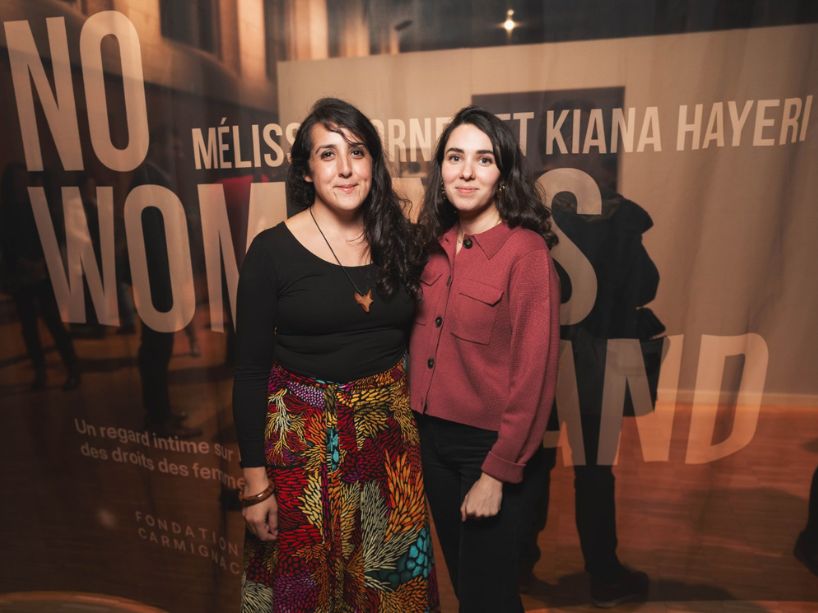
Hayeri (left) won the West Central South Asia Stories category for her work, which she produced in partnership with writer and women’s rights researcher Melissa Cornet (right).
Next steps: Syria and beyond
After leaving Afghanistan, Hayeri spent time searching for the next place she could connect with meaningfully. That place, she says, is Syria.
Earlier this year, Hayeri spent two months working on daily assignments and a personal story about youth in Damascus. That piece is currently in production.
As for what’s next? Hayeri plans to study Arabic over the summer before returning to Syria in the fall.
Learning the language, she says, is just as much a professional decision, which will aid in her work in Syria, as much as it is a personal one. “We had to study Arabic in school in Iran, so I have the basics,” she says. “But now I want to really understand it so I can go deeper.”
As for what keeps her going, it’s not fame or global acclaim. It’s the power of connection, intimate storytelling, and the quiet, urgent need to bear witness. “I don’t think about aesthetics when I’m shooting,” she says. “I just follow the light and the story will follow.”