Creating serendipity in commercial spaces
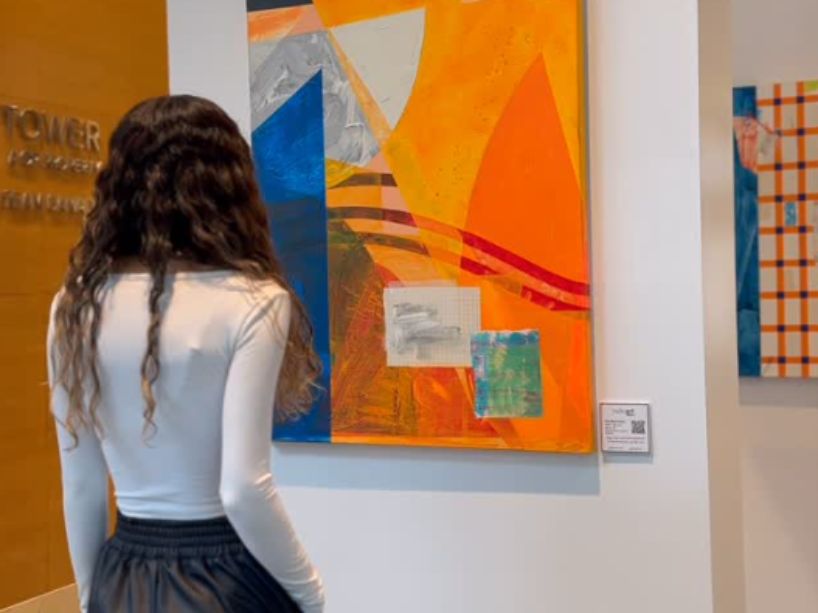
Art platform helloart, founded by Suzan El-Rass (Biology ’11) and Hussain Al-Jibory, transforms commercial spaces into visual galleries and enlivens workplaces. The entrepreneurs kick-started their venture at the DMZ and have since expanded across North America.
Art can stop you in your tracks, create a space for dialogue and make the mundane meaningful.
TMU graduate Suzan El-Rass (Biology ’11) saw how creative expression could revitalize commercial spaces and bring people together. She and her husband, Hussain Al-Jibory, launched helloart (external link) after getting inspired while admiring art in a local cafe.
The experience sparked inspiration, and the couple created a platform to connect artists with local businesses.
Art in unexpected places
Founded in 2019, helloart provides rotating art exhibits for commercial spaces and office buildings. The goal is to enhance ambiance, improve visitor experience and strengthen community while supporting local artists.
The duo started securing partnerships with local cafes, restaurants and co-working spaces. Then the pandemic hit and businesses closed. Instead of giving up, they used the shut down to develop their digital platform.
“The lockdowns were a major setback,” says El-Rass. “We pivoted to focus on preparing for the post-COVID world. But getting back to normal took way longer than anybody could have anticipated.”
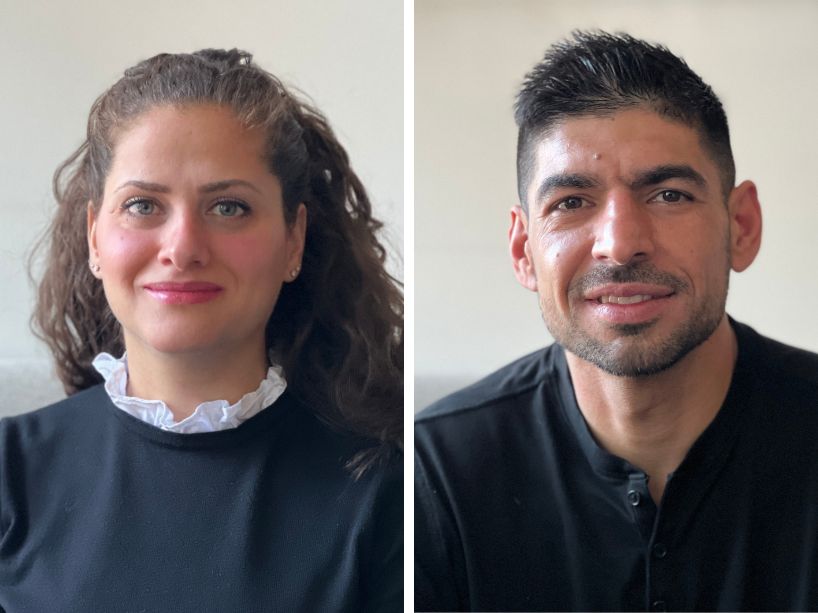
Suzan El-Rass (Biology ’11), co-founder and COO at helloart and Hussain Al-Jibory, co-founder, CEO at helloart got a boost from a DMZ’s start-up incubator to laser-focus and optimize their business strategy for scale. Today, they work with commercial landlords across Canada and have expanded to major U.S. cities.
The flashpoint
In January 2021, El-Rass and Al-Jibory joined the DMZ Bootcamp, a six-week program that helps early-stage tech founders test business ideas and scale their companies.
The DMZ’s Bootcamp is now called the pre-incubator program, a 9-month program for market validation.
“The bootcamp was a turning point for our company and as entrepreneurs,” says El-Rass. “It helped us clarify our priorities so we weren’t spreading ourselves thin, a common trap for new founders.”
They decided to focus on commercial spaces like building lobbies. With many commercial tenants gone, El-Rass and Al-Jibory saw an opportunity to attract tenants and workers back to office spaces and increase foot traffic.
“Commercial real estate is where we found the most meaningful and scalable impact,” says El-Rass. “It’s brought us to where we are today.”
A win-win
The platform hosts an online art gallery with works for sale. Al-Jibory notes that traditional art galleries take commission from artists, often charge exhibition fees and want exclusive representation.
helloart pays artists to showcase their work. The exhibits increase artist visibility and connect them with potential buyers.
“The traditional art world can be challenging to navigate, especially for emerging artists,” he says. “The impact we create not only revitalizes urban districts and office developments, it benefits the arts community more broadly.”
TMU’s biology co-op program was incredibly formative for me—it sharpened my critical thinking, strengthened my ability to collaborate, and gave me hands-on experience solving real-world problems. It has played a key role in preparing me to launch and lead my own business.
Transforming commercial spaces with value add
Exhibiting local art offers commercial landlords more than aesthetic appeal. It supports Environmental, Social, and Governance (ESG) objectives, enhancing reputation and value.
“Showcasing Canadian artists and activating lobby spaces fosters community, creates social impact and increases a building’s market value,” says Al-Jibory. “Property managers who invest in social programming are more likely to improve their building’s rating.”
The Building Owners and Managers Association (BOMA) of Canada, which represents the commercial real estate industry, featured helloart in a recent report: “More than a feeling: How commercial real estate can utilize artwork to enhance tenant well-being (external link) .” The guide shares research findings on the important and positive role art plays in the built environment and how art can reflect a company’s culture, values and identity.

Did you know? Canada has advantageous tax incentives for art investments The Canada Revenue Agency (CRA) recognizes the purchase or rental of Canadian artworks as a capital expense for both corporations and individuals operating businesses. Meeting specific criteria, businesses can claim an annual tax deduction for these artworks. Artwork rental expenses for business purposes are also tax deductible. |
The power of art
Today, helloart has launched in all major Canadian cities and is expanding to U.S. urban centres, recently launching in California and New York.
“We are seeing significant impact and growth, and are excited about the future,” says El-Rass. “Currently, we’re working to enhance the platform by incorporating AI technology to help scale more efficiently and better serve artists and businesses.”
For the founders, seeing artists discover their work in unexpected spaces is rewarding.
“Recently, a tenant at CIBC Square kept stopping to admire a piece that reminded him of his honeymoon in Italy,” recalls Al-Jibory. “It brought him so much joy that he purchased two artworks as gifts for his wife. Those connections are what make this work meaningful.”