New media exhibit explores a day in the life of dementia
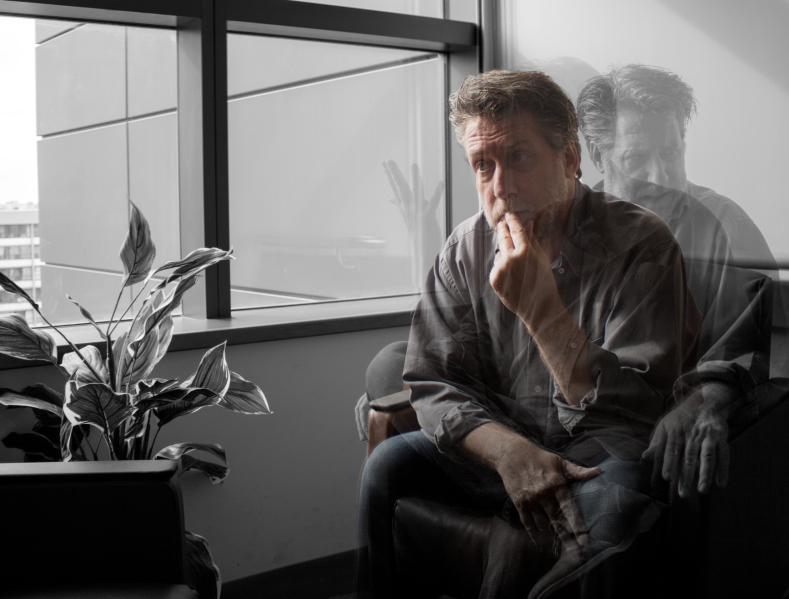
TORONTO, ON, October 15, 2018 – Researchers from Ryerson University’s Daphne Cockwell School of Nursing and the Toronto Rehabilitation Institute (TRI) will showcase an exciting new media exhibit titled EMBODY – Experiencing Dementia Through New Media. The exhibit will be located in the RBC iDAPT Innovations Gallery, main foyer at the Toronto Rehabilitation Institute (550 University Avenue). It will run from Monday, October 15, 2018 until Friday, November 9, 2018.
EMBODY is part of a multi-year study focusing on predicting episodes of agitation and other behavioural and psychological symptoms of dementia (BPSD), specifically between sexes. The exhibit interprets the study findings and shares the experiences of persons living with dementia through various modes of art. “The new media and art pieces will allow those visiting the exhibit to empathize with persons living with dementia,” says Kristine Newman, professor at Ryerson and one of the project’s principal investigators. “The exhibit raises awareness about dementia and allows audiences to learn about it in a new way.”
Pieces in the exhibit were conceptualized and created by a multidisciplinary team of students from Ryerson, with guidance and collaboration from research team members. Each piece offers different levels of immersion and abstraction. Audiences can view and interpret abstract paintings and photography, or experience a "day in the life" scenario through 360° video.
Audiences are also invited to participate in the current phase of the study, which examines whether the artworks are effective in communicating knowledge about the research. Once guests have completed their tour, they are encouraged to participate in a focus group to engage with one another and share their thoughts and experiences. “These pieces are meant to be reflexive. We’re asking viewers to consume and interpret, rather than telling them what to take away from the exhibit,” says Jacky Au Duong, a collaborator from Ryerson’s Centre for Communicating Knowledge.
EMBODY is free and open to the public. The exhibit runs Monday to Friday, 10:00 am to 5:00 pm.
ABOUT RYERSON UNIVERSITY
Ryerson University is Canada’s leader in innovative, career-oriented education. Urban, culturally diverse and inclusive, the university is home to more than 45,300 students, including 2,600 Master’s and PhD students, 3,800 faculty and staff, and nearly 198,000 alumni worldwide. For more information, visit https://www.torontomu.ca.
ABOUT THE DAPHNE COCKWELL SCHOOL OF NURSING
The Daphne Cockwell School of Nursing is a dynamic learning space that promotes socially responsive, evidence-informed nursing. Our teaching community is made up of award-winning researchers, clinicians, policy makers, and educators with roots in clinical practice, community health, policy, research and academia. Our faculty and staff are engaged, caring and committed — helping to create unique, hands-on learning opportunities for our students. Graduates are prepared to address global health needs and provide high quality care for future generations. Learn more at https://www.torontomu.ca/nursing
ABOUT THE CENTRE FOR COMMUNICATING KNOWLEDGE (CCK)
The Centre for Communicating Knowledge (CCK) at Ryerson University explores new and innovative ways of mobilizing knowledge. As a research centre, CCK undertakes its own projects that explore new models and approaches for translating, evaluating, and communicating knowledge that are relevant for today’s society. Uniquely positioned within the Faculty of Communication and Design (FCAD), CCK also doubles as a creative production unit, providing services and supports to researchers within and beyond Ryerson. Find out more at https://www.torontomu.ca/cck.
ABOUT THE TORONTO REHABILITATION INSTITUTE (TRI)
The Toronto Rehabilitation Institute (TRI) is Canada’s largest academic hospital dedicated to adult rehabilitation and complex continuing care. TRI’s research program solves problems in four areas: prevention of disability; restoration of function following injury or illness; enabling independent living at home; and optimization of the rehab system. TRI researchers develop new treatments, helpful products and evidence that guides changes to policy and public opinion. The institute includes labs and facilities that are completely unique in the world of rehabilitation research. For more information, visit www.uhn.ca/TorontoRehab.
MEDIA CONTACT
Zandra Alexander
Public Affairs, Ryerson University
416-979-5000 x 4282
zandra.alexander@torontomu.ca