Race, Health & Happiness podcast partners with the School of Journalism
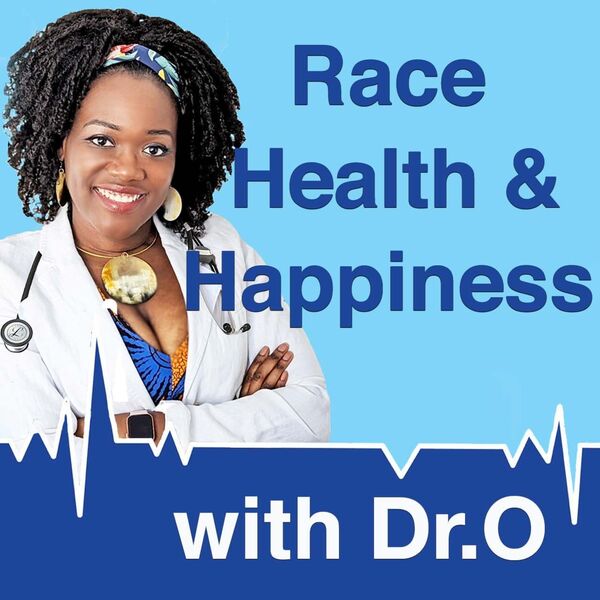
The School of Journalism has partnered with Race, Health & Happiness, a podcast about thriving and staying well despite the impacts of everyday and institutional racism.
The podcast hires interns from the School of Journalism and uses the Allan Slaight Radio Institute in the Rogers Communications Centre for their recording sessions.
The podcast is hosted by Dr. Onye Nnorom, a family doctor and public health specialist, whose work focuses on health equity and how racism impacts health. She teaches doctors, medical students, and other health professionals about how everyday and systemic racism has an impact on people's physical and mental health.
After her talks, she says racialized people, including students, would come up to her and ask how they could protect their own health from everyday racism. From this, she was inspired to look into literature about the topic, and discovered racialized communities that figured out how to thrive despite. "That was the idea of this podcast,” she says. “It really came from people who are racialized asking how they could learn more about the antidotes after hearing about the terrible harms that racism creates.”
Nnorom collaborated with one of her mentors from medical school, Dr. Karl Kabasele, who is now the producer of the podcast, to launch the show in February of 2020. "The focus was speaking to different leaders, professionals, and artists from diverse backgrounds about how they have dealt with systemic racism, individual racism, and how they have thrived and helped their communities to thrive as well,” she says.
Jael Joseph, a 2021 School of Journalism graduate, interned for the Race, Health & Happiness podcast as a production assistant at the end of her final year in the program. After the internship ended, she stayed on as a volunteer until March 2022, when she began her current role as associate producer.
She was initially interested in working with the podcast because she says a lot of the work she does is heavily involved in race, gender, and culture, and she wanted an organization that would align with those things and that would let her expand on them further.
"They really made me feel at home,” Joseph says. “I did not feel isolated. I didn't feel that I was just there to fill in space, and it felt meaningful to me. I enjoyed working with them so much that I'm currently doing my master's in media production."
She says that as a racialized person, she now understands how important it is to be in the same space as people who are going through the same experiences and who are willing to speak up about it.
Gavin Adamson, interim co-Chair of the School of Journalism, says the podcast’s content is critical creative work and that it's especially important that it's supportive to the Black and wider BIPOC community.
He says the school hopes for other possibilities for shared work and research collaborations that involve both their students and faculty.